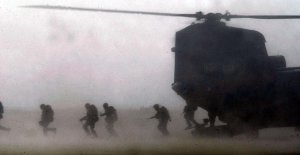
Dec. 1 (UPI) — Chiefs of Britain’s elite SAS tried to cover up possible war crimes committed in Afghanistan, according to testimony published Monday by the independent public inquiry into the actions of British Special Forces in the country.
In his closed-door testimony, an officer, said to be very high up in the SAS, detailed how he had provided the then-director of special forces with “explosive” evidence in 2011 indicative of “criminal behavior.”
When his successor took over a year later in 2012, the officer testified that he did nothing about it despite the fact that he “clearly knew there was a problem in Afghanistan.”
The Independent Inquiry relating to Afghanistan was set up in 2022 to look into possible crimes committed during Deliberate Detention Operations, otherwise known as “kill or capture,” in Afghanistan between 2010 and 2013, including the murder of detainees and unarmed civilians, including children.
In summer 2023, the Ministry of Defense clarified that the inquiry related to U.K. Special Forces specifically.
The officer who was identified only as N1466, said he first became worried after a night raid in which nine Afghan men were killed and just three weapons were seized. He told the inquiry that he noticed a pattern in SAS reports [arriving on his desk in London] of an abnormally high number of suspicious deaths and that the numbers did not match with the volume of arms seized.
After hearing allegations circulating that “people had confessed to a Sub-Unit policy of killing fighting-aged males on target regardless of threat,” N1466 went to the top but he said the two former heads of special forces he communicated with did not pass the evidence he provided to the Royal Military Police.
Commanders are required by law to inform the RMP when a person in their command may have committed a serious offense.
N1466 testified that he was “deeply troubled by what I strongly suspected was the unlawful killing of innocent people, including children…I will be clear, we are talking about war crimes,” he said.
He alleged the leadership was “very much suppressing” the allegations.
N1466 went to the Provost Marshal himself in 2015, nearly four years later, and when the force’s Operation Northmoor into the SAS was already underway, a delay he said he very much regretted and one he “wrestled with,” but said he was worried about his position and the organization and thought something was being done about it.
“When you look back on it, on those people who died unnecessarily from that point onwards — there were two toddlers shot in their bed next to their parents, you know — all that would not… necessarily have come to pass,” he said.
Questioned whether he had an agenda or an axe to grind, N1466 said he was a fiercely loyal member of the Special Forces, but that he believed loyalty was about doing the right thing, rather than what’s easiest.
He said he joined to become the best and most professional officer he could and to make a difference, “the best difference that I could.”
“I know I am not alone in that. I know a lot of my colleagues — and that’s colleagues at all ranks and in all units — did the same and they joined UKSF for the right reasons and for the right motivations and we didn’t join UKSF for this sort of behavior, you know, toddlers to get shot in their beds, or random killing.
“It’s not loyalty to your organization to stand by and to watch it go down a sewer.”
Former veterans minister Johnny Mercer criticized the inquiry, saying it was unfair to selectively publish one side of the story to “fit a certain narrative,” before those being accused of a cover-up had been given the chance to voice their version of events.
The inquiry defended its decision to publish.
“As the Chair of the Inquiry emphasized in a recent update, the Inquiry is investigating the deliberate execution of Afghan males. It is not about split-second decisions, taken in combat,” said a spokesperson.
“As with other statutory public inquiries, we are legally required to publish what evidence we can, when we can, having regard to the need to protect the identity of members of UK Special Forces, and National Security.”
The inquiry continues and is expected to report its findings next to the Defense Secretary and parliament next year.
COMMENTS
Please let us know if you're having issues with commenting.