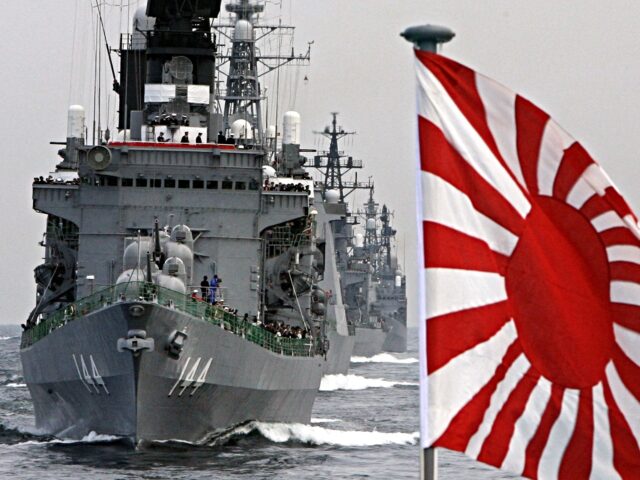

Japanese Prime Minister Takaichi Sanae on Friday delivered her first speech to parliament since her party’s landslide victory in snap elections. She promised to stand firm against growing Chinese “coercion” and craft a new national defense strategy to address the “most severe and complex security environment since World War 2.”
“China has intensified its attempts to unilaterally change the status quo through force or coercion in the East China Sea and South China Sea, while also expanding and stepping up its military activities in the areas surrounding our country,” Takaichi told Japanese lawmakers.
“It is a consistent policy of the Takaichi Cabinet to comprehensively advance a ‘Mutually Beneficial Relationship Based on Common Strategic Interests’ with China and to build a constructive and stable relationship,” she said.
“Precisely because China is an important neighbor and there are various pending issues and challenges, we will continue our communication and respond calmly and appropriately from the standpoint of our national interest,” she pledged.
In his own remarks to parliament, Japanese Foreign Minister Motegi Toshimitsu chided China for using force to alter the status quo around the disputed Senkaku Islands, and for threatening “peace and stability” in the Taiwan Strait. He said Japan wishes to resolve these disputes through “dialogue,” but would not relent on its own territorial claims.
Takaichi was extraordinarily polite to Beijing in her remarks, given that Chinese Foreign Minister Wang Yi sought to paint her as a dangerous warmonger at last weekend’s Munich Security Conference.
Wang accused Takaichi of seeking to “revive militarism,” invoking the memory of Imperial Japanese aggression during World War 2. He blasted her position on defending Taiwan from a potential Chinese attack as “erroneous” and claimed Japan secretly harbors ambitions to conquer Taiwan for itself.
“The Japanese people must be reminded not to be blinded or coerced again by far-right forces and extremist ideologies,” Wang lectured.
“All peace-loving countries must also issue a warning to Japan: if it tries to turn back the clock of history, it will seal its own doom. If it gambles once more, it will only face a swifter defeat and suffer a more disastrous loss,” he added.
The Japanese government lodged a formal protest with China over Wang’s remarks on Tuesday, saying the Chinese foreign minister’s comments were “not based on facts.”
“Postwar Japan’s consistent contribution to the peace and stability of the international community has been widely recognized by global society,” Japanese Chief Cabinet Secretary Kihara Minoru noted.
China has been at economic and diplomatic war with Takaichi since November, when she told her parliament that she would regard a Chinese attack on Taiwan as a “survival-threatening situation” for Japan – language that would authorize the Japanese Self-Defense Forces (JSDF) to intervene on Taiwan’s behalf.
Takaichi said on Friday that her administration planned to revise Japan’s core security documents to create a new defense strategy, which seems likely to include a further buildup of defense forces, looser rules for exporting military technology to allies, and establishing a centralized national intelligence council that would provide Japan with equivalents to the American Central Intelligence Agency (CIA) and Committee on Foreign Investment (CFIUS) for the first time.
Takaichi further promised to strengthen Japan’s supply chains and reduce dependence on China, especially in the area of critical minerals. She specifically mentioned a promising effort to extract rare earths from the sea bottom near Minamitori Island.
Takaichi is likely to get what she wants on national security after her Liberal Democratic Party (LDP), which had sunk to postwar lows in popularity and influence before she became prime minister, came roaring back in the February 8 snap election to win a two-thirds majority in the lower house of parliament.
Among other benefits, Takaichi’s wildly successful gamble to use her personal popularity to revive her party gave LDP enough seats to propose constitutional amendments, including some that would modify the pacifist stance of the Japanese military.
COMMENTS
Please let us know if you're having issues with commenting.