
A new potential hantavirus case is under investigation on the remote island of Tristan da Cunha as contact tracing from the outbreak aboard the cruise ship MV Hondius continues.
Meanwhile, two residents of Singapore who were passengers aboard the ship have tested negative for the deadly virus.
An international effort to trace the movements of Hondius passengers and crew and identify all of the people they might have infected through close contact, is underway. Hantaviruses have very long incubation periods of six to eight weeks, so people may not realize they have been infected without testing.
The Andes strain loosed upon the ship after it stopped in Argentina is the only variety of hantavirus known to spread through human contact, while the other strains are generally spread through vermin droppings.
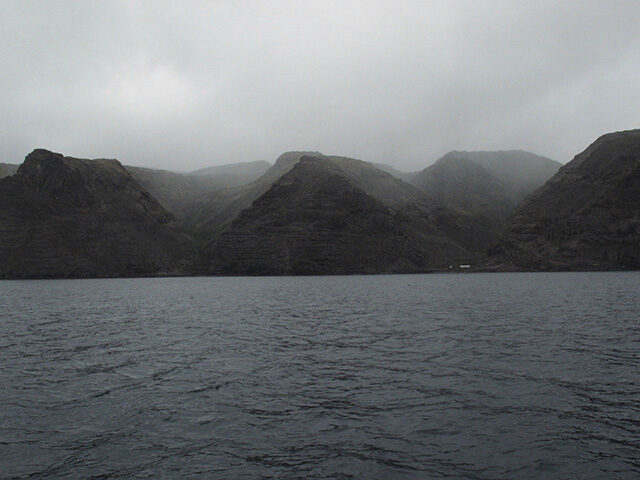
The UK Health Security Agency (UKHSA) said the suspected case on Tristan da Cunha involves a British man who was a passenger aboard the Hondius. The island is tiny, with only around 200 inhabitants, and is located about halfway between South America and South Africa.
Stephen Doughty, UK Minister for the Overseas Territories, sent a message to the Chief Islander of Tristan da Cunha to express sympathies for an islander who is “currently in hospital” from potential hantavirus infection, and “their spouse who is isolating.”
“I also understand you have four islanders currently on St Helena that travelled on the ship,” Doughty added.
St. Helena is the nearest inhabited island to Tristan da Cunha, but it is still six days away by boat. The Hondius docked at St. Helena on April 24, at which point seven British passengers left the ship. Four of them are still in St. Helena, two have returned to the United Kingdom to self-isolate, and the last was traced by UKHSA on Thursday to a “location outside the United Kingdom.”
Governor Nigel Phillips issued a statement to the people of Tristan da Cunha praising their “calm, measured, and proportionate response” to the hantavirus outbreak and cautioning them to be wary of social media disinformation and fearmongering about the situation.
“I am acutely aware that the vessel and its passengers are currently the subject of global news interest. Among our communities, there is intense social media activity. This is understandable. Yet we must also be cautious of potential fallibility, as the recent global misreporting of the death of Jonathan the tortoise so clearly revealed,” he wrote.
Jonathan the Tortoise is a 193-year-old Seychelles giant tortoise who lives at the Plantation House on St. Helena. He is the world’s oldest known land animal. In early April, a hoax was spread on social media that Jonathan had died, supposedly based on the account of a vet who had cared for him. Governor Philipps was obliged to step in and reassure the world that Jonathan was still “alive and well.”
Two Singapore residents who were aboard the Hondius, both men in their mid-60s, have been quarantined and tested for the hantavirus at the National Center for Infectious Diseases in Singapore. Their first tests came up negative on Friday, but they will remain quarantined for 30 days as a precaution, and will be monitored for 15 days after that.
The two men departed the ship and flew from St. Helena to Johannesburg, South Africa, at the same time as an adult female patient who was suffering from gastrointestinal distress. The female patient died the day after arriving in Johannesburg and was confirmed to be infected with hantavirus.
“The risk to the general public in Singapore remains low,” said the Singaporean Communicable Diseases Agency (CDA) on Friday.
There have been four confirmed hantavirus infections from the Hondius so far, not including the suspected case on Tristan da Cunha. Three people have died, and one is in critical condition. Several more possible infections are under investigation, with a promised update from the World Health Organization (W.H.O.) coming on Friday afternoon.
The W.H.O. has maintained so far that the outbreak has no risk of becoming a pandemic like the Wuhan coronavirus, because even the Andes strain of the hantavirus spreads slowly, and only through “close, intimate contact.”
“In previous outbreaks of Andes virus, transmission between people has been associated with close and prolonged contact, particularly among household members, intimate partners and people providing medical care. That appears to be the case in the current situation,” W.H.O. Director-General Tedros Adhanom Ghebreyesus said at a press conference on Thursday.
At least 12 nations are currently involved in the contact tracing effort, including Canada, Denmark, Germany, the Netherlands, New Zealand, Saint Kitts and Nevis, Singapore, Sweden, Switzerland, Turkey, the United Kingdom and the United States.
Five American states are currently monitoring passengers who left the Hondius before the first confirmed hantavirus infection, including Georgia, Texas, Virginia, Arizona, and California. State officials say none of these passengers has exhibited any signs of hantavirus infection.
“It’s very much, we hope, under control,” President Donald Trump told reporters on Thursday. “I think we’re gonna make a full report about it tomorrow. We have a lot of great people studying it, it should be fine, we hope.”
Although all of the local, national, and international health agencies involved in the Hondius outbreak have congratulated each other on doing an excellent job of responding to the situation, an unnamed health expert grumbled to the BBC that the response has been “highly chaotic and uncoordinated.” This critic added there was nevertheless “little general risk to the public” from the relatively small outbreak.
COMMENTS
Please let us know if you're having issues with commenting.