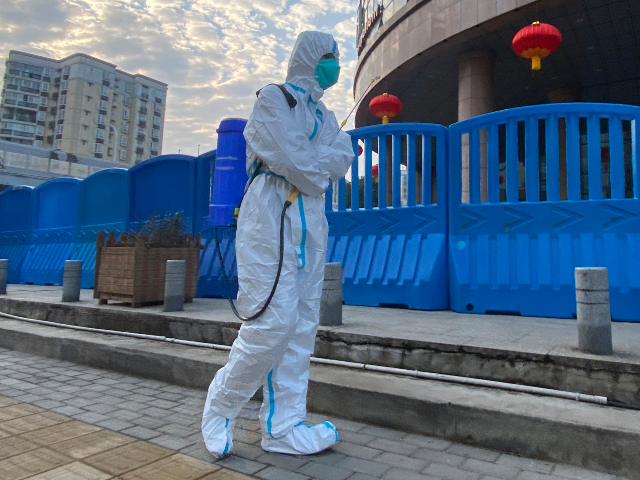

The Chinese National Disease Control and Prevention Administration warned citizens on Wednesday that it had documented a growing number of cases of various respiratory diseases, primarily influenza and rhinovirus, in the past month, suggesting travelers take precautions during the upcoming May Day holiday.
May Day, also known as “International Workers’ Day,” is a holiday observed on May 1 on which the world’s communists and assorted Marxist-adjacent ideological groups celebrate the legacy of their ideology, which consists of killing over 100 million people as well as mass torture, rape, starvation, slavery, and the collapse of entire national economies. May Day is a major vacation period in China where citizens typically increase their travel and spending activities. Many engage in “red tourism,” a term for visiting sites of relevance to the history of the Chinese Communist Party and its founder, mass murderer Mao Zedong.
The Chinese Foreign Ministry on Thursday encouraged foreigners to come visit China, particularly during the May Day holiday, even as public health authorities warned that increased travel could also lead to the spread of disease. The Chinese government has a notoriously poor reputation for containing diseases in the modern era following international travel by an estimated 5 million people out of Wuhan, central China, in early 2020, leading to the Wuhan coronavirus pandemic that has killed over 7 million people and counting.
The Chinese National Disease Control officials speaking on Wednesday emphasized that they had no evidence of the spread of any novel pathogen in the country, making the situation appear far less perilous than it was in late 2019. Nonetheless, they issued warnings not just regarding the spread of influenza, but of mosquito-borne diseases such as dengue and zika and other illnesses.
“Respiratory infectious diseases in China have shown some fluctuations since the beginning of April… As the May Day holidays approach, population mobility and gatherings are expected to increase significantly,” the state-run Global Times newspaper paraphrased a disease agency spokeswoman, Xi Jingjing, as telling reporters.
“The administration stressed the need for vigilance against mosquito-borne diseases such as dengue fever and chikungunya, as well as enteric infections, including norovirus infections and hand, foot and mouth disease,” according to the Times.
“The administration urged the public to stay vigilant amid seasonal weather changes, paying attention to travel hygiene, mosquito-and tick-borne disease prevention, and avoiding close contact with wild animals,” the state newspaper added, “It also called for closer health monitoring of the elderly and children, along with prompt medical care if symptoms develop.”
While the emphasis appeared to be on mosquito-borne diseases, the Times asserted that China had “reported increased influenza and rhinovirus activity since April.”
The state propaganda outlet China Daily reported an increase in infections of viruses associated with influenza in China in April, despite warming weather throughout most of the country.
“The rate of human parainfluenza viruses, or HPIVs — a group of common cold-like respiratory viruses — has been rising in China in recent weeks,” it shared, “with the rate among children aged 5 and under higher than in other age groups, according to recent data from the Chinese Center for Disease Control and Prevention [CDC].”
The Chinese CDC at the time issued special precautions for parents to monitor their children for respiratory diseases.
“[Experts] added that HPIVs are also spread through respiratory droplets and close contact. Therefore, regular handwashing, wearing masks and ensuring good ventilation remain key preventive measures,” China Daily observed.
Chinese state media reported on Wednesday that the country’s travel agencies were expecting a major boost in business during the May Day season and that the number of flights and hotel bookings had already shown a steady incline, though the former has been affected by fuel prices. China is Iran’s biggest oil client and the single most active recipient of goods shipped through the Strait of Hormuz, which has experienced significant interruptions as a result of the ongoing war between Iran and the United States. Much of the travel is expected to be domestic — citizens traveling to sites of historic significance for communists — but nonetheless lucrative.
“Over the eight-day period covering May Day holiday, Shanghai’s railway stations are expected to handle 4.83 million passenger trips,” the Global Times reported, “with an average daily volume of more than 600,000, representing a year-on-year increase of 5.42 percent, according to the Shanghai Railway Bureau.”
Reports that many Chinese are opting not to leave the country during May Day week accompany the Chinese Foreign Ministry openly inviting foreigners to visit the country for the occasion.
“As the spring-summer travel season begins, we welcome more foreign friends to make full use of the visa-free policy and immerse themselves in the experience of a China that is both traditional and modern,” Foreign Ministry spokesman Guo Jiakun was quoted as saying. “Convenient mobile apps, high-speed transportation network, and safe streets late at night in China deeply impressed foreign visitors.”
That invitation appears to be open for the entire summer, not just for the spring communist holiday.
Travel played a significant role in the spread of disease from China in late 2019 and early 2020. The government of Wuhan admitted following the discovery of cases of Wuhan coronavirus around the world that 5 million people had left the city to travel for the Lunar New Year, by far the largest travel season annually in Asia. Evidence suggests, however, that Chinese authorities were aware of the spread of a novel disease in the city as early as November 2019 and did not issue warnings or limit travel. Instead, the Wuhan government held an attempt at the “world’s largest banquet,” hosting 130,000 people, on January 18, 2020.
COMMENTS
Please let us know if you're having issues with commenting.