
Congress just bought itself one week to get this right. Don’t waste them.
Section 702 of the Foreign Intelligence Surveillance Act (FISA) is sold as a tool to spy on foreign terrorists. What surveillance hawks leave out is that when a foreign target — who can be virtually anyone — communicates with an American, those messages get swept into the database too. No warrant. No notice. And then the CIA, NSA, and FBI search through those private communications using Americans’ names, emails, and other identifiers — and no warrant is required for that either.
These “queries” for Americans’ information is what we call “backdoor searches,” and it is central to the raging fight over whether to reauthorize FISA. A federal court called it unconstitutional. The searches keep happening anyway.
Now add artificial intelligence to that picture. The government can now train AI on information about your constitutionally protected activity, from what you buy to what websites you visit to where you sleep at night, all based on information purchased from data brokers without any court or law authorizing agencies to do so. The Cato Institute has documented how AI tools are being used to generate the legal justifications for initiating surveillance in the first place — the government is using algorithms to write its own permission slips.
In many cases, there’s no human on the other end making the judgement call — just an AI deciding it’s your turn to lose your right to privacy.
As Sen. Ron Wyden (D-OR) and Sen. Mike Lee (R-UT) noted in introducing their bipartisan FISA reform bill, “advances in technology, from AI to the explosion of Americans’ data available for purchase, have far outpaced the laws protecting Americans’ privacy.”
These are two of the most critical sticking points in the ongoing FISA fight — the backdoor search and data broker loopholes. A bipartisan blob is fighting to keep the status quo, and a bipartisan team of strange bedfellows, including ourselves, are standing up for reform.
The Government Is Building a Gun Registry. They’re Just Not Calling It That.
Federal agencies are buying your personal data from commercial data brokers. The data for sale includes your location history — every gun store, range, and sporting goods shop your phone went near. Your financial records — every ammo purchase. Your consumer behavior profile. The Cato Institute has described how this creates insight into gun ownership at a level of commercial granularity that rivals a formal registry. The government doesn’t need your Form 4473. It buys the data trail your constitutionally protected actions leave behind. The AI layer makes this worse. Those broker datasets don’t just record where you’ve been — they’re used to build predictive profiles of who you are and what you might do.
This problem compounds when it’s combined with how Section 702 can be used to directly collect information about gun owners. “Major firearms manufacturers supplying the American civilian market are headquartered abroad: Glock in Austria, Heckler & Koch and Sig Sauer’s parent company in Germany, Beretta, Benelli, and Fabarm in Italy, IWI in Israel, and CZ in the Czech Republic … These foreign-to-US-subsidiary communications are precisely the kind of international business communications that §702 upstream incidental collection could capture.”
And it’s not just guns. The same pipeline can map your neighbor’s political and religious affiliations — private decisions that belong to them and nobody else. Protecting that privacy is not a left or right-wing position. It’s what the Fourth Amendment requires.
What We’re Asking For
Conservative Republicans killed the clean reauthorization last week, and they were right to so. Now we have until April 30 to find a path forward.
First, require a warrant before the FBI searches an American’s private communications. This failed by a single vote in 2024. The government now claims it conducts only a few thousand such searches a year. Great, the courts can handle that load. If the real number is higher, that proves exactly why the warrant requirement is necessary.
Second, close the data broker loophole. The bipartisan Wyden-Lee-Davidson bill, Rep. Andy Biggs’s Protect Liberty Act, and the Durbin-Lee SAFE Act would all reauthorize FISA while banning the federal government from buying Americans’ data without court orders. If collecting your location data directly would require a warrant, buying it from a broker should too.
The Founders required the government to ask permission before searching for your effects. They wrote it down. One week is enough time to honor that — if Congress actually wants to.
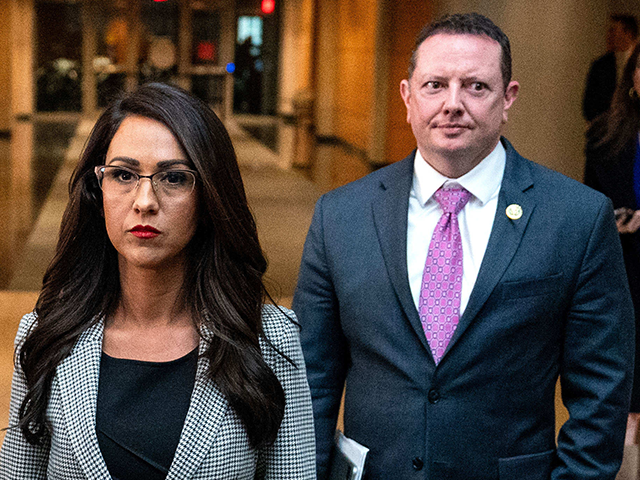
Lauren Boebert represents Colorado’s 4th congressional district, and Eric Burlison represents Missouri’s 7th congressional district in the U.S. House of Representatives.
COMMENTS
Please let us know if you're having issues with commenting.