
Reports citing Iranian state media suggested that Iran’s “ten-point plan” to end hostilities with the United States and Israel, which President Donald Trump suggested may be “a workable basis on which to negotiate,” includes provisions such as the lifting of all sanctions on the rogue terror state and “compensation” to Tehran.
President Trump spent much of this week threatening to annihilate the Iranian state in its entirety, as well as Persian “civilization.” On Tuesday night, about an hour before the 8:00 p.m. Eastern Time deadline Trump set this weekend, the president and what remains of the Iranian regime announced that, through the mediation of Pakistan, both sides agreed to a two-week ceasefire to allow space for peace talks intended to end America’s military action against Iran, titled “Operation Epic Fury.”
“We received a 10 point proposal from Iran, and believe it is a workable basis on which to negotiate,” Trump wrote in a message on his website, Truth Social, on Tuesday night. This plan, reports indicate, is separate from a reported American 15-point plan that Washington relayed to Pakistan in late March.
“Almost all of the various points of past contention have been agreed to between the United States and Iran, but a two week period will allow the Agreement to be finalized and consummated,” Trump continued. “On behalf of the United States of America, as President, and also representing the Countries of the Middle East, it is an Honor to have this Longterm problem close to resolution.”
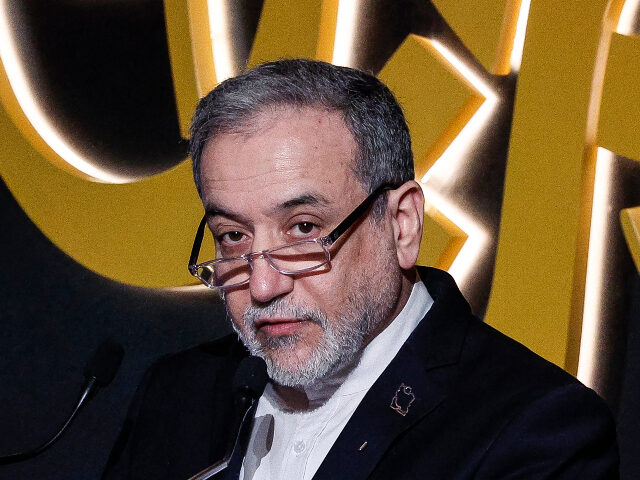
Concurrent with Trump’s statement, Iranian Foreign Minister Abbas Araghchi – widely considered among the most powerful people left in Iran after the elimination of dozens of senior Iranian officials, including the “supreme leader” – published a statement, allegedly from Iran’s Supreme National Security Council, affirming that negotiations were ongoing.
“In response to the brotherly request of [Pakistani] PM [Shehbaz] Sharif in his tweet, and considering the request by the U.S. for negotiations based on its 15-point proposal,” the statement read, “as well as announcement by POTUS about acceptance of the general framework of Iran’s 10-point proposal as a basis for negotiations … if attacks against Iran are halted, our Powerful Armed Forces will cease their defensive operations.”
The Iranian statement notably appeared to accept the legitimacy of both the 15-point American proposal and the ten-point Iranian one.
Reports in Middle Eastern media, citing Iranian state media, noted that Iran has yet to publish the full text of the ten-point plan, but did publish a summary of the major points in the negotiation. The Emirati newspaper The National published ten demands from Tehran, several of them centered on eliminating American and United Nations sanctions.
The deal would require Iran to retain full control of the Strait of Hormuz, a critical transit hub for the region’s oil industry, but allow Iran to impose a “secure transit protocol” in the strait – presumably a way for Iran to impose a toll that could generate millions of dollars for the Islamist regime. The ten points also include several maximalist demands including the full withdrawal of American military forces from the entire Middle East, not just those in positions close to Iran, and “full payment of compensation to Iran.” Iran has for years demanded “reparations” from the United States for a variety of actions ranging from the elimination of terror mastermind Qasem Soleimani in 2020 to airstrikes against Iran’s illicit nuclear enrichment sites last year.
The National also listed among the demands in the ten-point list the “release of all frozen Iranian assets” abroad, a move that would require not just American cooperation but also a host of international banks and other institutions to comply.
The Saudi news agency Al-Arabiya reported that Iran is also demanding a point not listed by The National – a United Nations Security Council resolution asserting that any formalized agreement ending the conflict was “binding,” meaning the U.N. could act to punish a violation of the agreement. The Security Council has not been charitable to the Iranian terror state during “Operation Epic Fury,” in part due to the presence of several countries on the Council actively being bombed by Iran. In April, Bahrain, which has been the target of several rounds of Iranian missile and drone strikes, holds the presidency of the Council. The Council passed one resolution condemning Iran’s attacks in March, but failed to pass a second resolution urging all action possible to stop Iran’s attacks this week, as Iran allies China and Russia vetoed the message.
Iranian media and allied outlets associated with Iranian terrorist proxies such as Hezbollah regurgitated Tehran’s talking points calling the recognition by Trump of the existence of the ten-point plan a victory for the Islamic revolution. The Supreme National Security Council called the announcement of a ceasefire an “undeniable and crushing historical defeat,” the Hezbollah-friendly Lebanese outlet Al Manar reported. Iran also outrageously claimed that “the majority of American military capabilities in the region were destroyed” and that the alleged victory was possible because “supreme leader” Ali Khamenei was killed on the first day of the American operation, without explaining how losing its head of state was a victory for Iran.
COMMENTS
Please let us know if you're having issues with commenting.