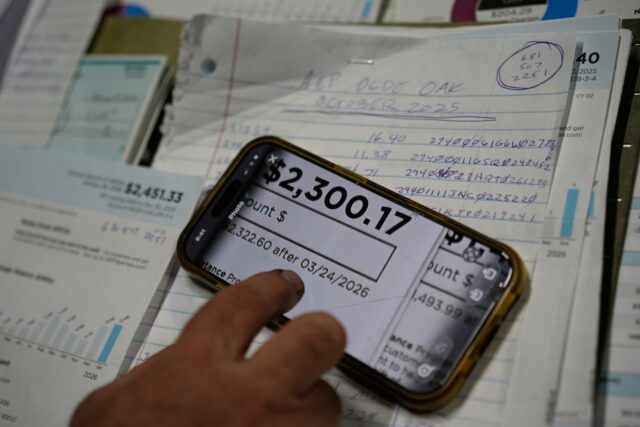

The artificial intelligence boom is leading to fights in some states over growing utility profits
As electric bills rise, some states are focusing on the growing profits of utilitiesBy MARC LEVYAssociated PressThe Associated PressHARRISBURG, Pa.
HARRISBURG, Pa. (AP) — The artificial intelligence boom is leading to fights in some states over growing utility profits, as governors, attorneys general and others protesting rising electricity bills say cash-strapped residents are stuck in a broken system.
Officials and lawmakers in at least six states — including Arizona, Indiana, Maryland, New Jersey, New York and Pennsylvania — are going to new lengths to try to block rate increases proposed by utilities. Some are pressing utilities to completely change their model for financing major system upgrades.
The push comes during a midterm election year in which affordability is the leading theme in Democrats’ attempts to loosen Republicans’ control of Washington.
Arizona Attorney General Kris Mayes, a Democrat who is seeking reelection this year, is challenging two utility rate increase requests in front of the state’s utility regulatory board.
“I felt like it’s never been more important to stand up against the blatant corporate greed of our monopoly utilities in Arizona,” Mayes said in an interview.
The fights are getting noticed on Wall Street
The voracious energy demands of AI data centers have driven up electric prices in some regions and launched a moneymaking energy-sector construction boom.
For years, consumer advocates have tried to challenge the size of a utility’s investment return in front of regulators. But maybe not like this, consumer advocates say.
“We’ve entered into this era of expensive energy and (demand) growth, and we’re seeing utility profits at record highs and rising utility bills,” said Matt Kasper of the Energy and Policy Institute, which pushes utilities to keep rates low and use renewable energy sources.
Utilities were long viewed as a stable haven for investors, with a reliable source of income and predictable demand. Because of that lower risk, the utility’s sector investment returns are typically on the low end compared to other sectors, analysts say.
However, utilities — many of which are owned by multibillion-dollar, for-profit parent companies — have seen share prices perform particularly well during the data center expansion.
The investment returns that utilities get from regulators aren’t the sole reason consumers’ bills are rising, but researchers suggest they are a contributing factor. In March, the Energy and Policy Institute issued a report that said the profits of 110 for-profit utilities rose from just under $39 billion in 2021 to over $52 billion in 2024.
Mark Ellis, a former utility executive-turned-consumer advocate, said about 10% of the typical customer bill is what he called a for-profit utility’s “excess profit,” above what might be considered reasonable under long-standing Supreme Court precedent.
Instead of regulators setting returns above what the market might require, utilities should instead shop for the lowest-cost investor cash, much like someone might shop for the lowest interest rate on a loan, Ellis said.
Paul Ferraro, an economics professor at Johns Hopkins University, said that targeting utility investment returns is a political action, not an economic action.
“That’s an action that’s aiming to address the deep social disagreements we have about who should benefit from essential infrastructure,” Ferraro said. “But it’s not going to address the key challenges that the electricity sector is facing.”
That includes investment in modernization, expansion, renewable energies and distributed sources of power, Ferraro said.
‘Affordability’ has reached corporate earnings calls
Travis Miller, an energy and utilities analyst for Morningstar, said utility executives on earnings calls are emphasizing efforts to cut costs or protect residential customers from the cost to supply electricity to data centers.
“Affordability is probably the number one issue that executives and investors are thinking about right now in the utility sector,” Miller said.
If rates aren’t affordable currently, there’s no way that utilities can get the rate increases they need to boost earnings and dividends for investors, Miller said.
Utilities point to federal data showing that home electricity bills as a proportion of household income have fallen in the past couple decades. They defend the investment returns they are granted by state regulators as critical to raising the cash they need to appropriately maintain electric grids and ensure reliability for millions of people.
They also warn that investors will simply send their cash to utilities in other states that promise higher returns.
Critics call that fearmongering.
Earlier this month, the New Jersey Board of Public Utilities launched what its president, Christine Guhl Sadovy, called one of the most consequential regulatory reviews in a generation, to question how utilities “should earn revenue in a modern energy system.”
In recent weeks, Pennsylvania Gov. Josh Shapiro pressured PECO, the Philadelphia-area utility subsidiary of Exelon Corp., to withdraw a 12.5% rate increase, or $20 per month extra for the average residential customer. Shapiro, a Democrat running for reelection this year, then issued a letter to utility executives, taking a whack at utility profits and saying that the “20th century utility model is broken.”
“We can no longer simply prioritize corporate profitability to drive infrastructure development,” Shapiro wrote.
In a note to investors, one analyst called it “Quaker State Sticker Shock,” and the share prices of companies that own Pennsylvania-based utilities lagged their peers in the following days.
For its part, Exelon — the Chicago-based parent of Commonwealth Edison, PECO, Baltimore Gas and Electric and several other utilities — emphasized that it recognizes the importance of affordability.
Calvin Butler, Exelon’s president and CEO, told analysts on its first-quarter earnings call May 6 that it was committed to justifying what it spends and keeping energy bills as low as possible. Its decision to withdraw its rate increase request came after conversations with “stakeholders” who said, “Hey, if you could partner with us to address the affordability issue and lean in, timing is not the best right now,” Butler said.
In Indiana, Republican Gov. Mike Braun appointed a new slate of utility commissioners with a mission to face down rate increases.
Their first big test is a request by AES Indiana for a 10.1% increase, or $193 million a year more from ratepayers, said Ben Inskeep, program director for the Indianapolis-based consumer advocate Citizens Action Coalition.
As part of it, AES Indiana — whose parent company is being taken private in a $33.4 billion deal led by private investment giant BlackRock — sought a 10.7% return on its cash.
Inskeep said an 8% return — instead of 10.7% — would slash the proposed rate increase nearly in half.
In Arizona, Mayes is challenging a pair of 14% proposed increases that she said could be dramatically reduced if the companies are simply paid the cost to maintain reliable service.
“It’s becoming unbearable for the people in Arizona,” Mayes said. “And I think we have to fight back.”
___
Follow Marc Levy at http://twitter.com/timelywriter
COMMENTS
Please let us know if you're having issues with commenting.