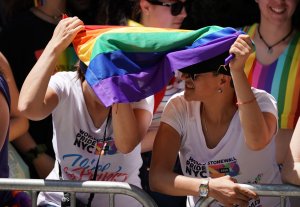

April 1 (UPI) — A new survey from the U.S. Census Bureau showed there were 1.4 million same-sex couple households in the United States in 2024, and female same-sex households outnumbered male.
The share of same-sex couple households increased to about 1% of all in 2024, and about 0.6% were married and 0.4% were unmarried households.
The latest release uses American Community Survey one-year estimates for 2005 to 2024, leaving out 2020 because of the effects of COVID-19.
The U.S. Supreme Court legalized same-sex marriage on June 26, 2015, though 37 states legalized it earlier. The first, Massachusetts, made it legal in 2004.
The increase in same-sex households was boosted by growth in married and unmarried couple households, the survey reported.
For example, in 2024 there were about 836,000 married same-sex couple households, up from about 392,000 in 2005. Unmarried same-sex couple households had a more modest increase, from about 385,000 to 551,000.
Estimates of married and unmarried same-sex couple households in 2005 were not significantly different from one another.
The number of married and unmarried female same-sex couple households grew more dramatically during this time, which flipped the gender ratio. In 2005, there were more male same-sex households.
Since 2005, female same-sex married couple households more than doubled from about 178,000 in 2005 to about 450,000 in 2024. Male same-sex married couple households grew from around 214,000 to about 386,000.
Those in same-sex marriages were younger on average (49) than those in opposite-sex marriages (53.2), but older on average than those in same-sex unmarried (40.6) and opposite-sex unmarried (40.1) couple households.
Both partners in married same sex-couple households (60.8%) were more likely than those in married opposite-sex couple households (49.8%) to be employed.
The median annual household income of female same-sex couples ($108,500) was less than of male same-sex couples ($140,500). Yet the share of female same-sex (64.2%) and male same-sex (64.7%) couple households with both partners employed were similar.
Both partners had at least a bachelor’s degree in a larger percentage of same-sex (32.5%) than opposite-sex (19.1%) unmarried couple households.
A larger percent of same-sex (31.3%) than opposite-sex (19.5%) married couple households were interracial.
Washington, D.C., (3.2%) had the highest percentage of same-sex couple households of any state or state equivalent.
The ACS doesn’t identify all couples living together because it only collects information about each household member’s relationship to the householder, instead of about the relationships among all household members.
COMMENTS
Please let us know if you're having issues with commenting.