U.S. Business Continues to Boom as Factory Activity Surges
“US business continues to boom,” said Chris Williamson, chief business economist at S&P Global Market Intelligence
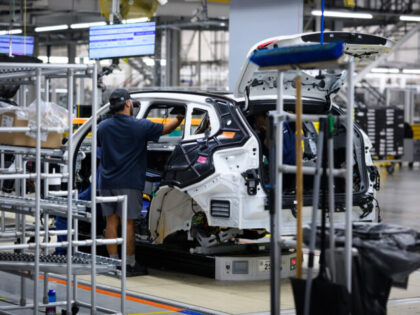
“US business continues to boom,” said Chris Williamson, chief business economist at S&P Global Market Intelligence
Growth in business activity in the U.S. accelerated for the third consecutive month in June, boosted by strong growth in demand and output in the manufacturing sector. S&P Global said its flash composite purchasing managers index rose to a five-month

New orders and output measures rose sharply in May.
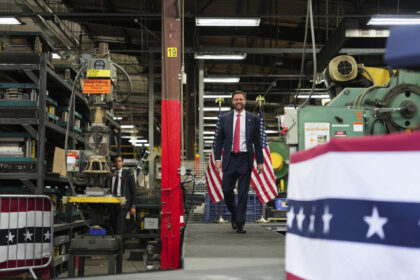
A closely watched gauge of Midwest business activity posted one of its largest monthly gains on record, suggesting that U.S. economic growth accelerated this spring.

U.S. business activity growth slowed to its weakest pace in nearly a year in March as the war with Iran sent energy prices surging and rattled consumer and business confidence, according to a closely watched survey released Tuesday.

The American services sector roared ahead in February at its fastest pace in more than three years, blowing past every Wall Street forecast while inflationary pressures eased to their lowest level in nearly a year. The Institute for Supply Management’s

American manufacturing roared back to life in January, posting its strongest performance in nearly four years and ending more than two years of persistent contraction.

U.S. manufacturing surveys released Monday showed welcome signs of easing inflationary pressures, with both major purchasing managers’ indexes reporting slower rates of price increases in October—a potentially encouraging signal for Federal Reserve policymakers as official government economic data remains unavailable
The September purchasing managers’ indexes from S&P Global showed companies in manufacturing and services reported sharply higher input costs, which they primarily attributed to tariffs. But weak demand and fierce competition prevented most from raising prices, leading to the weakest goods inflation since January.

U.S. manufacturing activity picked up sharply in August, according to a pair of surveys released Tuesday, offering mixed but cautiously encouraging signals for the industrial economy as new orders returned to growth and output surged.
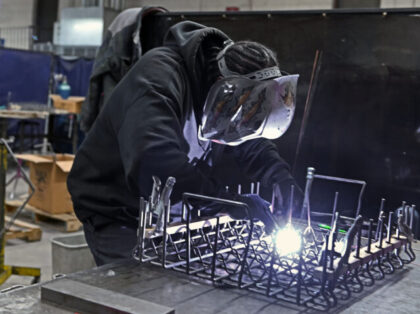
America’s factories are humming, demand is solid, and prices are rising alongside precautionary inventories. The Fed’s theory inflation “lag theory” doesn’t explain this.
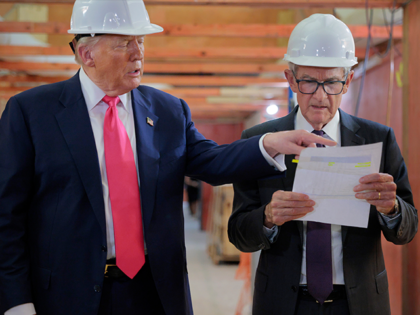
U.S. manufacturing expanded in August at the fastest pace in more than three years, lifting overall business activity to its strongest level of 2025, according to S&P Global’s flash purchasing managers indexes.
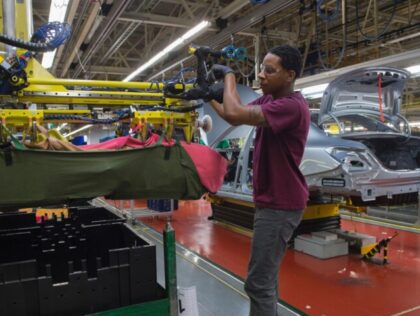
The S&P Global US Manufacturing Purchasing Managers’ Index (PMI), a closely watched gauge of economic activity, climbed to 52.9 in June from 52.0 in May.

U.S. manufacturing activity sent conflicting signals in May, as two closely watched surveys diverged on the state of the industrial economy. The Institute for Supply Management’s (ISM) manufacturing index fell to 48.5, below the neutral 50 mark and under expectations
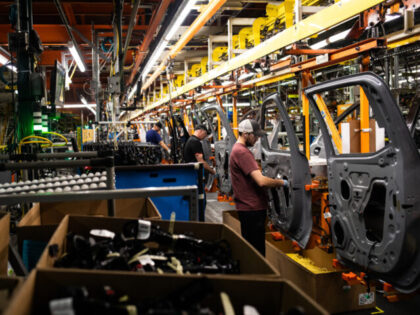
The upturn in activity suggests the economy is more resilient to tariffs and market volatility than many analysts believed.
U.S. economic growth accelerated in March, driven by a strong rebound in the services sector that more than offset a renewed decline in manufacturing.
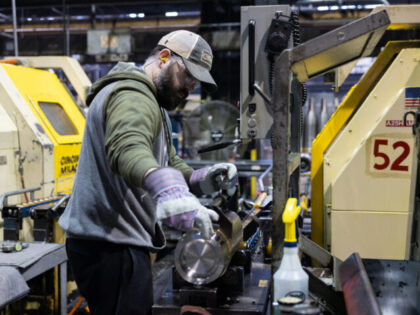
S&P Global PMI Shows Strongest Growth Since 2022, While ISM Reports Weaker Demand
The latest S&P Global Flash U.S. Manufacturing PMI rose to 50.1 in January, inching above the threshold that separates expansion from contraction. This marks a significant turnaround for an industry battered by months of declining demand and production setbacks.
Inflationary pressures, however, are heating up again.

The Institute for Supply Management’s latest survey shows manufacturing slumped for the 8th straight month in August.
Businesses stay optimistic as inflation stubbornly persists and Fed keeps rates high.

The US economic upturn lost momentum at the start of the second quarter and employment contracted in the services sector, a survey from S&P Global showed.

After 16 months in contraction, the ISM manufacturing survey unexpectedly popped into positive territory.

“Firms are consequently investing in more staff and more equipment, laying the foundations of further production gains in the coming months to hopefully drive a stronger and more sustainable recovery of the manufacturing economy,” S&P Global’s economist said.
The economy appears to be growing much faster than the Fed expected, casting rate cuts into doubt.

The growth of the U.S. economy appeared to accelerate in October, with both the services and manufacturing sides of the economy growing, an early read of S&P Global surveys of businesses showed Tuesday. The S&P “flash” services-sector index rose to

Manufacturing remains in contraction, although the pace of the decline has eased. Services came closer to the threshold indicating a decline in activity.

The U.S. economy slouched toward stagnation in August, expanding at its weakest pace in six months, a key survey of business leaders indicated Wednesday. The S&P Global flash composite output index—a preliminary reading of survey results that combines both the services

Growth is slowing in services and manufacturing remains in a slump. Inflation is proving to be a “sticky” concern.

You could not wish for a better illustration of how hard it is to read the economic signals these days than the dueling services sector purchasing managers indexes released on Monday.
This is not the slowdown Jay Powell was looking for.

Another “no landing” report.

S&P Global’s survey indicates a second consecutive month of contraction.
S&P Global’s flash composite PMI indicates contraction for the fourth straight month.

Dueling surveys paint different pictures of demand and production.
S&P Global’s PMI indicates a second month of contraction driven by a steep drop in services sector demand.

“The rising cost of living is the most commonly cited cause of lower sales, as well as the worsening economic outlook,” said economist Chris Williamson.

A worrying deterioration in the economy

The economy is on a path to contracting in the third quarter, according to the chief business economist at SP Global Market Intelligence.
The S&P Global Manufacturing PMI comes in lower than expected as inflation drags down optimism and shortages weigh on production.