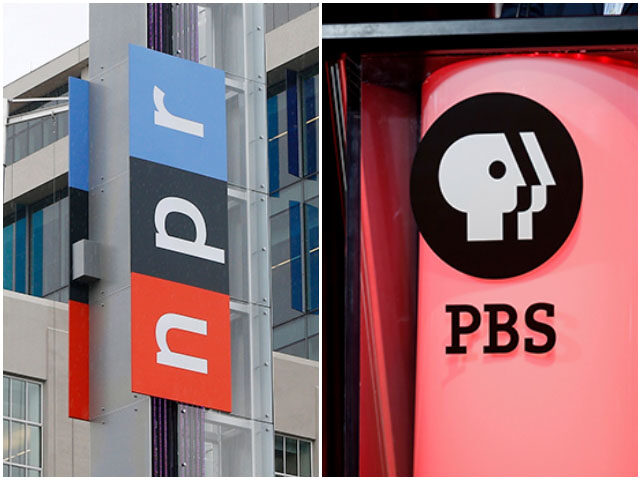

Public radio and TV stations have survived after losing their $535 million in annual funding taxpayer welfare.
Yes, what we have here is another corporate media hoax debunked by reality. Media experts assured us that “the operations of 79 public radio and 33 television stations across 34 states and territories are at imminent danger of going dark if the Senate goes along with a House measure to claw back $1.1 billion in money already appropriated for fiscal years 2026 and 2027.”
Destruction, death, civil wars, pestilence, locusts, and genocide would soon follow:
“Nearly 13 million Americans live in communities under threat of losing their local public broadcast stations. What’s worse, these stations serve large swaths of the Western, Midwestern, and Southeastern U.S. at risk of wildfires, tornadoes, hurricanes, and other public safety emergencies,” the report says. “This double threat casts uncertainty on the ability of these stations to disseminate emergency alerts and information to residents when they need it most.”
This nonsense was everywhere:
- The far-left AP: “NPR stations targeted for cuts by Trump have provided lifelines to listeners during disasters”
- Far-left CNN: “Trump’s victory over PBS and NPR ‘bias’ will be ‘devastating’ for rural areas, station leaders say”
- The far-left Hill: “Rural stations hit hardest by Trump’s ‘life or death’ public media cuts”
- The far-left Politico: “‘Catastrophic’: Rural public media stations brace for GOP cuts”
Hoax, hoax, hoax, hoax, hoax…
Lie, lie, lie, lie, lie…
The reality six months later is what all Normal People expected:
But six months after the funding cuts, few public TV or radio stations have closed their doors. Many have scraped together a patchwork of funding from concerned donors, philanthropies or government grants. Others, facing insurmountable budget issues, have resorted to mergers with bigger stations to stay online. NPR and PBS have not gone anywhere.
In fact, the country’s public media system — more than 1,000 radio and TV stations, serving millions of people — remains largely intact, despite the disappearance of the Corporation for Public Broadcasting.
The first media hoax was this ludicrous narrative about how rural America wouldn’t know if a hurricane or tornado or blizzard was enroute without their precious NPR or PBS station; as though it’s 1938 and the hicks are without Internet, cable TV, and satellite radio and TV.
The second media hoax was the idea that public radio and TV couldn’t survive without all this welfare money.
According to this report, guess what happened? These public TV and radio outlets were forced to behave like everyone else who doesn’t depend on government handouts. Meaning, they cut their budgets, solicited donations from people who want their service, merged with other stations, laid people off, tapped cash reserves, and the greedy motherships at NPR and PBS reduced their affiliate fees.
Hey, welcome to the real world, where your business must conform to the marketplace for the product you provide.
The only loss here — which was no loss whatsoever — was the Corporation for Public Broadcasting (CPB), an entity that was nothing more than a clearinghouse for that $535 million annual welfare check from the federal government. According to this report, the CPB took over $50 million of that $535 million to distribute that welfare check.
What a racket, all of it paid for with our tax dollars.
The CPB closed operations a few weeks ago.
Tee hee.
John Nolte’s first and last novel, Borrowed Time, is winning five-star raves from everyday readers. You can read an excerpt here and an in-depth review here. Also available in hardcover and on Kindle and Audiobook.
COMMENTS
Please let us know if you're having issues with commenting.