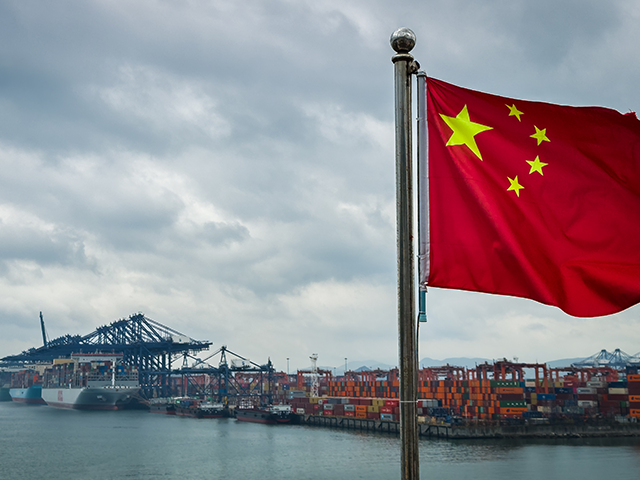

Working families paid for America’s addiction to Chinese supply chains. They paid in shuttered factories, lost wages, and empty store shelves during a pandemic that exposed the fragility of the arrangement. President Trump was right to identify and name the problem. Now corporate America needs to address the issue, not circumvent it.
For years, political leaders in both parties let American industry hollow itself out. Manufacturing capacity was offshored to China. Strategic industries eagerly followed the cheap labor honey trap. American workers lost leverage too. Families grew more vulnerable to economic shocks they had no power to prevent. The COVID pandemic did not create that fragility, rather it exposed the depth of the problem.
The numbers tell a complicated story. In 2025, U.S. goods imports from China dropped to $308 billion, down nearly 30 percent from 2024. That is real progress, but context matters. That progress was produced by the Trump administration’s tariff policies. China still controls approximately 90 percent of the world’s rare earth processing capacity. Fifty-six percent of our battery imports came from China. A drop in import volume is not the same as dismantling dependency. The real question is whether that movement will remain long-term if the tariffs are removed.
President Trump’s manufacturing agenda recognized this reality. His administration pushed corporations to rethink decades of offshoring and over-dependence on geopolitical rivals. He changed the national debate in a meaningful way. Today, leaders across the political spectrum openly acknowledge the importance of industrial resilience and domestic production. Where the rubber meets the road, however, is follow-through.
Reuters recently reported that General Motors will begin assembling the Chevrolet Groove and Aveo in Mexico rather than importing them directly from China. Sounds like progress, but it’s not. Reuters also reported that GM will continue producing parts for those vehicles in China. Moving final assembly across a border while preserving the underlying Chinese supply chain is not de-risking. It’s simply concealing the problem.
Apple is doing the same thing. Tim Cook has said most iPhones sold in the United States will soon come from India. That’s a nice line, but it’s divorced from reality. An independent analysis from the American Enterprise Institute found that around half of Apple’s manufacturing locations remain in China, and Chinese suppliers account for roughly 40 percent of Apple’s total supplier base. Moving final assembly to India does not change that reality. Apple’s Chinese suppliers are not being replaced. They are being rebranded as partners in a global supply chain that still runs through Beijing.
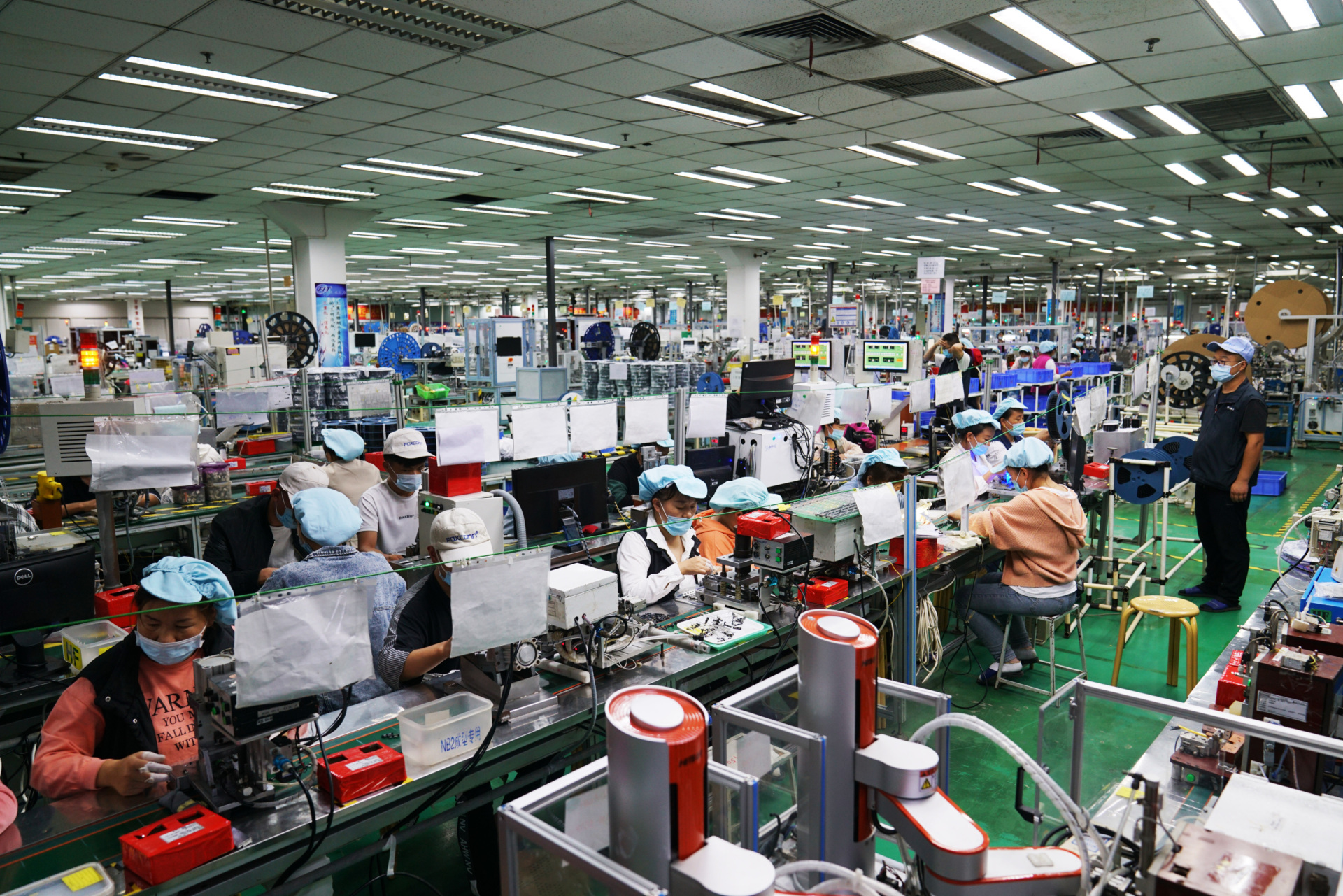
Employee work at a Foxconn factory on September 4, 2021, in Zhongmu County, Zhengzhou City, Henan Province of China. (VCG/VCG via Getty Images)
GM is moving the car. Apple is moving the final step. But dependency on the China honey trap remains.
C-suite executives across corporate America have become fluent in “supply-chain resilience” linguistics. Consumers, government officials, and others like to hear it. However, the economic structure underneath the talking points has largely stayed the same though.
That is the gap between language and reality that Americans are increasingly unwilling to accept.
Supply chains are not an abstract policy issue. They are a kitchen-table issue. When critical manufacturing concentrates overseas, the United States loses economic and geopolitical leverage. When supply chains are vulnerable, families pay the price through higher costs, product shortages, and inflationary pressure. China does not have to fire a single shot to damage the American economy. It just has to stop shipping. American prosperity means onshoring manufacturing here at home.
At the Coalition for Affordability and Prosperity, we believe economic strength and national resilience are intertwined. Policies that rebuild American manufacturing, secure critical supply chains, and reduce dependence on China will produce a stronger economy for working families. That means holding corporations accountable for the gap between their PR and their actual supply chain decisions. Accountability without structural change is just another press release. Americans can see through the smoke and mirrors, so the work starts now.
The American people have heard enough slogans.
Chuck Flint is the Executive Director of the Coalition for Affordability and Prosperity and a former U.S. Senate Chief of Staff.
COMMENTS
Please let us know if you're having issues with commenting.