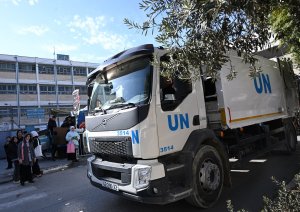

Dec. 29 (UPI) — The United States has pledged to contribute $2 billion to U.N. humanitarian efforts, slashing its funding to about one-fifth of its average annual financial commitment over the past decade, the U.S. State Department announced Monday.
The memorandum of understanding makes good on President Donald Trump’s promises to dramatically reduce the amount of the United States’ foreign aid and save taxpayers’ money.
“The United States remains the most generous nation in the world for lifesaving humanitarian assistance — but under @POTUS’s leadership taxpayer dollars will never fund waste, anti-Americanism, or inefficiency,” Secretary of State Marco Rubio said in a post on X.
“This new model will better share the burden of U.N. humanitarian work with other developed countries and will require the U.N. to cut bloat, remove duplication, and commit to powerful new impact, accountability and oversight mechanisms.”
In addition to reducing funding, the agreement narrows what countries and projects benefit from the U.S. aid. The $2 billion will go into a fund administered by the U.N. Office for the Coordination of Humanitarian Affairs. Among the areas not receiving any of the U.S. funding are Gaza, Yemen and Afghanistan.
“These agreements will focus funding on hyper-prioritized life-saving activities; provide for powerful new impact, accountability, and oversight mechanisms; enhance the efficiency and flexibility of humanitarian operations; and better share the burden of humanitarian work across major donors,” a release from the U.S. State Department said.
Tom Fletcher, the U.N. under-secretary-general for Humanitarian Affairs and coordinator for Emergency Relief, offered his thanks to the United States for the commitment as “a powerful act of leadership and generosity that will help save millions of lives.”
“At a moment of immense global strain, the United States is demonstrating that it is a humanitarian superpower, offering hope to people who have lost everything.”
The newly announced funding, though, is a dramatic decrease from annual U.S. contributions over the past decade — from $6.5 billion in 2017 to a high of $17.25 billion in 2022. The average yearly contribution over the decade ending in 2024 was around $10 billion, five times the size of the funding announced Monday, according to data on the OCHA’s Financial Tracking Service.
This reduction in U.S. aid comes weeks after the United Nations launched an appeal to raise $33 billion to support operations for 2026. OCHA said the total would provide aid to 135 million people in 23 countries, and six projects serving refugees and migrants.
“The highly prioritized appeal follows a year when humanitarian lifelines strained and, in some places, snapped due to brutal funding cuts,” a release from the OCHA on Dec. 7 said.
“Funding for the appeal in 2025 — $12 billion — was the lowest in a decade and humanitarians reached 25 million less people than in 2024. The consequences were immediate: Hunger surged, health systems came under crushing strain, education fell away, mine clearance stalled and families faced blow after blow: no shelter, no cash assistance, no protection services.”
COMMENTS
Please let us know if you're having issues with commenting.