Google Accuses China-Linked Hackers of Targeting Diplomats in Asia
Google reports that a “complex, multifaceted campaign” by hackers linked to the Chinese government is targeting diplomats in Asia.
Google reports that a “complex, multifaceted campaign” by hackers linked to the Chinese government is targeting diplomats in Asia.
During an interview with “PBS NewsHour” aired on Monday, White House National Security Adviser Jake Sullivan responded to questions on if the Chinese cyberespionage campaign that successfully compromised multiple networks and illicitly obtained information still has access to those companies by

The U.S. Department of Justice (DOJ) on Thursday unsealed an indictment of five Russian intelligence officers, plus one Russian civilian, for conducting the “WhisperGate” cyberattack on Ukrainian infrastructure in January 2022. The case is largely symbolic but offers an interesting look at what the FBI described as “the first shot of the war.”
Reports from the U.S. and New Zealand warn that China is waging complex campaigns to interfere with foreign politics online.

A cybersecurity team called the Insikt Group found that Chinese hackers intensified their attacks on Taiwan during its presidential election.
A bipartisan group of U.S. senators sent a letter to President Joe Biden on Tuesday urging the expulsion of 300 Russian diplomats if Russia does not issue more visas for American diplomatic personnel in Russia.
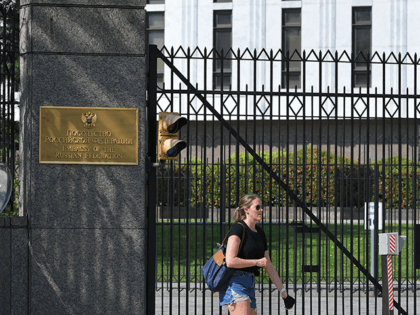
The U.S. State Department announced on Wednesday that Deputy Secretary of State Wendy Sherman will visit China on July 25 and 26.

Japanese Chief Cabinet Secretary Kato Katsunobu announced Tuesday that a hacking group known as APT40 attacked several Japanese companies and is “highly likely” to be an instrument of the Chinese government.
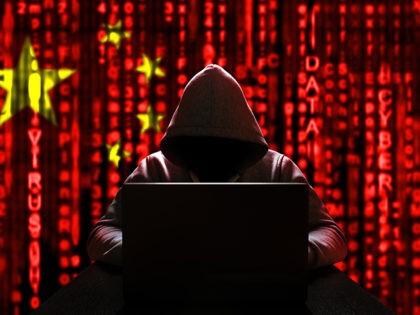
A Friday report from Bloomberg News revealed China was able to spy on American computer systems for a decade by supplying compromised chips to Super Micro Computer Inc. (Supermicro), one of America’s leading motherboard providers.

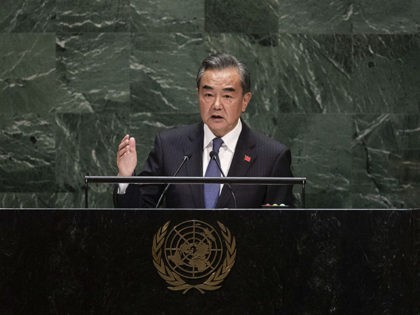
Speaking to a symposium on international relations in Beijing on Friday, Chinese Foreign Minister Wang Yi denounced “virus politicization” — other countries holding China responsible for the spread of the Wuhan coronavirus— and said China wants to “open a dialogue with the US on an equal footing at all levels and in all fields for candid, in-depth, and constructive exchanges.”
The U.S. Department of Justice (DOJ) announced on Wednesday that charges have been filed against Hooman Heidarian and Mehdi Farhadi, two Iranian nationals in their 30s who allegedly carried out cyberattacks against private and public systems in the U.S., Europe, and Middle East — “sometimes at the behest of the government of the Islamic Republic of Iran.”
The Iranian Foreign Ministry announced on Tuesday that a Yahoo News report linking the Netherlands to a landmark 2007 cyberattack on Iran’s Natanz nuclear enrichment facility is being “carefully examined” and could lead to diplomatic action between the two countries.
China immediately denounced Tuesday’s unsealed U.S. indictment of ten Chinese agents for a five-year plot to steal aerospace technology as “sheer fiction and completely fabricated.”
Cybersecurity firm FireEye warned on Tuesday that Iranian hacking activity increased significantly after President Donald Trump withdrew the United States from the Iran nuclear deal. The firm tracked an especially vigorous “cyberespionage” effort against targets in the Middle East, U.S., and Japan through the month of July.
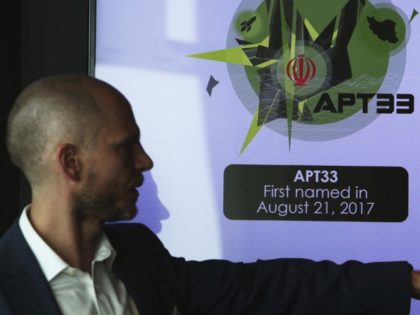
A report published on Thursday by the Foundation for Defense of Democracies warns Chinese cyber espionage is the “single greatest threat to U.S. technology,” siphoning over $300 billion per year from the U.S. economy.