

This morning’s key headlines from GenerationalDynamics.com:
- Japan deploys Patriot Missiles to counter North Korea’s planned rocket launch
- India’s navy prepares to confront China in South China Sea
- A ‘Coalition of the Willing’ is emerging against China
- European nations summon Israeli ambassadors over new settlement announcement
Japan deploys Patriot Missiles to counter North Korea’s planned rocket launch
North Korea says it will launch a long-range rocket in a southerlydirection sometime between December 10-22, between 7 am and noon.This will be the first new attempt following a humiliating failure inApril, where the rocket exploded shortly after launch. North Koreaclaims that the purpose of the launch is to test putting a satelliteinto orbit, but it’s believed to be a test of a long-range nuclearweapon delivery system. Because of the possibility that the rocketwill land on Japanese territory, Japan will position surface-to-airPatriot missiles on Okinawa and two other islands, all of which areunder the North Korean missile’s likely flight path. In addition,Aegis ships carrying interceptor missiles will be deployed. The Asahi Shimbun (Tokyo) and Yonhap (Seoul)
India’s navy prepares to confront China in South China Sea
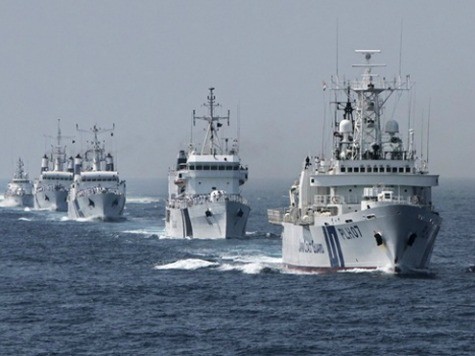
India’s nave is holding practice exercises to confront China’swarships in the South China Sea. Navy chief Admiral DK Joshi said onMonday that the Indian Navy was prepared to defend Indian assets inthe South China Sea:
Not that we expect to be in those waters veryfrequently, but when the requirement is there for situations wherethe country’s interests are involved, for example ONGC Videsh, wewill be required to go there and we are prepared forthat.
ONGC Videsh is an Indian energy firm that signed a deal in 2011 withVietnam to explore oil in three oil blocks in the South China Sea offthe coast of Vietnam. Oil has already started flowing from one ofthose blocks, despite the fact that China warned India earlier thisyear to refrain oil exploration in the Vietnamese blocks in order toensure “peace and stability” in the area. However, China hasannounced plans to board and seize foreign ships in the South ChinaSea starting in 2013 and has been conducting naval drills withwarships in preparation. The Indian navy has so far restricted itssphere of influence to the Indian Ocean region from the Gulf of Adento the Malacca Straits near Singapore. The navy chief’s statementcould mark a shift in that policy particularly with an assertiveChina. India Today
A ‘Coalition of the Willing’ is emerging against China
As we’ve been reporting, China’s neighbors have been expressingincreasing alarm over China’s recent moves to consolidate its takeoverof the entire South China Sea, including regions that historicallyhave belonged to other countries. In addition to announcing plans toboard and seize foreign ships entering the region, China has issuednew passports containing it’s “nine-dash map” that claims sovereigntyover the entire area. ( “2-Dec-12 World View — China’s neighbors express alarm over militant new South China Sea policy”)
In the wake of fury over China’s belligerent policies, an ad hocsecurity alliance is emerging among Japan, the Philippines, Vietnam,and other countries to block China’s assertive interventions throughdiplomacy or possibly by other means.
Japan is the only naval power in East Asia that can face off with theburgeoning naval power of the People’s Liberation Army.Japanese officials say Japan has been “building up ties with othernations that share worries about their imposing neighbor.”
Accordingto one Japanese official: “We want to build our own ‘coalition of the willing’in Asia to prevent China from just running over us.”
European nations summon Israeli ambassadors over new settlement announcement
Britain, France, Spain, Denmark and Sweden all summoned their Israeliambassadors on Monday to criticize Israel’s decision to buildthousands of new settlement homes in the West Bank. U.S. Secretary ofState Hillary Clinton called the it “a setback for peace,” whileBritain called the move “deplorable,” and said in a statement:
I also made clear that the strength of our reactionstems from our disappointment that the Israeli government has notheeded the calls that we and others had made for Israel to avoidreacting to the U.N. General Assembly resolution in a way thatundermines the Palestinian Authority or a return totalks.
Germany’s Chancellor Angela Merkel said her government is “worried”about Israel’s plans. Merkel is meeting with Israel’s prime ministerBenjamin Netanyahu in Berlin on Monday.
According to an Israeli official:
[Israel will] continue to stand up for its vitalinterests even in the face of international pressure.
The Palestinian unilateral move at the UN is a blatant andfundamental violation of agreements to which the internationalcommunity was a guarantor. No one should be surprised that Israelis not sitting with its arms folded in response to the unilateralPalestinian steps.
Jerusalem Post and CNN
Permanent web link to this article
Receive daily World View columns by e-mail
COMMENTS
Please let us know if you're having issues with commenting.