Trump Announces Trade Deal with Vietnam: 20% Tariff on Vietnam, Zero on U.S.
Vietnam runs a very large trade surplus with the U.S. and a trade deficit with China, essentially recycling dollars from the U.S. into China.

Vietnam runs a very large trade surplus with the U.S. and a trade deficit with China, essentially recycling dollars from the U.S. into China.

The ADP report was expected to show a gain of 100,000. Instead, it showed a sharp contraction in employment for June.

It’s been a good start to the year for Breitbart Business Digest.

Andy Jassy, Amazon’s chief executive, said Monday that newly enacted tariffs on Chinese goods have not led to meaningful price increases on the company’s platform, joining a growing body of evidence suggesting that recent trade measures have not produced the

The S&P Global US Manufacturing Purchasing Managers’ Index (PMI), a closely watched gauge of economic activity, climbed to 52.9 in June from 52.0 in May.

U.S. job openings rose more than expected in May, led by strong demand in the private sector, even as federal job postings and hires fell sharply.

The Home Depot–GMS deal shows us that forward-looking firms are planning for a world where labor is scarce, immigration is limited, and scale is king.

Texas business leaders say prolonged economic policy uncertainty and high interest rates are weighing heavily on investment, hiring, and overall growth, according to the latest Texas Business Outlook Surveys released by the Federal Reserve Bank of Dallas. More than 300

Businesses will be able to immediately deduct 100 percent of the cost of new “qualified production property,” including newly built American factories.

The Supreme Court’s decision on Friday in FCC v. Consumers’ Research didn’t just preserve a telecom subsidy—it delivered a serious setback to efforts to dismantle President Trump’s trade agenda.

Inflation is down, wages are up, and the stock market is hitting record highs.

The Federal Reserve’s preferred inflation gauges showed underlying price pressures easing in May, reinforcing the case for interest rate cuts later this year as price growth continues to drift downward. The Personal Consumption Expenditures (PCE) price index, released Friday by

The Index of Consumer Sentiment climbed to 60.7, up from 52.2 in May, a 16.3 percent increase.

Wages and salaries rose 0.4 percent in May, extending a run of solid monthly gains and continuing to outpace inflation, according to Commerce Department data released Friday. With core consumer prices rising just 0.2 percent last month, the latest wage

Durable goods prices—the category most directly exposed to international trade—were flat month-over-month, showing zero growth after a 0.5 percent gain in April.

The federal government has decided that your crypto portfolio—your Bitcoin, your Ethereum, your lingering Dogecoin bag—can help you qualify for a mortgage.

GDP shrinks 0.5% on downward revisions to consumer demand and government spending.

New orders for durable goods rose sharply in May, propelled by a surge in aircraft contracts and a broader rebound in business investment. Orders for long-lasting manufactured goods increased 16.4 percent from the prior month to a seasonally adjusted $343.6

Fed Chair Jerome Powell’s belief that tariffs will push prices higher might be based on a new working paper from the Boston Fed that relies on a flawed model.

High interest rates are increasingly a drag on the housing market.

The Fed chair once warned against using speculative forecasts to drive policy. Now he’s doing exactly that.

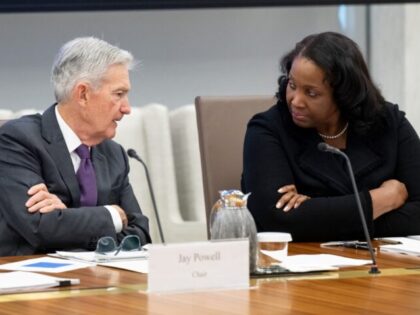
Fed chair tells lawmakers inflation could rise again due to Trump’s tariffs, keeping rate cuts on hold for now.

Oil prices sunk more than three percent early Tuesday morning.

For much of this year, the Federal Reserve has held interest rates steady after a series of cuts in late 2024. But that fragile consensus may be breaking.

Bowman’s comments come just days after Fed Governor Christopher Waller also said he could support a July cut. T

Oil prices fell around one percent Monday morning.

Despite the geopolitical shock, the modest scale of the rally suggested traders were not yet pricing in a prolonged disruption to global supply—or doubted that Iran would escalate in a way that threatens oil flows.

President Trump has a rare opportunity to break the cycle of the Fed’s bureaucratic groupthink. Here are three decisive moves he can make.

Federal Reserve Governor Christopher Waller said Friday that the central bank could begin lowering interest rates as soon as next month, arguing that inflation has cooled and that policymakers should not wait for the labor market to weaken before acting.

or years, critics have warned that presidential use of tariff authority threatens the separation of powers.

“TOO LATE’s an American Disgrace!” Trump wrote.

The Federal Reserve announced definitively on Wednesday that President Trump’s tariff policies are forcing a more aggressive stance on inflation.

The Fed says it expects tariffs will trigger higher inflation later this year.

The President joked that maybe he should appoint himself to the Fed.

Housing starts declined 9.8 percent in May to the slowest pace since the pandemic-striken June 2020.

Retail sales fell in May, but beneath the surface, the picture of the American consumer remains solid—and in many categories, unexpectedly strong.

U.S. business inventories were unchanged in May while sales dipped slightly, according to data released Tuesday by the Census Bureau. The figures suggest that the recent expansion of tariffs has not produced significant economic disruption, with firms showing no signs

U.S. manufacturing output rose slightly in May, lifted by strong gains in business equipment and motor vehicle production, even as other parts of the industrial economy remained weak. The Federal Reserve reported Tuesday that manufacturing output increased 0.1 percent last

Pre-tariff measures show subdued cost pressures despite trade tensions.

A closer look at the data shows continued strength in several core spending categories, underscoring the unusual dynamics created by shifting tariffs, falling inflation, and front-loaded demand earlier in the spring.