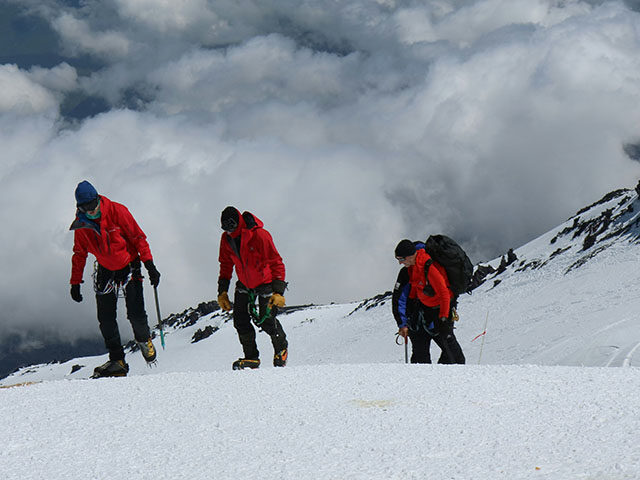

Even Mount Everest is not immune from fraudsters as a new report has revealed that guides have been using scare tactics, including secretly lacing climbers’ food to sicken them and trigger costly helicopter rescues and hospitalization, as part of a $45 million insurance scam.
Authorities in Nepal recently charged 32 individuals with organized crime and fraud charges related to the plot, which involves trekking company owners, helicopter operators, and hospital executives, the Kathmandu Post reported Friday.
Essentially, the scam involves filing insurance claims that bared little resemblance to what actually happened on the slope.
Corrupt guides used several methods in the rescue racket to manufacture a “medical emergency” during tourists trips to the mountain’s higher elevations, according to the Nepal Police’s Central Investigation Bureau (CIB).
The first involves tourists who show reluctance to walk back after an Everest base camp trek, which can take up to two weeks. Guides suggest the tourist pretend to be sick and a helicopter will come, according to CIB investigators.
The second method was described in the Post as “more troubling.”
According to the Nepal newspaper:
At altitudes above 3,000 metres, mild symptoms of altitude sickness are common. Blood oxygen saturation can drop, hands and feet tingle, headaches develop. In most cases, rest, hydration or a gradual descent is all that is needed. But guides and hotel staff, according to the CIB investigation, have been trained to terrify trekkers at precisely this moment. They tell them they are at risk of dying, that only immediate evacuation will save them.
Guides also improperly administered an altitude sickness pill and excessive water “to induce the very symptoms that would justify a rescue call.” In one case, investigators found that baking powder was mixed into food to make tourists sick.
Insurance companies were then billed with fake claims of a $12,000 helicopter flight. Those and other fraudulent gains were then allegedly split among the guides, helicopter companies, trekking agencies, and the hospitals where the tourists were taken for fake treatments, the New York Post reported.
The CIB investigation began earlier this year, first resulting in the arrest of six executives from three prominent mountain rescue firms.
The amount of alleged fraudulent profits by hospitals and the rescue firms exceeds $45 million.
According to the Katmandu Post:
Between 2022 and 2025, investigators identified 4,782 foreign patients treated across the implicated hospitals. Of these, 171 cases were confirmed as fake rescues. Over that period, Era International Hospital received deposits of more than $15.87 million linked to these activities. Shreedhi International Hospital received over $1.22 million.
Among rescue operators, Mountain Rescue Service conducted 171 fraudulent rescues out of 1,248 total charter flights, claiming approximately $10.31 million from insurers. Nepal Charter Service carried out 75 fake rescues from 471 flights, claiming $8.2 million. Everest Experience and Assistance was linked to 71 suspicious rescues from 601 flights, with insurance claims totalling $11.04 million.
Many scandals have plagued Nepal’s tourism industry, which supports directly and indirectly more than 1 million jobs.
In 2018, investigative reporters for the Katmandu Post first exposed the fake rescue scams. As a result, the Nepalese government announced reforms including eliminating all “intermediaries” in arranging emergency evacuations.
Last year, the CIB reopened their investigation and found that the fraud did not stop.
“Instead, it was growing,” the Katmandu Post reported Friday.
Contributor Lowell Cauffiel is the best-selling author of the Los Angeles crime novel Below the Line and nine other crime novels and nonfiction titles. See lowellcauffiel.com for more.
COMMENTS
Please let us know if you're having issues with commenting.