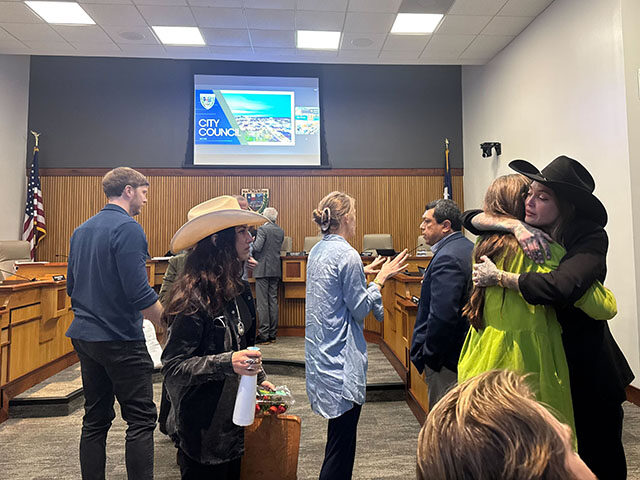

SAN ANTONIO, Texas — After more than eight hours of public testimony in front of the San Marcos City Council, city residents celebrated a 5-2 vote by the council denying zoning changes that would allow for the construction of a large data center near the city. Citizens opposed to the plan erupted in applause as the results of the vote were announced shortly after 2:00 a.m. Wednesday.
The council meeting vote was broadcast on YouTube by the city of San Marcos and shows the several hours of testimony regarding the zoning request, which would have allowed the project to proceed. The developer of the project can submit another re-zoning request in six months to have the matter reconsidered.
According to a report by Data Center Dynamics (DCD), the proposal for the rezoning of approximately 200 acres was submitted by law firm Armbrust & Brown on behalf of Highlander SM One LLC, the landowners of the property, which is situated between Grant Harris Road and Francis Harris Lane just outside the city. San Marcos is nestled between San Antonio to the south and the Texas capital city of Austin to the north.
According to DCD, the proposers indicated the data center would consume up to 75,000 gallons of water per day to sustain a closed-loop cooling system. Energy usage details involved in the project were not specified. The amount of water used daily would be the equivalent of one percent of the total water usage for the city of San Marcos.
More than 4,000 residents of the city participated in an online petition, asking public officials to reject proposals for the project out of concern for water resources needed to support the data center. The petition cited the concern with natural resources and energy usage, saying, “At present, neither federal authorities, the State of Texas, or local elected and appointed officials have adopted comprehensive policies to adequately monitor, regulate, or mitigate the rapid development of large-scale data centers, despite their significant impacts on water resources, land use, utility costs, and community health.”
The placement of data centers on agricultural land is considered by some to be a threat to food production. In January, Commissioner Sid Miller of the Texas Department of Agriculture called upon state and federal legislators to protect Texas ranchlands from the impacts of data centers.
Miller unveiled a plan to steer the installation of large data centers needed by organizations and businesses to house critical computing equipment to collect, process, store, and distribute data to land not suitable for agricultural production. Miller is not opposed to the data centers but is concerned with the impact they have on the food supply, saying, “The unchecked spread of data centers onto prime farm and ranchland is a real and growing threat to our food supply, but America also needs data, innovation, and technology infrastructure to stay competitive. America will continue to lead the world in both agricultural production and technology innovation, but only if we do it the right way.”
Randy Clark is a 32-year veteran of the United States Border Patrol. Before his retirement, he served as the Division Chief for Law Enforcement Operations, directing operations for nine Border Patrol Stations within the Del Rio, Texas, Sector. Follow him on X (formerly Twitter) @RandyClarkBBTX.
COMMENTS
Please let us know if you're having issues with commenting.