
The Christian population of southern Lebanon could be able to return to their homes following the U.S.-brokered ceasefire agreement with Israel that took effect on Friday, but it remains to be seen how many will do so given the scale of destruction from the conflict between Israel and Hezbollah.
President Donald Trump announced on Thursday that Israel and the Lebanese government, represented by Prime Minister Benjamin Netanyahu and President Joseph Aoun respectively, had agreed to a ten-day ceasefire “in order to achieve peace between their countries.”
To that end, Trump said he would invite Netanyahu and Aoun to the White House for more intensive discussions. Notably absent from the talks was Hezbollah, the Iran-backed Shiite Muslim extremist party that dragged Lebanon into war by launching rocket attacks against Israel in March.
The peace talks between Netanyahu and Aoun were unquestionably historic. Lebanon has technically remained at war with Israel since 1948 and, until this week, the two nations have not held direct talks for 33 years. A great amount of this perpetual tension is caused by Hezbollah chronically launching terrorist attacks against Israel with Iran’s support and direction.
Some observers were astonished to see a major Lebanese TV station broadcasting on Tuesday from a set that included both the Lebanese and Israeli flags — a sight that would have been all but unthinkable until now. And yet, there are lingering fears that Hezbollah could (literally) blow up this budding rapprochement and it would seem to have every reason to do so, as its masters in Tehran loathe the idea of Israel and Lebanon becoming peaceful good neighbors.
As the Jerusalem Post pointed out on Friday, it may be wonderful to see Netanyahu speaking directly with Aoun to chart a course toward peace, but Aoun’s administration is not the party Israel has a problem with. There are signs that Hezbollah remains more powerful than the elected government of Lebanon. For one thing, Aoun’s government declared Iranian Ambassador Mohammad Reza Sheibani persona non grata and evicted him from Lebanon on March 24, but he is still there.
“Symbolism is not substance, and symbols do not bring quiet and normalcy to residents of the North,” the Jerusalem Post argued, referring to the citizens of northern Israel who suffer from Hezbollah’s bombardments. “The more honest way to understand what unfolded this week is not as a breakthrough, but as the opening of a narrow and uncertain window, perched somewhere between the truly historic and the illusory.”
The difference between history and illusion is a matter of life and death for the displaced Christians of southern Lebanon. Lebanese officials say over 2,000 people have been killed by Israeli bombardments since the beginning of March, a figure that includes Hezbollah fighters, and over a million people have been displaced from their homes.
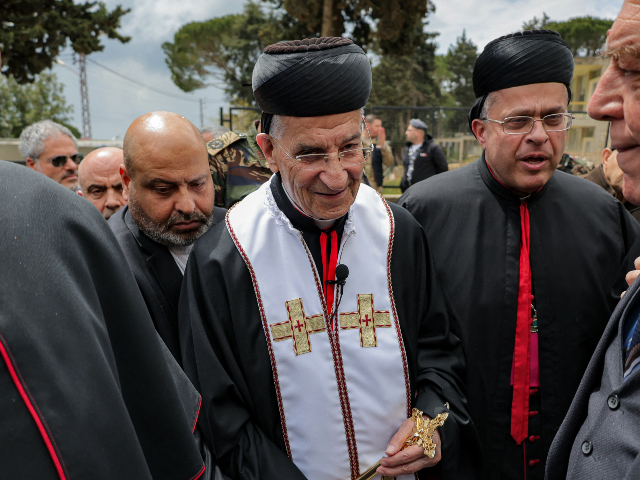
The patriarch of the Maronite Catholic Church, Cardinal Bechara Rai, condemned both Hezbollah and Israel for the death and destruction in his Easter homily.
“The country is going through a critical situation due to Iranian interference through Hezbollah and Israeli aggression. Our hearts bleed for the victims of the conflict imposed on Lebanon,” the cardinal said.
Lebanon’s population is about one-third Christian and many of them feel they have been punished by a war they have no part in. Their apprehension is shared by the many other faiths and ethnicities in Lebanon who have been pushed to the sidelines by Hezbollah’s belligerence and lust for power.
In late March, the government in Beirut canceled plans to build a large refugee center for southern Lebanese who were displaced by the Israel-Hezbollah war. Opposition to the center came largely from Christians in Beirut, who feared the occupants of the new facility would be mostly Shiite Muslims — a shift in the capital city’s demographics that could spark a new round of sectarian conflict, perhaps even a new civil war.
Christian groups argue that Israel’s strikes against Hezbollah have been more destructive than necessary and some have targeted villages where the Israeli military knows the Christian residents refused to evacuate.
“Towns and villages in which Christians live in south Lebanon have also been violently attacked without any warning. Israel has bombed areas that have nothing to do with Hezbollah,” charged Michel Constantin, regional director for the Catholic Near East Welfare Association-Pontifical Mission in Lebanon and Syria.
The Israel Defense Forces (IDF) generally respond to such criticism by pointing out that Hezbollah operatives have a penchant for taking shelter in Christian villages, and even positioning weapons nearby, using the villagers as human shields.
Netanyahu said on Friday that “dismantling” Hezbollah remains Israel’s objective and it “will not be achieved tomorrow,” but the long road to peace with Lebanon has nevertheless begun.
“We are giving an opportunity to advance a combined diplomatic and military solution with the Lebanese government,” he said.
“I will say honestly, we have not yet finished the job. There are things we plan to do regarding the remaining rocket threat and the drone threat, which I will not detail,” he added.
President Trump, however, said in a Truth Social post on Friday that Israel “will not be bombing Lebanon any longer,” and have been “prohibited from doing so by the USA.”
“Enough is enough!!!” Trump exclaimed. In a separate post, he promised to help “make Lebanon great again.”
The BBC on Friday found some Israelis, especially those living within rocket range of southern Lebanon, were disappointed by the seemingly premature end of what was billed as a no-holds-barred campaign to remove the Hezbollah threat once and for all.
“We gave the Lebanese government a chance and they failed to uphold the agreement. They didn’t disarm Hezbollah. If we don’t do it, no one will. It’s a shame they stopped. It seemed like there were significant achievements this time,” said one disappointed Israeli.
The BBC’s sources in Israel said the ceasefire agreement was pushed through in a rush under heavy pressure from Trump, with little opportunity for the Israeli parliament or military commanders to weigh in.
“A pattern has developed in which ceasefires are imposed upon us — in Gaza, in Iran, and now in Lebanon. Netanyahu does not know how to convert military achievements into diplomatic gains,” complained former IDF chief of staff Gadi Eisenkot, who now leads the center-left Yashar party.
Aoun said on Friday that negotiations with Israel were at a “delicate and crucial” juncture, and strongly implied that Hezbollah would face consequences for causing trouble.
“The Lebanese Army will play an essential role after the withdrawal of Israeli forces by deploying up to the southern international border, ending armed displays, and reassuring residents of the South after their return to their villages and localities,” he pledged.
COMMENTS
Please let us know if you're having issues with commenting.