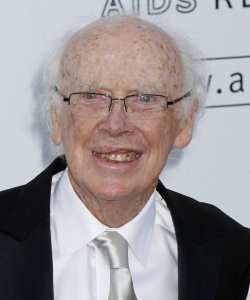

Nov. 7 (UPI) — James Watson, who helped his research partners to discover the double helix structure of DNA, died of unknown causes at an East Northport, N.Y., hospice at age 97.
Watson’s son, Rufus, and officials with Cold Spring Harbor Laboratory confirmed his death on Thursday without citing the cause, according to The Washington Post.
Watson recently was transferred from a hospital treating him for an infection to the New York hospice earlier in the week, his son, Duncan, told The New York Times.
Watson won the Nobel Prize in Physiology or Medicine in 1962, which he shared with Francis Crick and Maurice Williams, for their scientific discoveries related to DNA.
Watson also had a long association with the Cold Spring Harbor Laboratory, where his work helped to permanently change how people engaged in biological study.
Over seven decades, he enabled the founding of the global biotechnology industry and its influence on agriculture, forensics, green technology, medicine and other fields.
DNA testing arose from Watson’s work and has helped to prove who has committed crimes and exonerated those falsely accused and at times convicted of crimes that they did not commit.
His work also improved the diagnosis of diseases, enabled the confirmation of paternity and genetic relationships, supported the modification of agricultural products and helped to develop gene therapies to combat diseases.
Watson also led the Human Genome Project and lived on the Cold Spring Harbor Laboratory’s grounds in Long Island, N.Y., during his 70-year career.
He became the CSHL’s director in 1968 and helped establish it as one of the world’s leading microbiology labs before resigning from his position in 1993.
He also published his book on DNA, The Double Helix, in 1968, which is hailed as one of the most important literary works in U.S. history, but also drew accusations of elevating his status at the expense of others.
Watson later made statements during media interviews in 2007 and 2018 in which he claimed Black people are not as intelligent as whites, which led to his ostracization among the scientific community.
COMMENTS
Please let us know if you're having issues with commenting.