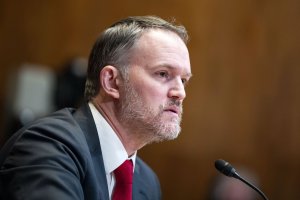

March 13 (UPI) — U.S. Trade Representative Jamieson Greer announced investigations Thursday into 60 economies to determine if they have failed to curb imports of goods made with forced labor.
The investigations are based on 301(b) of the Trade Act of 1974, which allows the United States to create tariffs on countries that have used unfair trade practices without congressional authorization. President Donald Trump used the law to add tariffs in his first term.
“Despite the international consensus against forced labor, governments have failed to impose and effectively enforce measures banning goods produced with forced labor from entering their markets,” Greer said in a statement.
“These investigations will determine whether foreign governments have taken sufficient steps to prohibit the importation of goods produced with forced labor and how the failure to eradicate these abhorrent practices impacts U.S. workers and businesses,” he said.
The investigations are targeting some of the United States’ closest allies and trade partners, including the European Union, the United Kingdom, Australia, New Zealand and more.
On Wednesday, the USTR launched investigations under Section 301 targeting excess industrial capacity against 16 economies: China, the European Union, Singapore, Switzerland, Norway, Indonesia, Malaysia, Cambodia, Thailand, Korea, Vietnam, Taiwan, Bangladesh, Mexico, Japan and India.
“With the strike-down of the reciprocal tariffs, the administration made it clear that their plan-B would be rolled out soonest,” Wendy Cutler, vice president at Asia Society Policy Institute and a former U.S. trade representative, told CNBC.
Since the Supreme Court ruled Trump’s reciprocal tariffs illegal under the International Emergency Economic Powers Act on Feb. 21, Trump has tried to find legal ways to continue his tariff programs, including adding a 10% temporary tariff across the board, which he then upgraded to 15%.
The USTR will have hearings on the investigations from April 28 to May 1.
Deborah Elms, head of trade policy at Hinrich Foundation, said that timeline is “unrealistically short,” given the number of countries included. She also told CNBC that including the European Union while ignoring other countries that have weaker enforcement records “doesn’t make sense.”
The probe also risks alienating allies and wasting needed goodwill to stop Chinese industrial overcapacity.
“The administration is losing an important opportunity to work with partners to address the real excess capacity problem in the world, [which is] China,” Cutler told CNBC.
“By adding more than a dozen countries into an investigation on excess capacity, our partners will be in no mood to work with us to address the serious challenges China’s excess capacity is presenting globally,” she added.
Treasury Secretary Scott Bessent has plans to meet with Chinese Vice Premier He Lifeng in Paris next week for trade talks. The meeting may clear the way for a summit between Trump and Chinese President Xi Jinping.
COMMENTS
Please let us know if you're having issues with commenting.