
Canadian voters handed the nation’s center-right Conservative Party a historic loss on Monday night in an election that, three months ago, the party was winning by over 25 points.
Mark Carney, a finance professional by trade who ran the Bank of Canada and Bank of England before becoming unelected prime minister in March, assumed the head of government position democratically on Monday as voters gave the leftist Liberal Party a slight plurality in Parliament as of the vote count at press time. The Liberals’ doom appeared sealed in January, when longtime Prime Minister Justin Trudeau resigned after a humiliating appearance at Mar-a-Lago in a failed attempt to convince President Donald Trump not to impose tariffs on his country. Polls at the time showed Conservatives attracting 46 percent of the vote should the election be held in January, compared to 20 percent for the Liberals and another 19 percent for the New Democratic Party (NDP), a radical leftist third party.
By Monday morning, polls were showing Liberals between three to five percentage points ahead of the Conservatives, and the NDP in a state of near-total collapse. As of Monday morning, those predictions seem to have materialized; at press time, the Liberals appear to be holding onto 155 Parliament seats, compared to 133 for the Conservatives. The New Democrats, once polling ahead of the Liberals, have only been elected to five parliamentary seats so far.
Both the Canadian left and right awoke on Monday to blame Trump for the Conservatives’ defeat in the election, claiming that his humiliation of Trudeau as “governor” of Canada and his repeated claims that the country would be better off as an American state than a British colony somehow made Canadian voters turn on Conservative leader Pierre Poilievre. These assessments never explained how Trump endorsing Mark Carney and calling Poilievre “no friend of mine” — and Poilievre actively campaigning against Trump — did not factor into voters’ decision-making.
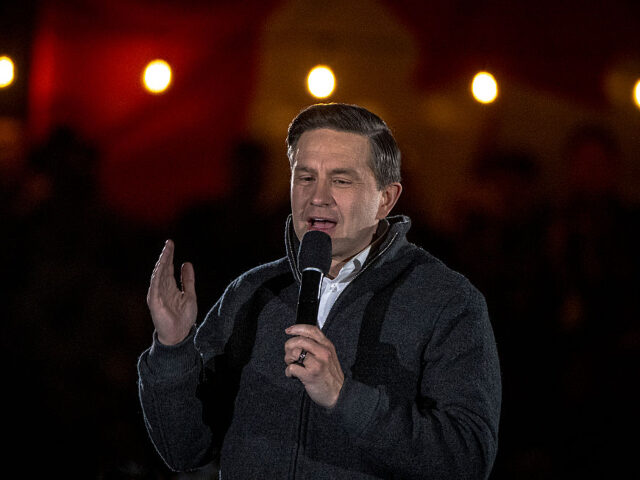
They also do not explain that, at press time, Poilievre appears to be losing his own parliamentary seat, which he has held for over 20 years. Poilievre’s chances to stay in Parliament deteriorated after he delivered a concession speech in which he took no responsibility for losing a race his party had led by over 25 percentage points, and he indicated he expected to remain the head of the party.
The idea that the 2025 Canadian general election was a referendum on a foreign president was one Carney hammered on a daily basis — with no meaningful pushback from Poilievre, who actively condemned Trump repeatedly and chose to only lightly criticize Carney. Yet the Liberals had some core policy weaknesses that were left on the table and could have helped turn the tide for the right.
Below, five critical political issues that Conservatives chose not to center in their campaign that could have made a difference.
Chinese Election Interference and Wanton Killing of Canadians
In March, the Communist Party of China revealed that it regularly executes Canadian citizens. In 2025, Canadian officials noted, China has killed at least four Canadians so far on dubious “drug” charges. The Chinese government condemned Canada for issuing a mild reprimand to the genocidal state for the killings, calling them “reasonable, legal, and responsible.”
China killing Canadians without remorse should have been a major campaign issue in part due to Mark Carney’s close ties to Beijing and the Canadian government openly revealing it had found evidence that the Chinese government was interfering in the election in Carney’s favor. Canada’s Security and Intelligence Threats to Elections (SITE) Task Force, an arm of the Liberal government, claimed that China’s “coordinated inauthentic behavior” calling Carney a “rock star economist” made no difference in the election, and Poilievre appeared to take that assurance at face value, failing to make any significant mention of the problem during the race. Poilievre’s refusal to elevate the issue as a major threat to Canada’s national security is particularly egregious given both how he embraced the alleged threat presented by President Trump and how the Liberals flagrantly turned this issue around by claiming, with minimal evidence, that Poilievre was benefitting from Indian interference in the election.
Poilievre also refused to attack Carney with any regularity on his own ties to China. Carney visited China in October as part of his job with Brookfield Asset Management, a finance firm, and received glowing praise in Chinese state propaganda. He appeared in photos with alleged Chinese government agents, then claimed he did not know who the people in the photos shaking hands with him were. No one pressed Carney to explain how his ties to China were not an egregious national security threat to Canadians.
Canada’s State-Backed Doctor Homicide System
Under Trudeau’s Liberals, Canada has championed and dramatically expanded a program called “medical assistance in dying,” or MAID, a euphemism for euthanasia. Rather than being promoted as a last resort, Canadian doctors are advised to bring up suicide to patients preemptively as a solution for their physical, and sometimes mental, health problems. Canadian authorities have documented the killing of patients who did not meet the legal requirements of the homicide program, and even those killed for “legal” reasons sometimes fell into dubious categories, such as “post Covid-19 vaccination syndrome.” The United Nations Committee on the Rights of Persons with Disabilities (UNCRPD) issued a statement in April condemning Canada for its woeful human rights practices regarding MAID.
MAID was not remotely discussed during the current election cycle. Mark Carney, who served as a public health advisor to Trudeau, was not made to defend the abhorrent practice of normalizing doctor homicide during either of the debates he attended or on the campaign trail. Poilievre claimed that he would not expand the mass killing vehicle for doctors, but did not meaningfully challenge the morality of it, either. A completely lost opportunity.
Immigration
Trudeau significantly expanded the ability of foreign nationals to move to Canada — a practice so unpopular that, during the final days of his tenure, Trudeau suddenly announced he would “significantly reduce” immigration in the country and admitted to “mistakes” on his liberal immigration policy. Poilievre had taken a hard line on immigration last year, when he was still campaigning against Trudeau. With Carney taking the reins of the Liberal Party, the issue all but disappeared from his campaign, which opted to focus on attacking President Trump instead.
Climate Alarmism
To his credit, Poilievre spent much of his time in Conservative leadership campaigning against Trudeau’s radical “green” policies, including onerous “carbon” taxes proposed to limit Canada’s emissions. Following Trudeau’s retirement, however, Poilievre redirected his energy towards issues such as lowering taxes generally and improving housing affordability. Carney himself had the most memorable green energy line of the campaign when he told Poilievre in a debate, “you’ve spent years running against Justin Trudeau and the carbon tax, and they’re both gone.”
Poilievre did not make a convincing counterargument that this was not true. While attacking Carney for his past as a Trudeau adviser in passing, much of Carney’s history as one of the world’s most extreme climate alarmists was missing from the campaign. Carney served as Special Envoy for Climate Action and Finance at the United Nations and led multiple climate “action” efforts. Green activists have warmly noted that he has dedicated much of his career to pressuring global companies into accepting radical climate policies.
“Climate change is an existential threat. We all recognize that, and there’s increasing urgency around it,” Carney said in a 2021 interview at the United Nations. “What we have seen increasingly… is societies putting tremendous value on achieving net zero. Companies, and those who invest in them and lend to them, and who are part of the solution, will be rewarded. Those who are lagging behind and are still part of the problem will be punished.”
The leftist New York Times blamed President Trump for “drowning” climate alarmism out of the Canadian election, but Trump was not the Conservative Party’s candidate to lead the country and had no responsibility to raise the issue.
Carney’s Bad French
Canada is a bilingual nation that places a heavy patriotic emphasis on its French-derived history and culture. In politics, concern for ensuring that French-Canadian culture persists is strong enough to buoy the Bloc Québécois, a regional party that does not bother to field candidates outside of Quebec but is dedicated to representing that population. The Liberals had attracted significant French-Canadian support in the past decade in part due to Trudeau’s ethnic background and the fortune of being born into one of Canada’s most important French-Canadian political families.
Carney has admitted that his French is not as fluent as his rivals and made multiple gaffes in French since entering politics two months ago. During a debate for the Liberal Party leadership in February, Carney declared of the party, “we agree with Hamas,” prompting his frazzled rival Chrystia Freeland to correct him.
Carney refused to participate in one of two French-language debates — one hosted by Quebec’s TVA — for unclear reasons.
Yves-François Blanchet, the leader of the Bloc Québécois, and NDP leader Jagmeet Singh called his refusal to join the debate disrespectful and cowardly. Poilievre, who spoke fluent French often during the campaign, failed to capitalize on the moment, emphasizing instead his plan to increase housing supply and lower taxes.
COMMENTS
Please let us know if you're having issues with commenting.