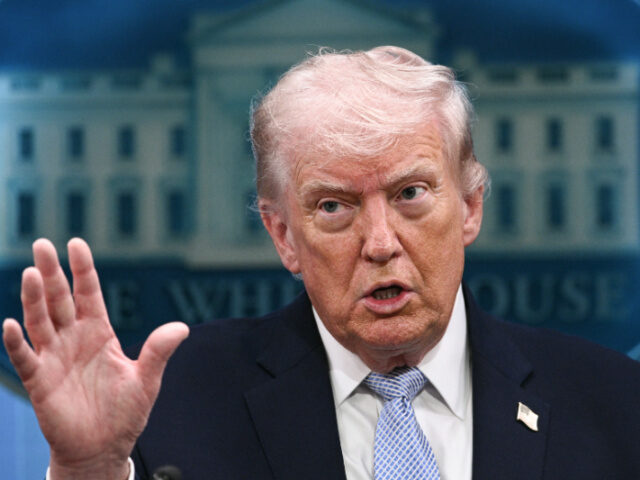

President Donald Trump agreed Tuesday evening to a two-week ceasefire with Iran, suspending planned U.S. strikes after a last-minute diplomatic push produced a breakthrough centered on reopening the Strait of Hormuz.
The agreement — proposed by Pakistan and brokered through ongoing backchannel talks — hinges on Iran committing to the “complete, immediate, and safe opening” of the strategic waterway, with both sides pausing hostilities during a two-week window aimed at finalizing a broader deal.
Trump, writing on Truth Social less than two hours before his 8 p.m. deadline, said he would halt the planned strikes following direct talks with Pakistani leadership.
“Based on conversations with Prime Minister Shehbaz Sharif and Field Marshal Asim Munir, of Pakistan… and subject to the Islamic Republic of Iran agreeing to the COMPLETE, IMMEDIATE, and SAFE OPENING of the Strait of Hormuz, I agree to suspend the bombing and attack of Iran for a period of two weeks,” Trump wrote, adding, “This will be a double sided CEASEFIRE!.”
He continued that the decision reflects that U.S. forces have “met and exceeded all Military objectives” and that negotiations toward a long-term agreement are “very far along,” adding that a “10 point proposal” from Iran is viewed as a workable basis to finalize a deal.
Israel has also agreed to join the temporary ceasefire, suspending its bombing campaign while negotiations continue, according to a senior White House official.
The decision marks a sharp pivot from earlier escalation, after Trump warned that “a whole civilization will die tonight” and threatened to destroy Iran’s bridges, power plants, and other infrastructure if Tehran failed to meet U.S. demands .
Pakistani Prime Minister Shehbaz Sharif, whose government has served as a primary intermediary between Washington and Tehran, had urged Trump earlier Tuesday to extend the deadline by two weeks while calling on Iran to reopen the Strait of Hormuz as a goodwill gesture .
The proposal gained traction as negotiations intensified in the final hours, with U.S. and Iranian officials exchanging messages through mediators including Pakistan, Egypt, and Turkey.
A senior Iranian official told Reuters earlier in the day that Tehran was “positively reviewing” the Pakistani proposal, signaling openness to a temporary pause even as key issues remained unresolved.
The White House had said Trump “has been made aware of the proposal, and a response will come,” according to Press Secretary Karoline Leavitt.
In a brief call with reporters earlier Tuesday, Trump declined to signal how he would proceed, saying, “I can’t tell you, because right now we’re in heated negotiations,” while adding he was being fully briefed and describing Sharif as “a highly respected man.”
Trump also condemned Iranian efforts to mobilize civilians around infrastructure sites, calling reports of human chains at power plants “totally illegal.”
Behind the scenes, negotiations accelerated over the previous 24 hours, with Pakistan playing a central role in relaying proposals between Washington and Tehran as both sides sought a framework to bridge remaining gaps.
Additional reporting indicated that Iranian leadership has approved the ceasefire framework, according to a report cited by the New York Times, though full details of Tehran’s commitments remain unclear as negotiations continue.
With the immediate threat of U.S. strikes now paused, the standoff shifts back toward diplomacy, with both sides facing renewed pressure to turn the temporary ceasefire into a lasting agreement.
Joshua Klein is a reporter for Breitbart News. Email him at jklein@breitbart.com. Follow him on Twitter @JoshuaKlein.
COMMENTS
Please let us know if you're having issues with commenting.