
The Consumer Financial Protection Bureau (CFPB) has finalized a rule that scraps diversity, equity, and inclusion (DEI) requirements and other burdensome regulations that affect small business lending, saving more than $166 million annually.
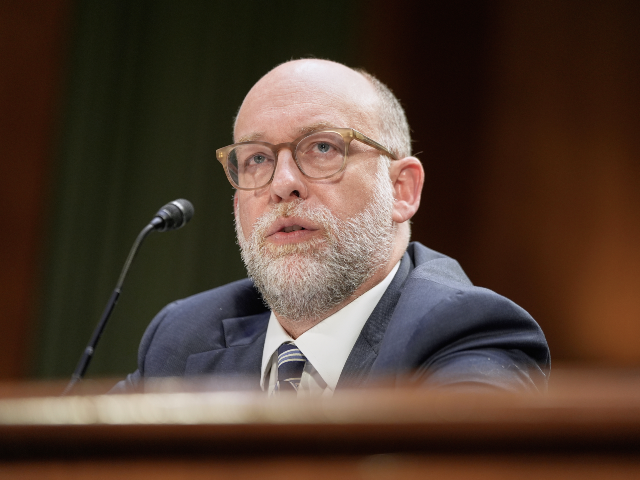
“This is a long-awaited win for both borrowers and small businesses. Annual savings from replacing the Biden-Harris rule will exceed an estimated $166 million annually,” Acting CFPB Director Russ Vought said in a statement to Breitbart News. “These reforms not only make borrowing more affordable for America’s small businesses, including our farmers, but minimize burdens on those needing quick access to credit without requiring them to answer unnecessary and invasive DEI questions introduced by the Biden-Harris-Chopra Administration.”
The CFPB, under the Trump administration, has moved to replace the Biden-era Section 1071 rule that was believed to be too invasive, and the Trump administration’s proposal would have the rule go back to the regulation’s intent as stipulated by the Dodd-Frank banking law. The rule intends to help with the administration’s mission to increase affordability as it would seek to save money for borrowers and small businesses who loan to them. It would also help farmers who get access to credit.
The Dodd-Frank Act directed the CFPB to adopt regulations governing the collection of small business lending data. Section 1071 amended the Equal Credit Opportunity Act to require financial institutions to compile, maintain, and submit to the CFPB data on applications for credit from women-owned, minority-owned, and small businesses.
The CFPB rule would reduce the discretionary data points adopted during the Biden administration and focus on data points set out in the Dodd-Frank ACT and only include a few essential discretionary data points such as time in business, number of principal owners, and NAICS code. The rule eliminates:
- Application method (in-person, online, etc.)
- Application recipient (direct vs. third-party submission)
- Denial reasons
- Pricing information (interest rates, fees, prepayment penalties)
- Number of workers
- LGBTQI+-owned business status
The rule modified demographic data collection to comply with the Trump administration executive order that requires binary sex categories of male or female and removes references to gender identity. It also eliminated disaggregated race and ethnicity categories and collects only aggregate categories to limit complexity.
The rule maintains applicants’ right to refuse demographic questions and requires institutions to clearly inform applicants of that right.
The rule would reduce the scope of “covered credit transactions” as the CFPB intends to limit the types of transactions subject to reporting to focus on data collection efforts on core lending products such as loans, lines of credit, and credit cards that are utilized by small businesses. The new rule would:
- Exclude Merchant Cash Advances, which were previously included under the broad definition of “credit.”
- Exclude agricultural lending, as loans for crop production, livestock, farmland, and farm equipment will be exempt. Agricultural lending is already subject to Farm Credit Administration oversight and often differs from small business lending.
- Excludes small-dollar business credit, with transactions of $1,000 or less that will now be excluded.
The rule narrows “covered financial institutions” so that small lenders will be exempt, significantly reducing compliance costs and complexity. The rule would raise the origination threshold under the rule if it originated 1,000 or more covered credit transactions in each of the two preceding calendar years. It also excludes Farm Credit System Lenders.
The CFPB rule revises the definition of “small business” to define a small business as entities with $1 million in gross annual revenue from $5 million, allowing the rule to focus on collecting data related to micro and small businesses, which is relevant to Section 1071’s goals.
Banking groups such as the American Bankers Association have said the prior rule was “too far-reaching, will put small businesses’ privacy at risk and will discourage bank lending to small businesses given the cost to collect this data.”
COMMENTS
Please let us know if you're having issues with commenting.