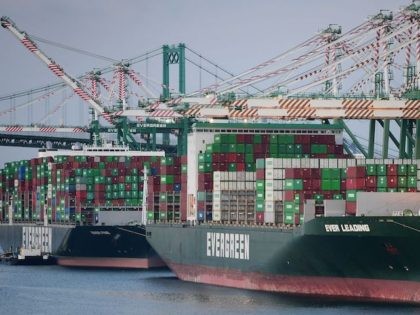
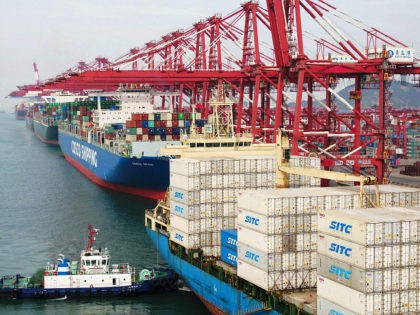
Trump’s Tariffs Are Working: Trade Deficit Narrows To Smallest Since 2009
This is the third straight monthly decline in the trade deficit, suggesting that changes to U.S. tariff policy are driving deep changes in the global economy.

This is the third straight monthly decline in the trade deficit, suggesting that changes to U.S. tariff policy are driving deep changes in the global economy.

Colombian clothing manufacturers are struggling to keep up with the unfair trading practices of the Chinese low-cost shopping apps Temu and Shein, the magazine Semana reported over the weekend.

The U.S. trade deficit surged in July to its highest level in four months as American businesses rushed to import goods ahead of expected tariff increases, the Commerce Department said Thursday.

Multiple postal services around Europe announced Saturday that they are suspending the shipment of many packages to the United States amid a lack of clarity over new import duties.
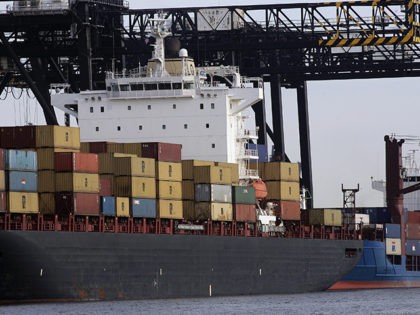
President Donald Trump signed a pair of executive orders on Wednesday–one to close the de minimis loophole, which long exempted low-value import shipments into the United States from duties, and another to hike tariffs on Brazil to 50 percent. The Suspending

U.S. import prices rose modestly in June, suggesting little evidence of inflationary pressure from foreign-sourced goods, according to data released Thursday by the Bureau of Labor Statistics. The import price index increased 0.1 percent last month, following a downwardly revised

GDP shrinks 0.5% on downward revisions to consumer demand and government spending.

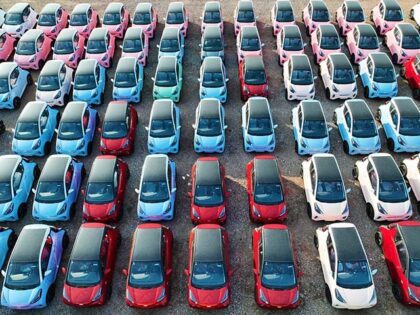
Brazilian automobile industry executives and labor leaders are growing uneasy about the flood of cheap electric vehicles (EVs) pouring in from China, because the Chinese onslaught is crushing Brazilian manufacturing.

Pre-tariff measures show subdued cost pressures despite trade tensions.

Ecuador’s Production and Foreign Trade Ministry announced on Monday all packages shipped from China by companies such as Temu and Shein under a specialized personal courier shipping modality will be subject to a $20 tariff.

The supposed culprit of the import surge—consumer panic buying—simply isn’t real. Consumers are not front-running the tariffs, and that is good news.

President Donald Trump on Tuesday directed Commerce Secretary Howard Lutnick to begin a national security probe of tariffs on critical U.S. imports, including rare earths and other vital substances.

The Vietnamese Trade Ministry said this week it will impose temporary anti-dumping tariffs on some galvanized steel products from China and South Korea.

China’s retaliation against President Donald Trump’s tariffs went into effect on Monday, imposing levies of 10% to 15% on a range of key American goods, including liquefied natural gas (LNG), coal, agricultural equipment, and automotive products.

Chinese fast-fashion giant Shein is reportedly preparing to slash its valuation for a prospective listing on the London stock market by $50 billion, losing almost a quarter of its value after President Donald Trump closed the “de minimis” loophole that allows small import shipments to evade duties and customs inspections.

The government of Argentina on Monday eliminated a hefty 30 percent “inclusive” surcharge tax on foreign currency debit and credit card purchases imposed by the previous socialist administration.

Low-cost Chinese electric vehicles (EVs) have reportedly made major inroads into South Africa’s market, with industry analysts pointing to years of double-digit sales growth.

EU countries gave definitive green light to hefty additional tariffs on electric cars made in China, despite strong opposition led by Germany.

The U.S. Commerce Department said on Monday it wants to ban Chinese and Russian software and hardware from Internet-connected and autonomous vehicles, citing the security risks to American drivers and U.S. national security.

The Biden White House responded on Friday to a plea from House Democrats by proposing new rules for foreign shipping to close the notorious “de minimis” loophole, but took no immediate action.

Donald Trump said U.S. tariffs on imports did not cause the record inflation that has occurred under Joe Biden and Kamala Harris.

China’s effort to jump-start its economy by exporting a vast quantity of cheap manufactured products is running into unexpected resistance from the United States, European Union, and even developing nations such as Brazil and Mexico. All of these nations are concerned with market disruptions caused by a tidal wave of Chinese imports, as happened during the “China Shock” two decades ago.

Civilian mariners killed in a Houthi missile strike for the first time, a bulk carrier abandoned and burning in the critical waterway.

India’s leading drone manufacturer IdeaForge is making a play for U.S. business with a line of light, high-endurance drones engineered to fly in the thin atmosphere and harsh climate of the Himalayas.

Farmers say grain and other agriculture products coming from Ukraine and Latin America negatively affect the market.

We are in serious danger of entering a historically anomalous era of prolonged inflation.

A group of Dutch shipowners have approached the Ministry of Defence in Amsterdam to get permission to embark armed teams onboard cargo ships.

One of the UK’s largest retailers warns of stock shortages this year as strikes in Red Sea delay arrivals and send shipping prices spiralling.

China’s faltering economy took another beating in July, as both import and export numbers came far below expectations. Imports fell 12.4 percent instead of the five-percent slide that was expected, while exports dropped 14.5 percent against an expected 12.5 percent.

India has quietly banned its growing domestic drone industry from using Chinese parts due to fears of security vulnerabilities.

Chinese exports to the United States fell by 12.2 percent in May, a much larger drop than expected and the first net reduction since February.

Excluding fuel, import prices rose 0.3 percent in January after rising 0.4 percent in December. Economists had been expecting a 0.3 percent decline.

Filipinos visiting the United Arab Emirates (UAE) are packing their suitcases with an unusual souvenir: onions. Filipino cooking uses a lot of onions, and inflation is making them unaffordable back home, but the UAE sells them for a fraction of the price.

The European Union is completely reliant on foreign imports for 14 “critical” raw materials needed for industry, a study has found.

The nation’s trade deficit widened 5.4 percent in October to a four-month high of $78.2 billion, data from the Commerce Department showed Tuesday.

Chinese customs data for October released on Monday revealed a surprisingly steep drop in both imports and exports, the latter contracting for the first time since the early days of the Wuhan coronavirus pandemic in 2020.

China’s state-run Global Times on Thursday bemoaned the collapse of demand from Western countries for “festive products for coming Halloween,” while taking some solace in brisk orders for “Christmas consumption.”

The stronger dollar hurt exports but imports fell by even more.

A strong dollar and weakening demand for imports sent the trade deficit tumbling in July.

China’s state-run Global Times on Monday reversed a good deal of spin from Beijing by admitting that U.S. demand for Chinese goods is falling sharply enough to damage the Chinese economy.