New Yorkers Say They Cannot Access State’s Unemployment Benefits Website
The tidal wave of jobless claims has overwhelmed the systems in New York and elsewhere.
The tidal wave of jobless claims has overwhelmed the systems in New York and elsewhere.
The Department of Homeland Security (DHS) is halting efforts to bring more H-2B foreign visa workers to the United States to take nonagricultural jobs after mounting public opposition.
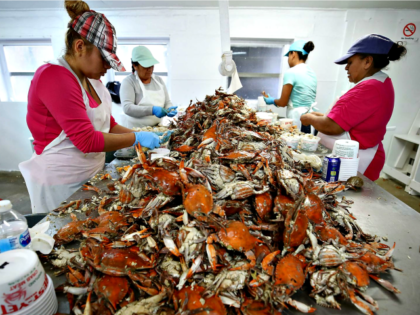
More than 6.6 million Americans applied for unemployment benefits last week.

We will likely see more jobs lost before we begin to turn things around. But it is useful to remember that we can. And the clearest proof is in the very recent past.

Graham joined a few other Republican senators to object to bolstered unemployment benefits in the economic rescue bill.

Jobless claims are up but you ain’t seen nothin’ yet.

Weekly jobless claims provide the most up-to-date look we have at economic developments since the corona pandemic took hold.
The coronavirus has roiled financial markets but the labor market remains very strong.
The labor market remains very strong with very low levels of layoffs and unemployment.
The number of Americans filing for unemployment benefits fell 15,000 to a seasonally adjusted 202,000 last week.

It’s a virtuous circle for the economy: consumer spending supports labor market strength which supports consumer spending.
The economy is starting 2020 on a strong note.
New applications for state unemployment benefits fell 9,000 to a seasonally adjusted 214,000, the Labor Department said Thursday.
Initial jobless claims dropped 2,000 to a seasonally adjusted 222,000 for the week ended December 28.

The data suggests the labor market remains strong.
Jobless claims can be volatile around the holidays and this week’s spike in claims is likely a result of holiday effects rather than a jump in layoffs.
Jobless claims fall back down toward record lows.
The U.S. labor market displays surprising strength going into the holiday season.
The labor market continues to show signs of strength, supporting consumer spending and ongoing economic growth.
The number of Americans filing for state unemployment benefits increased by 5,000 to a seasonally adjusted 218,000 last week.

The labor market remains very tight despite sluggish growth around the world.
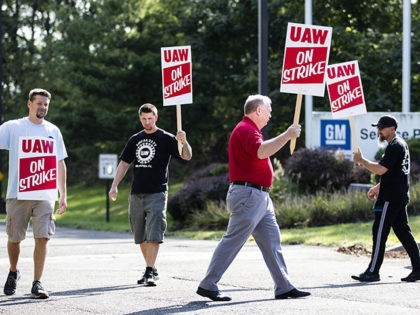
Employers are holding on to workers in a tight labor market despite sluggish consumer spending in September and the UAW-GM strike.
Layoffs are scarce in the United States despite concerns over global growth and trade tensions.
Despite all the recession talk this week, jobless claims remain very low.
Initial claims for state unemployment benefits plunged 15,000 to a seasonally adjusted 204,000 for the week ended September 7.
Elaine Parker of Job Creators Network writes in the Washington Times that the broad scope of economic indicators offset the concern that the inverted yield curve suggests a recession is imminent.
Jobless claims fell to a seasonally adjusted 209,000 for the week ended August 17, suggesting recession fears are overblown.
Jobless claims declined last week to the lowest level in three months, the Labor Department said Thursday.
The number of Americans applying for unemployment benefits rose by 3,000 to 222,000 last week.
The labor market remains one of the brightest spots in the economy, defying critics of tariffs by keeping layoffs very low.
Amid rising trade tensions and a tight labor market, U.S. businesses are hanging on to their employees and not laying off workers.
Initial jobless claims are a proxy for layoffs. The low number of claims suggests that tariffs have not hurt American workers
Economists had estimated initial claims for state unemployment benefits to decline to 215,000 for the week ended April 27.
Jobless claims fell to the lowest levels since 1969, when the U.S. economy and labor market were much smaller.
Jobless claims fell to the lowest level in almost 50 years despite signs that economic growth has slowed.
It’s time to finally put to rest the idea that the steel and aluminum tariffs would hurt American workers and raise unemployment.
Economists had expected jobless claims to fall to 225,000. Instead, they fell all the way down to 216,000.
Still no sign that tariffs are costing jobs.
Jobless claims were expected to come in at 220,000.

Just 199,000!