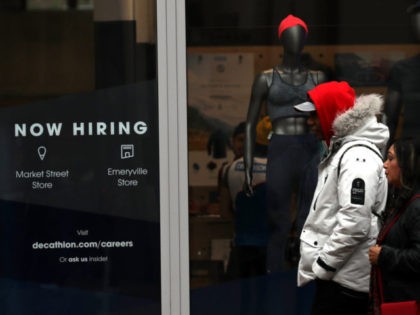
Job Openings Edge Down to 10.3 Million
Job openings fell, reversing the rise seen in September.
Job openings fell, reversing the rise seen in September.
If you want to figure out where monetary policy is heading next, watch the labor market.

A big and unexpected reversal for the Federal Reserve in a closely watched measure of the labor market. The job vacancy ratio is back up to 1.9.

The Department of Labor will issue its report on September payrolls, unemployment, and wages on Friday. It may be the most hotly anticipated jobs report in recent memory.

Yesterday we explained that good news is bad news. Financial markets on Tuesday confirmed the corollary: bad news is good news.

The number of open jobs in the United States rose in July, defying predictions that vacancies would fall for a fourth straight month and dashing hopes that the Federal Reserve’s monetary policy tightening had already throttled demand for labor.

Jerome Powell’s dream of taming inflation by bringing down job vacancies has turned into a nightmare of an overheating labor market.

Retail and construction openings crashed in June as the Fed raised interest rates at the fastest pace in decades.

While other parts of the economy seem to be teetering on the brink of recession, the labor market remains strong.

There are 1.7 jobs for every unemployed worker in America.
Don’t believe the hype about a Great Resignation. Something deeper is happening.

A record number of Americans quit their jobs in November even as job openings declined from recent record high.

People are leaving their jobs in record numbers.
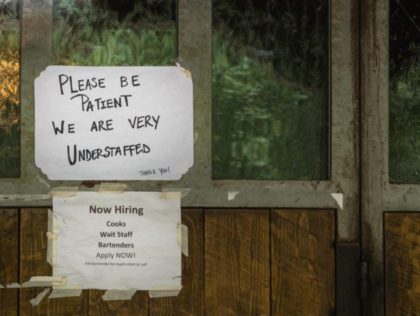
According to the report, 4.4 million Americans — three percent — chose to voluntarily leave their place of employment.

U.S. employers posted a record number of available jobs in June, data from the U.S. Bureau of Labor Statistics showed Monday. There were 10.1 million job openings on the last business day of June, according to the BLS. As well,

Job openings are up and actual hires are down, highlighting ongoing distortions in the Biden economy.

Along with the record number of job openings in April, there was a record pace of workers leaving their jobs.

U.S. employers posted a record number of available jobs in April, far surpassing expectations, and March’s record number of openings was revised higher.

Job openings in the U.S. jumped to 8.1 million in March, a record high, the Labor Department said Tuesday.

Job openings in the retail trade sector rose in February, according to data from the Department of Labor’s Job Openings and Labor Turnover Survey. In January, employers posted 793,000 help wanted notices. These rose to 817,000 in February.
But the number of hires actually fell in February, the second straight monthly decline.
In other words, the number of people retail businesses want to hire is rising. But the number of workers accepting jobs in retail trade is falling.

U.S. businesses posted wanted ads for 6.9 million jobs in January, the U.S. Bureau of Labor Statistics reported Thursday. That was an increase from the upwardly revised 6.752 million for December and well-above the 6.585 forecast by economists surveyed by Econoday.
The year 2020 saw extremely violent gyrations in the economy but the end result was 70 million hires and 75 million layoffs. A tough year with a deep slump followed by a record-setting recovery.

The labor market may have ended the year in slightly better shape than thought. The number of job openings climbed in December to 6.6 million, up from 6.5 million in November. Economists had forecast a decline to 6.4 million jobs.

With the exception of March and April of this year, Novembr is the worst month on record for layoffs in hotels and restaurants.

Restaurants, bars, and hotels led the way as the labor market weakened in November.
The latest sign that the economy was stronger than many thought in the months leading up to the 2020 election.

Hiring and job postings rose in September while layoffs declined sharply.

Job openings dipped by less than expected after four months of strong growth.

A much bigger boost in job openings than expected points to an economy recovery faster than previously thought.

The JOLTS report suggests restaurants, bars, and hotels expanded hiring in June but manufacturing was a bit weak.

Hiring in manufacturing jumps to the highest level since 2001.

Two sectors were basically immune to the shutdown layoffs: finance and the federal government.

Job openings fell but the ratio of unemployed to openings remains at historically low levels, indicating labor market strength.

Another sign that the economy is finding a firmer footing as we move away from the summer of 2019’s imaginary recession.

Unemployment is at a 50 year lows so it is not surprising that a historic share of the workforce is voluntarily quitting their jobs.

Manufacturing job openings jumped to 522,000 from 515,000 in the prior month, the Department of Labor said Tuesday.
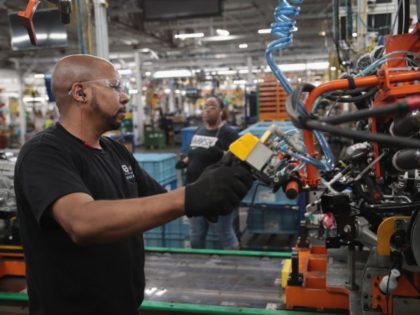
Job openings and hires in the manufacturing sector remain elevated despite trade tensions. Factory layoffs remain very low.
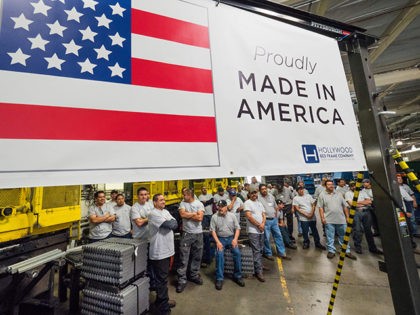
The last time there were this many open manufacturing jobs was all the way back in 2001.

Factory jobs expanded to match the highest ever levels on record, defying predictions of tariff-induced manufacturing stress.

The U.S. labor market began the year with a boom as employers posted a near-record number of job openings.