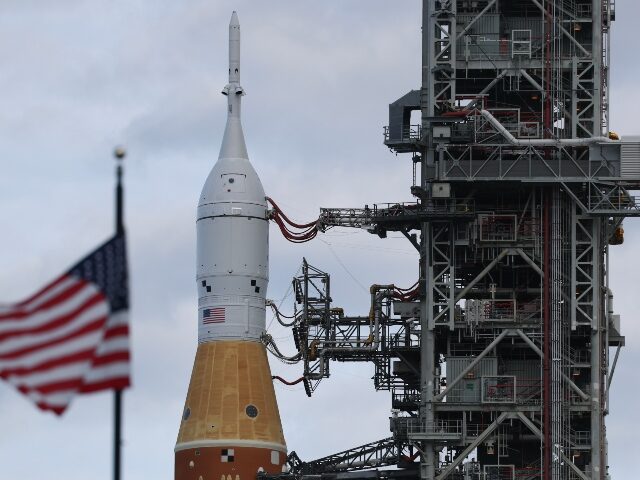
NASA announced Tuesday it is delaying its highly anticipated Artemis II mission to send four astronauts around the moon after engineers encountered hydrogen fuel leaks during a critical launch rehearsal at Kennedy Space Center in Florida. A very similar problem caused a six month delay to an Artemis mission in 2022.
NBC News reports that NASA announced Tuesday it is delaying its highly anticipated Artemis II mission to send four astronauts around the moon after engineers encountered hydrogen fuel leaks during a critical launch rehearsal at Kennedy Space Center in Florida.
The space agency was conducting what is known as a wet dress rehearsal, an elaborate launch day walkthrough designed to test all systems and procedures before an actual launch, when engineers detected hydrogen leaking at the base of the Space Launch System rocket. The issues forced NASA to halt the test with approximately five minutes and fifteen seconds remaining in the simulated launch countdown.
Due to the leak, NASA made the decision to skip the February launch window, which had been scheduled to run through February 11, for the Artemis II mission. The agency stated it would target March as the earliest possible launch opportunity to allow teams adequate time to review data and conduct another wet dress rehearsal.
According to NASA, launch opportunities are available from March 6 through March 9 and on March 11, with additional backup dates in April if necessary.
John Honeycutt, the Artemis II mission management team chair, addressed the situation during a news briefing Tuesday afternoon. “To me, the big takeaway was we got a chance for the rocket to talk to us, and it did just that,” Honeycutt said. He emphasized that the elaborate practice run is designed to put the rocket and team through their paces “before we ask our crew to go fly on launch day.”
The wet dress rehearsals are a standard component of NASA’s launch preparation process and enable mission managers to evaluate the performance and readiness of a rocket before flight. This assessment is particularly critical for the Artemis II mission, as the Space Launch System booster and Orion spacecraft have never launched with astronauts aboard and have not flown since late 2022. In fact, hydrogen fuel leaks delayed the 2022 mission as well.
NASA Administrator Jared Isaacman addressed the delay in a post on social media platform X. “With more than three years between SLS launches, we fully anticipated encountering challenges,” Isaacman wrote. “That is precisely why we conduct a wet dress rehearsal. These tests are designed to surface issues before flight and set up launch day with the highest probability of success.”
The hourslong rehearsal involved filling the massive rocket with more than 700,000 gallons of cryogenic propellant and simulating each step of the launch countdown exactly as it would occur on the actual launch day.
The fueling process began around 12:30 p.m. Eastern Time on Monday. During this process, mission managers were forced to pause operations twice to investigate hydrogen fuel leaks at the tail end of the rocket. Super-chilled liquid hydrogen and liquid oxygen serve as common propellants for rockets, but hydrogen molecules are notoriously difficult to contain due to their extremely small size, making them prone to leaking.
“When you’re dealing with hydrogen, it’s a small molecule, it’s highly energetic,” Honeycutt said. “We like it for that reason. And we do the best we can.”
The hydrogen leak issues persisted into the final minutes of the simulated launch countdown. According to NASA, systems on the rocket designed to assume control of the booster in the final minutes before liftoff automatically stopped the countdown due to a spike in the liquid hydrogen leak rate.
In addition to the hydrogen leaks, engineers will investigate several audio issues that occurred in communications channels used by ground teams during the wet dress rehearsal, NASA said.
Artemis launch director Charlie Blackwell-Thompson stated in the briefing, “We’ll figure it out, and we’ll be back here talking to you once again about when we’re going to target our next wet dress and the results from that.”
In a statement posted on X, Wiseman said he and his fellow crew members had breakfast with their families and will resume training on Wednesday. “Immense pride seeing the rocket reach 100% fuel load last night, especially knowing how challenging the scenario was for our launch team doing the dangerous and unforgiving work,” he wrote.
Read more at NBC News here.
Lucas Nolan is a reporter for Breitbart News covering issues of free speech and online censorship.
COMMENTS
Please let us know if you're having issues with commenting.