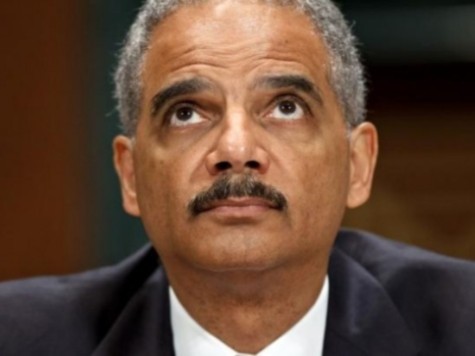

Attorney General Eric Holder faces new questions about racial bias at the Department of Justice (DOJ), as well as about the veracity of his testimony before Congress, as the result of a new Inspector General report and documents obtained by Judicial Watch.
The Inspector General’s report, covered extensively by former DOJ official J. Christian Adams, reveals that many Civil Rights Division attorneys do not believe that the Voting Rights Act ought to be enforced to protect white victims as well as black victims, and that black employees who were willing to help prosecute black defendants–such as the New Black Panther Party–were subject to alleged threats and intimidation by DOJ officials.
The Judicial Watch documents suggest that political appointees at DOJ were involved in the decision to drop the case against the New Black Panther Party, contrary to Holder’s sworn testimony before Congress, in which he said: “The decisions made in the New Black Panther Party case were made by career attorneys in the department. And beyond that, you know, if we’re going to look at the record, let’s look at it in its totality.”
The documents also contradict the testimony of Assistant Attorney General for Civil Rights Thomas Perez, who claimed that there was no political intervention in the case.
Perez is currently considered the frontrunner to be President Barack Obama’s next Secretary of Labor, despite a controversial history that includes heavy involvement with the pro-amnesty group La Raza as well as the New Black Panther Party case.
Judicial Watch president Tom Fitton, who fought the DOJ in court for access to the documents, called for “an independent investigation into whether Messrs. Holder and Perez committed perjury in testifying under oath about the Black Panther controversy.”
COMMENTS
Please let us know if you're having issues with commenting.