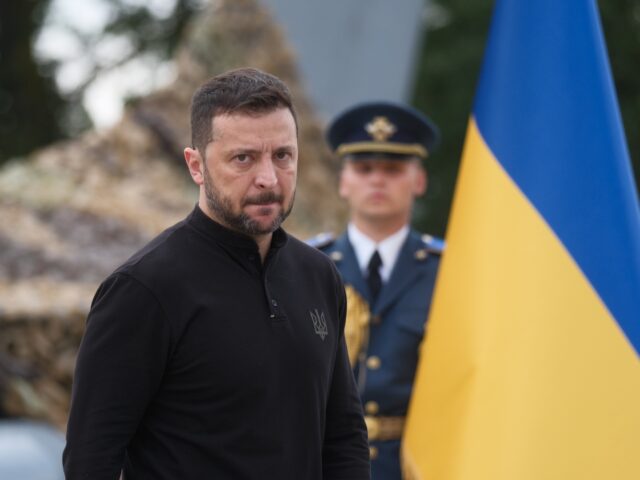

Ukrainian President Volodymyr Zelensky has submitted legislation to once again extend the decree of martial law, which as part of a suite of wartime powers has the impact of suspending elections, banning opposition parties, and shutting down media organisations.
According to state-run outlet Ukrinform, President Zelensky has submitted bills to the Verkhovna Rada, the Parliament in Kyiv, this week for the extension of martial law and the general mobilisation, which empower the government to conduct large-scale conscription of manpower and other resources to fight the war against Russia.
The current martial law decree will remain in effect until May 4th, and if the bills submitted by Zelensky are approved, it will be extended until at least August 2nd.
The likely passage of the bills will mark the 19th extension of the initial martial law decree, which was signed by Zelensky on February 24, 2022, the same day that Russia launched its invasion of the country over four years ago.
The imposition of martial law has led to the cancellation of elections, including the planned 2024 presidential election and the parliamentary elections scheduled for the autumn of 2023.
The position of the Ukrainian government, and its supporters, is that it would be unreasonable to hold elections while the country is at war and a fifth of its landmass is occupied. Detractors have noted, as part of this debate, that such votes are not without precedent in Western democracies, including the 1864 United States presidential election, which was held during the Civil War, which remains the bloodiest war in American history.
Amid criticism from figures such as President Donald Trump, President Zelensky has previously said that he would consider holding elections, but only if the United States and European Union paid for them, citing the additional costs of collecting votes from Ukrainian refugees across Europe.
In addition to cancelling elections, the Zelensky government has also used martial law to purge opposition media and political parties.
This included the ban on the Opposition Platform — For Life party, which garnered the second-most votes behind Zelensky’s Servant of the People party in the 2019 general election, the last such vote held in the country.
The government also banned multiple news media outlets accused of being pro-Russian, including three news channels associated with former Opposition Platform — For Life co-founder Viktor Medvedchuk, who now lives in exile in Russia after having been swapped in a prisoner exchange last year.
COMMENTS
Please let us know if you're having issues with commenting.