
Security Minister of Argentina Alejandra Monteoliva detailed that upwards of 4,000 metric tons of cocaine are being produced in South America per year.
Minister Monteoliva spoke on Wednesday with Radio Mitre on the sidelines of the 40th International Drug Enforcement Conference (IDEC), co-hosted by the United States and Argentina in the city of Buenos Aires this week. Speaking on the subject of the fight against drug trafficking, the minister stressed to Radio Mitre that South America is now considered the “epicenter” of cocaine production in the world, with anywhere between 3,800 and 4,000 metric tons of cocaine produced in the region every year.
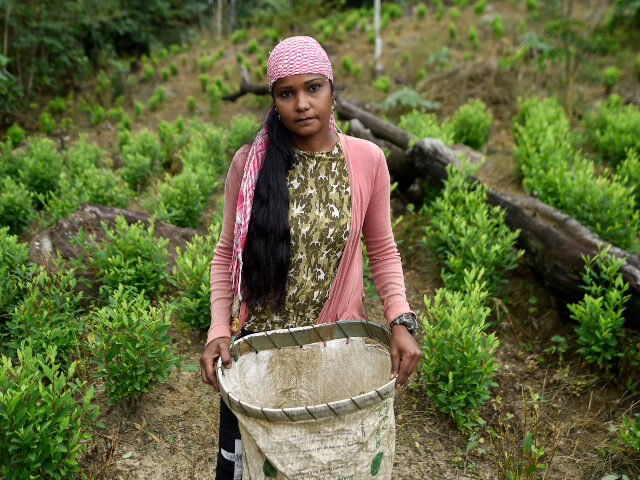
Monteoliva detailed that in Colombia — the world’s top cocaine producer — up to five times more cocaine is being produced compared to the past decade. Noticeable increases in cocaine production were also documented in Bolivia and Peru. The minister further explained that Argentina, while not a cocaine producer, is identified as a transit country of the drug — and emphasized, “production is local, transit is regional, and consumption is global.”
According to Monteoliva, the latest report from the World Customs Organizations indicates a change in the ports of origin for cocaine seizures, with Argentine ports going from being a “strainer” of cocaine transit to “the last place” in the report. The security minister explained to Radio Mitre that new drug trafficking logistics have been detected in which one ship carries the main drug cargo, which is then distributed to smaller vessels at sea.
“That was something that hadn’t happened for years,” Monteoliva stressed. “In other words, the mother ship distributes the cargo to other vessels, the mother ship carries a thousand kilos, and various vessels handle the distribution on the high seas. And that also involves a different kind of criminal intelligence work.”
Monteoliva spoke alongside Drug Enforcement Administration (DEA) Administrator Terry Cole on Wednesday during the 40th IDEC drug control conference. Monteoliva told attendees that the event represents a vote of confidence for Argentina in its fight against drug trafficking and organized crime.
Monteoliva emphasized that Latin America is still a violent region marked by the presence of transnational crime syndicates. Monteoliva noted that although Argentina has achieved “significant results” in the reduction of violence, homicides, and drug seizures, it is not enough for the country to succeed on its own.
“The secret to success is when we succeed together, since no country can confront organizations that operate on a global scale alone, and that is why we are gathered here,” she said.
Per the Argentine Security Ministry, DEA Administrator Cole said that the ministry is leading the region in its efforts and is doing “incredible things” against drug traffickers and terrorists.
“This is a model for the region, and we fully support them in everything they do. The Drug Enforcement Administration and the U.S. government are delighted with this partnership, and we will continue to invest in resources and technology here,” Cole said. “We will continue to support the operations that your teams carry out every day.”
According to the Argentine Security Ministry, the 40th International Drug Enforcement Conference hosted by the United States and Argentina saw the participation of representatives of over 100 countries as well as officials from partnered international police organizations. Participants shared strategic practices and held dialogues to reinforce their cooperation in the shared fight against drug trafficking, money laundering, and narco-terrorism. The event will conclude on Thursday.
Christian K. Caruzo is a Venezuelan writer and documents life under socialism. You can follow him on Twitter here.
COMMENTS
Please let us know if you're having issues with commenting.