
Pakistani Prime Minister Shehbaz Sharif said on Wednesday the ceasefire agreement his government mediated between the United States and Iran would also cover Lebanon, but Israeli Prime Minister Benjamin Netanyahu quickly stated that operations against the Iran-backed Hezbollah terrorists in Lebanon would continue.
Sharif claimed on Wednesday morning that Iran, the U.S., and their respective allies “agreed to an immediate ceasefire everywhere, including Lebanon and elsewhere, EFFECTIVE IMMEDIATELY.”
“We earnestly hope that the ‘Islamabad Talks’ succeed in achieving sustainable peace and wish to share more good news in coming days,” he added.
Netanyahu’s office expressed support for “President Trump’s decision to suspend strikes against Iran for two weeks subject to Iran immediately opening the straits and stopping all attacks on the U.S., Israel, and countries in the region,” but bluntly stated that “the two-weeks ceasefire does not include Lebanon.”
President Donald Trump also said on Wednesday morning that Lebanon was “not included in the deal.”
“Because of Hezbollah. They were not included in the deal. That’ll get taken care of too. It’s alright,” Trump explained in an interview with PBS.
Trump said “everyone knows” Lebanon is a “separate skirmish” that was not covered by the ceasefire agreement with Tehran.
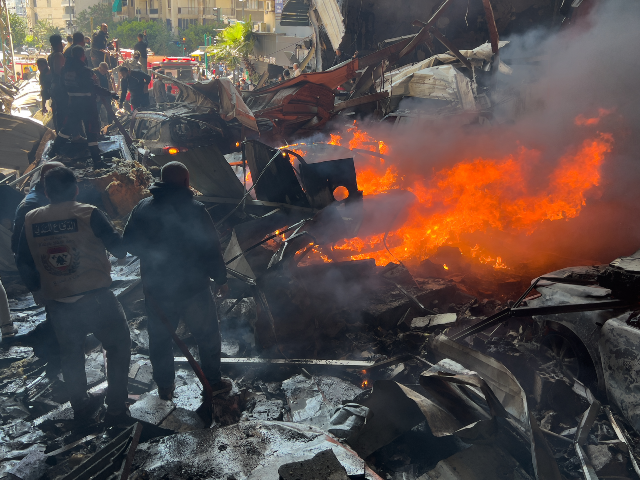
Lebanese media reported that Israeli strikes against Hezbollah positions in southern Lebanon continued on Wednesday, accompanied by evacuation orders for civilians in the area.
The Lebanese Army urged civilians to “wait before returning to southern villages and towns and to avoid approaching areas where Israeli occupation forces have advanced,” and warned civilians in those areas “may be exposing themselves to the ongoing Israeli attacks.”
Hezbollah dragged Lebanon into war with Israel on March 2 by launching rockets at Israeli cities, ostensibly to get revenge for the Israeli strike that eliminated Iranian Supreme Leader Ayatollah Ali Khamenei.
Hezbollah officials later boasted they were part of a “joint and integrated operation” with Iran’s terrorist Islamic Revolutionary Guard Corps (IRGC) to open a second front in the war against Israel. Hezbollah’s rocket barrages from southern Lebanon showered Israeli civilian targets with hundreds of rockets.
Israel responded by saying it has lost all faith in the Lebanese government to disarm Hezbollah as required by the Gaza War ceasefire agreement in 2024 and would now be obliged to invade southern Lebanon to create a “buffer zone” that would protect Israeli cities from future Hezbollah attacks. Israel has also launched targeted strikes all the way into Lebanon’s capital of Beirut to eliminate Hezbollah leaders.
The Lebanese government, while still angry at Hezbollah for hijacking national foreign policy by starting the war, has been increasingly critical of Israel’s operation, particularly as civilians are endangered and their villages are destroyed. The Israel Defense Forces (IDF) noted that Hezbollah deliberately hides its operatives and weapons in civilian areas, including Christian villages, so it has no choice but to strike those targets.
Lebanese state media said on Wednesday that Israeli strikes continued after the ceasefire was announced, including powerful strikes at targets in Beirut, while the IDF continued issuing evacuation orders for civilians in southern Lebanon.
Lebanese President Joseph Aoun on Wednesday welcomed the ceasefire agreement and promised his administration would make “continued efforts to ensure that the regional peace includes Lebanon in a stable and lasting manner.”
Aoun condemned Israel’s strikes on Wednesday as a “dangerous escalation” and a “crime” that would “only lead to further tension and instability at a time when calm and adherence to commitments are most needed.”
“Today, Israel intensifies its aggression once again, committing a new massacre added to its dark record in blatant defiance of all human values and disregarding all efforts aimed at calm and stability,” he said.
Israel Defense Minister Israel Katz said Wednesday’s operation dealt Hezbollah its heaviest blow since the 2024 covert operation that killed and injured dozens of Hezbollah terrorists by detonating their pagers.
“The IDF attacked hundreds of Hezbollah terrorists in headquarters across Lebanon in a surprise attack. This is the largest concentrated blow Hezbollah has suffered since Beepers Operation,” he said.
“We insisted on differentiating the arenas between Iran and Lebanon in order to change the reality in Lebanon and remove the threats from the residents of the north,” Katz said, to explain why Israel did not view the ceasefire agreement as covering Lebanon.
“Naim Qassem did not understand what Nasrallah understood in his last moments — that Israel after October 7 is not the same Israel as before and will not accept any threat or harm to its citizens. Neither from Iran nor from Lebanon,” he said.
Naim Qassem is the current leader of Hezbollah. His predecessor Hassan Nasrallah was eliminated by an Israeli airstrike in September 2024.
“We warned Naim Qassem that Hezbollah would pay a very high price for attacking Israel on behalf of Iran, and today we fulfilled another step in our promise,” Katz said.
“The terrorist Naim Qassem’s personal turn will also come,” he warned. “IDF forces continue to operate in Lebanon to eliminate threats and thwart Hezbollah’s capabilities in accordance with the policy we have established.”
COMMENTS
Please let us know if you're having issues with commenting.