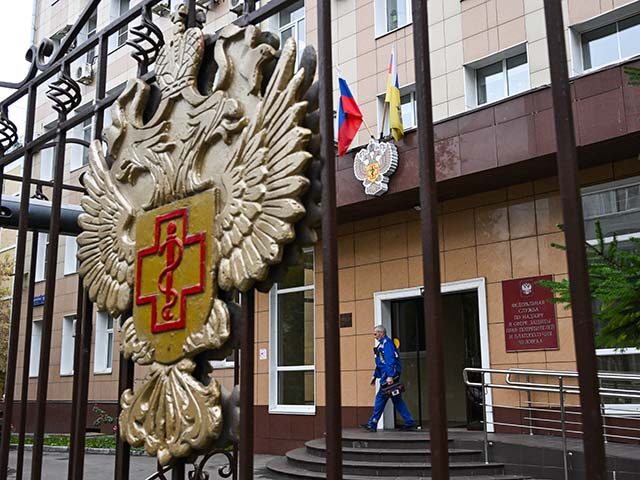

The Russian state health agency Rospotrebnadzor and the governor of the Siberian region of Irkutsk announced on Thursday that authorities had completed all quarantine and monitoring measures following the suspicious death of a laboratory worker and found no trace of the spread of pneumonic plague.
Local Siberian reports revealed this week that a worker at the Irkutsk Anti-Plague Research Institute, later identified as 28-year-old Daria Shipilova, had died after suffering from what Russian government authorities referred to as pneumonia of an unknown origin. Unverified reports claimed that Shipilova had handled samples of pneumatic plague bacteria or other, unspecified pathogens, and alleged that she may have broken a vial carrying such samples shortly before her death. The Russian government has not addressed those rumors and friends and family vehemently denied them in interviews this week.
Russian officials have not, at press time, issued a public explanation for what caused Shipilova’s pneumonia, leaving the pathogen in question a mystery. Rospotrebnadzor has insisted, however, that she did not test positive for any of the pathogens that she was known to handle at the Anti-Plague Research Institute.
On Thursday, Rospotrebnadzor further added that none of the identified contacts of the patients had tested positive for any such pathogen, either, and that its health checks and monitoring on anyone potentially affected had concluded.
“Amidst intense media scrutiny, the specialists thoroughly investigated the situation. It was a test, but we passed it in worthy fashion,” Irkutsk Governor Igor Kobzev said in a public statement, according to Reuters.
Authorities claimed to test nearly 5,000 human samples in pursuit of any potential virus or bacteria that causes pneumonia or other severe respiratory illness but found none. This report followed unverified claims online that a second person had been identified as carrying a plague or other respiratory infection at the Irkutsk lab, which Russian authorities referred to as “incorrect.”
“Comprehensive preventive and anti-epidemic measures have been implemented. There are no epidemic risks to the population of the city of Irkutsk and the Irkutsk region,” Rospotrebnadzor insisted.
The governor also denied the rumors of a laboratory accident taking place at the institute.
“No accidents involving the handling of pathogenic microorganisms have been identified at the institute. Proper oversight of this work has been confirmed,” he asserted.
In Kobzev’s message, the governor also claimed that Shipilova had been adequately vaccinated to prevent the spread of any known diseases and was believed to be immune to the pathogens she handled at the Institute.
As a result, local officials will reportedly be lifting any “preventive measures” implemented during the alleged investigation. The Russian government never made exactly clear what “preventive measures” were implemented or who was quarantined. Some local reports claimed that certain factories, hospitals, and businesses imposed mask mandates and plague screenings in Siberia, but those reports were never confirmed.
Given the relative isolation of Siberia and the ability to treat bacterial plague infections with antibiotics, public health experts have not expressed significant alarm at the situation. Nonetheless, leaders at the World Health Organization (W.H.O.) have demanded the Russian government be more transparent about the situation, lamenting that it does not have enough information to fully assess the threat level. In remarks on Thursday, W.H.O. Director-General Tedros Adhanom Ghebreysus shared the information that Russian authorities issued to the W.H.O., but encouraged Moscow to reveal more specifics to allow for a more robust response.
“The Russian Federation responded, saying that no case of plague had recently been reported in the Irkutsk oblast, and that they had placed about 200 contacts in quarantine,” he said, referring to W.H.O.’s initial request for information. “However, W.H.O. has requested further information on the laboratory tests conducted on the individual who died and the contacts, more detail on what prompted the public health measures, and details about the health status of the contacts.”
“As we don’t yet have the full picture of this event, we are not able to conduct a full risk assessment,” he concluded. “Timely, complete, and transparent information sharing under the International Health Regulations is essential to clarify conflicting reports and enable an accurate assessment of potential public health risks.”
Similarly, senior W.H.O. official Maria Van Kerkhove pointed on Wednesday to the fact that it is not yet publicly known, nor does the W.H.O. appear to know privately, what happened to Daria Shipilova.
“If this individual didn’t die from plague, then how did she die?” Van Kerkhove asked.
Russian media notably chose to highlight, instead, Van Kerkhove saying that the W.H.O. inspects thousands of cases of potential plague a year, not just from Russia, in an apparent attempt to downplay the significance of the current influence.
“There are thousands of cases of suspected plague every year that happen around the world,” she noted factually.
“The WHO official emphasized that plague is caused by a bacterium and is treatable with antibiotics,” Russia’s Tass news agency added.
COMMENTS
Please let us know if you're having issues with commenting.