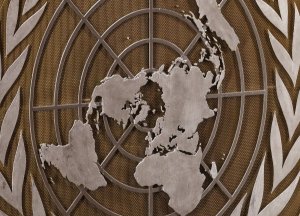
Supranational power, or global governance, exercised by institutions of the international legal system such as the United Nations, must be strengthened.
Their independence must be safeguarded, effective mechanisms must be put in place, and binding actions must be defined to guarantee the protection of human rights and democracy. These principles must prevail over the law of the strongest, within a coherent understanding of state sovereignty.
Contemporary international debate is increasingly shaped by a binary and polarized logic, intensified by the dynamics of the digital society. This polarization is reinforced by ideological entrenchment inherited from the Cold War, which limits the ability to listen to others or to accept opposing viewpoints as legitimate.
The debate is often framed around two competing principles, each burdened by political bias: on one side, the defense of state sovereignty and the right to self-determination; on the other, the defense of human rights and the rule of law.
When should one principle prevail over the other? How can these principles be protected in the international arena? Delaying or avoiding these questions creates fertile ground for the rule of force to replace the rule of law.
In different parts of the world, major powers act arbitrarily and with impunity, using their strength to pursue economic advantage, political leverage or broader geopolitical objectives.
The prolonged crisis in Venezuela, and its devastating humanitarian cost, offers a stark example that challenges the effectiveness of the United Nations and existing global institutional frameworks.
Confusion is compounded by unilateral interventions by the United States, which raise questions about motivations and underlying interests.
The ineffectiveness of international institutions stands in sharp contrast to the speed with which unilateral actions by powerful states can produce abrupt changes, as seen in Venezuela. Such actions risk further destabilization, deepen humanitarian suffering and provoke rejection by the international community.
In international politics and law, the Peace of Westphalia in 1648 laid the foundations of the modern state and the core principles of international relations, including state sovereignty and non-interference in internal affairs.
Since then, however, society has changed profoundly, exposing the practical dysfunction of the Westphalian order. The emergence of a global and digital world has transformed time, space and patterns of interaction, challenging the continued relevance of these principles.
As borders blur, state sovereignty is increasingly constrained by supranational global challenges. These include human rights violations, climate change, large-scale forced migration, organized crime, narco-terrorism, cybercrime and transnational security threats.
The traditional concept of sovereignty, understood as the exclusive exercise of power within a defined territory, is further questioned by the rise of democratic legitimacy and universal human rights principles developed during the 20th century.
This tension reveals a significant gap between principles and practice. It exposes the shortcomings of intellectual leadership and supranational institutions, particularly when confronted with unilateral actions by major powers.
Sovereignty must adapt to the realities of the digital age, balancing state autonomy with the protection of human rights and democratic norms.
Some thinkers define sovereignty as control over one’s own destiny, a concept that appears increasingly elusive in an interdependent world. Others emphasize digital sovereignty, focusing on how states can maintain control over data, strategic infrastructure, and critical technological assets without abandoning global innovation.
The central challenge is to reconcile the Westphalian pillar of state sovereignty with the universal defense of human rights, which many consider a moral and legal imperative that can supersede strict non-interference.
The rigid defense of state sovereignty, as seen in cases such as Cuba and Venezuela, has often allowed the slow erosion of democracy and the persistent violation of human rights to continue for decades.
The absence of effective mechanisms to confront these abuses, combined with prolonged international inaction, reflects structural leniency, ethical inconsistency and ideological blindness.
It is necessary to move beyond entrenched ideological positions and militant posturing. Those who bear ethical and historical responsibility must do more than comment from the sidelines while abuses persist.
The path forward lies in building a new consensus, understood as a challenge of adaptation to the digital society and its emerging paradigms.
This requires complementing the concept of state sovereignty with new treaties, legal frameworks, cooperative mechanisms and norms that address supranational challenges in a coherent manner.
Proposals range from the creation of international courts with genuine sanctioning power to the development of more effective mediation and enforcement mechanisms.
The supranational authority of institutions within the international legal system, particularly the United Nations, must be strengthened by ensuring their independence and equipping them with binding tools to protect human rights and democracy.
Only then can international law prevail over the law of the strongest, within a renewed and coherent conception of state sovereignty.
Carlos Cantero is a Chilean geographer who holds a master’s degree and a doctorate in sociology. He is an academic at the International University of La Rioja in Spain. An international lecturer, adviser, and consultant, his work focuses on adaptability to the digital society, ethics, social innovation and human development. The views and opinions expressed in this commentary are solely those of the author.
COMMENTS
Please let us know if you're having issues with commenting.