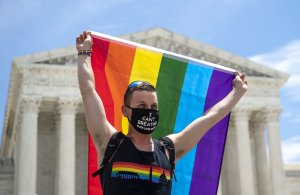

Oct. 7 (UPI) — The Supreme Court is expected to consider a challenge to Colorado’s ban on conversion therapy for minors Tuesday in a case that could have a far-reaching effect on the country.
The case stems from a lawsuit by a licensed counselor whose practice is based in Christianity who says the Colorado law prevents her from assisting her minor clients who seek “to live a life consistent with their faith.”
Kaley Chiles says the law violates her First Amendment rights by “censoring” client conversions and specifically targets Christians. She also took issue with the fact that Colorado law allows her to assist minors seeking to transition their gender but not to use conversion therapy on those same patients.
“Clients would like to hear a message of hope that you can have struggles with your body in a variety of ways and you can actually grow in peace and comfort with the body that you’re in,” Chiles told USA Today.
A lower court ruling said the Colorado law is a restriction on mental health treatment, not on speech. In a ruling by the 10th U.S. Circuit Court of Appeals, justices said the ban aligned with medical consensus that conversion therapy is “ineffective and harmful” and “rationally serves” the interests of the state in protecting minors.
Colorado is one of 23 states that ban conversion therapy, the practice of attempting to change a person’s sexual orientation or gender identity through therapy. Critics call the technique a pseudoscience, and the American Psychological Association and several other mental health and LGBTQIA+ organizations have come out in opposition to its use.
Colorado Attorney General Phil Weiser said a Supreme Court ruling striking down Colorado’s law could imperil not only efforts to prevent conversion therapy but other healthcare treatments that medical experts say are harmful or ineffective.
“For centuries, states have regulated professional healthcare to protect patients from substandard treatment,” he said, according to NBC News. “Throughout that time, the First Amendment has never barred states’ ability to prohibit substandard care, regardless of whether it is carried out through words.”
The Supreme Court will hear oral arguments in the case Tuesday. Alliance Defending Freedom, a conservative legal firm, is representing Chiles in the case.
COMMENTS
Please let us know if you're having issues with commenting.