
May 28 (UPI) — The United States designated two more Latin American criminal organizations as terrorist groups on Thursday, a day after Brazilian presidential hopeful and Trump ally Sen. Flavio Bolsonaro asked Washington to do so.
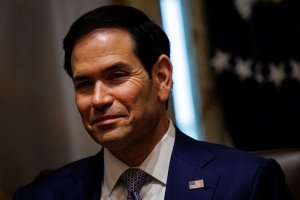
Secretary of State Marco Rubio announced the designations of Comando Vermelho and Primeiro Comando da Capital as specially designated global terrorists in a statement, adding that he also intends to designate them as foreign terrorist organizations.
Though both designations result in asset freezes, the foreign terrorist designation is a broader mechanism, imposing immigration restrictions on members of the blacklisted groups and prohibiting others from knowingly providing them with support under threat of criminal prosecution.
According to the State Department, CV and PCC command thousands of members, carrying out attacks against Brazilian law enforcement, officials and civilians, while maintaining networks that spread across the region.
“The Trump administration will continue to use all available tools to protect our nation and our national security interests by keeping illicit drugs off our streets and disrupting the revenue streams funding violent narco-terrorists,” Rubio said.
“Today’s actions taken by the State Department further demonstrates the Trump administration’s unwavering commitment to dismantling cartels and criminal organizations in our region and ensuring the safety of the American people.”
With the blacklistings, the Trump administration has designated 12 Latin American drug cartels and criminal organizations as terrorist groups as it seeks to expand its influence in the Western Hemisphere.
The designations come at a politically charged moment.
Flavio Bolsonaro is running for president against left-leaning President Luiz Inacio Lula da Silva. On Wednesday, the son of disgraced far-right former President Jair Bolsonaro — who is serving a 27-year sentence for staging a coup — met with Rubio and asked him to blacklist the organizations.
Flavio Bolsonaro confirmed to reporters that he had made the request while vowing that, if elected president, Brazil would be an “ally” in the fight against terrorism, while characterizing the da Silva administration as shielding the groups.
“The good people of Brazil, thank [Rubio] and [Trump] for their attention and commitment,” Flavio Bolsonaro said late Thursday in response to the designations.
“This fight belongs to all of us. Let’s put an end to these groups! Brazil deserves peace! Brazil has a future!”
However, opposition members and critics are describing the move as political, one that could be used to justify further U.S. intervention in Brazil during an election year.
Celso Amorim, chief advisor to Lula, called organized crime “an evil that must be fought” while praising international cooperation as welcome, but said that “a pretext for intervention is unacceptable,” local media reported.
Ivan Valente, a core member of Brazil’s Socialism and Liberty Party, said the designations were a “direct intervention in national sovereignty.”
“Brazil will not tolerate meddling in its decisions, or in its legislation and interference in its powers,” he said on social media.
“The judiciary must intervene to judge and imprison traitors to the homeland. The role of the Bolsonaro family is shameful.”
In an earlier post, Valente said the designations have been used to justify intervention in other countries.
“It’s the direct result of the treacherous and irresponsible actions of the Bolsonaro family. The Brazilian government must react with vigor,” he said.
The designations may also be used to justify more aggressive U.S. action against the criminal gangs.
Trump has used the terrorist designations as part of a legal framework work to attack suspected drug-trafficking boats in the Pacific and Caribbean with the U.S. military, killing nearly 200 people in nearly 60 strikes.
Under what some administration officials have dubbed the “Donroe Doctrine,” Trump is seeking to reassert U.S. dominance in the region and push back on foreign influence, invoking a modern corollary to the Monroe Doctrine of the 1820s.
The Trump administration has also targeted brazil over Jair Bolsonaro’s prosecution, imposing sanctions and visa restrictions against a Brazilian Supreme Court justice and his family, though they were later revoked. Tariffs and other punitive measures were also imposed against Brazil in connection with the elder Bolsonaro’s conviction.
COMMENTS
Please let us know if you're having issues with commenting.