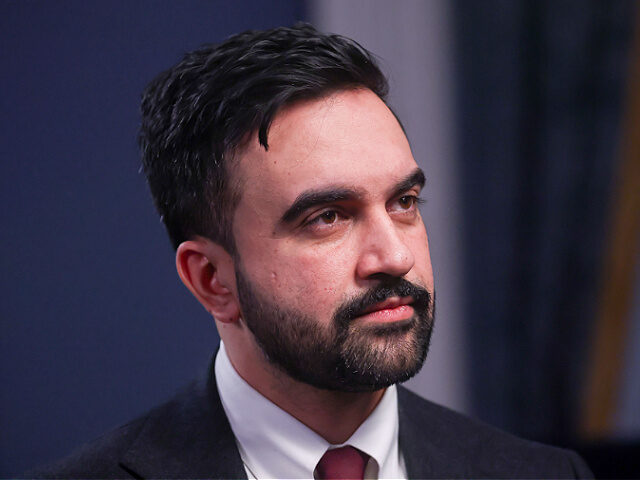
New York City Mayor Zohran Mamdani invoked Islam’s Hijrah — a concept he framed as a religious model for migration — as he rolled out a sanctuary-related executive order Friday, drawing backlash from critics who accused him of using religious doctrine to justify mass migration and shield illegal immigrants from federal enforcement.
Mamdani announced the order at his first Interfaith Breakfast at the New York Public Library, accusing Immigration and Customs Enforcement (ICE) agents of “visit[ing] terror upon our neighbors,” and likening their presence to riders arriving “atop a pale horse.”
“We will make it clear once again ICE will not be able to enter New York City property without a judicial warrant,” Mamdani said, citing schools, shelters, and hospitals.
However, the New York Post reported the order “doesn’t appear to do anything more to protect New Yorkers than what is already on the books.”
Mamdani then moved from policy to theology.
“I consider my own faith, Islam, a religion built upon a narrative of migration,” Mamdani said. “The story of the hijrah reminds us that Prophet Muhammad was a stranger too, who fled Mecca and was welcomed in Medina.”
He cited Surah An-Nahl 16:42 — “As for those who immigrated in the cause of Allah after being persecuted, We will surely bless them with a good home in this world” — and then quoted a saying attributed to Muhammad: “Islam began as something strange and will go back to being strange, so glad tidings to the strangers.”
“If faith offers us the moral compass to stand alongside the stranger, government can provide the resources,” Mamdani added. “Let us create a new expectation of City Hall, where power is wielded to love, to embrace, and to protect. We will stand with the stranger today.”
The remarks triggered swift backlash on X, with critics arguing that Mamdani was using Islamic doctrine to justify mass migration and municipal resistance to federal enforcement.
Rep. Keith Self (R-TX) charged that Mamdani was “the poster boy for the Islamic jihadists, globalists, and marxists,” adding that none “have any place in America.”
New York City Councilwoman Vickie Paladino (Queens) mocked the premise — “We have to allow infinity migrants because Islam says so” — warning, “This isn’t going to end well.”
Political commentator Dave Rubin reacted: “Sane people must leave NYC while they still can…”
Journalist and columnist Benjamin Weingarten argued that Mamdani’s invocation of “hijra” carries political meaning beyond a generic appeal for compassion, outlining the concept’s linkage to Muhammad’s migration from Mecca to Medina and the shift that followed.
Actor and commentator Michael Rapaport replied with a pointed question: “Non Muslims allowed in Mecca?”
Turning Point USA spokesman Andrew Kolvet said Mamdani’s administration was using taxpayer funds to publish “30,000 guides in 10 languages” to help illegal immigrants evade ICE, asking when such actions cross into “aiding and abetting.”
Prize-winning author and political commentator Dr. Carol Swain called the episode “Chilling,” asking, “Is this America?”
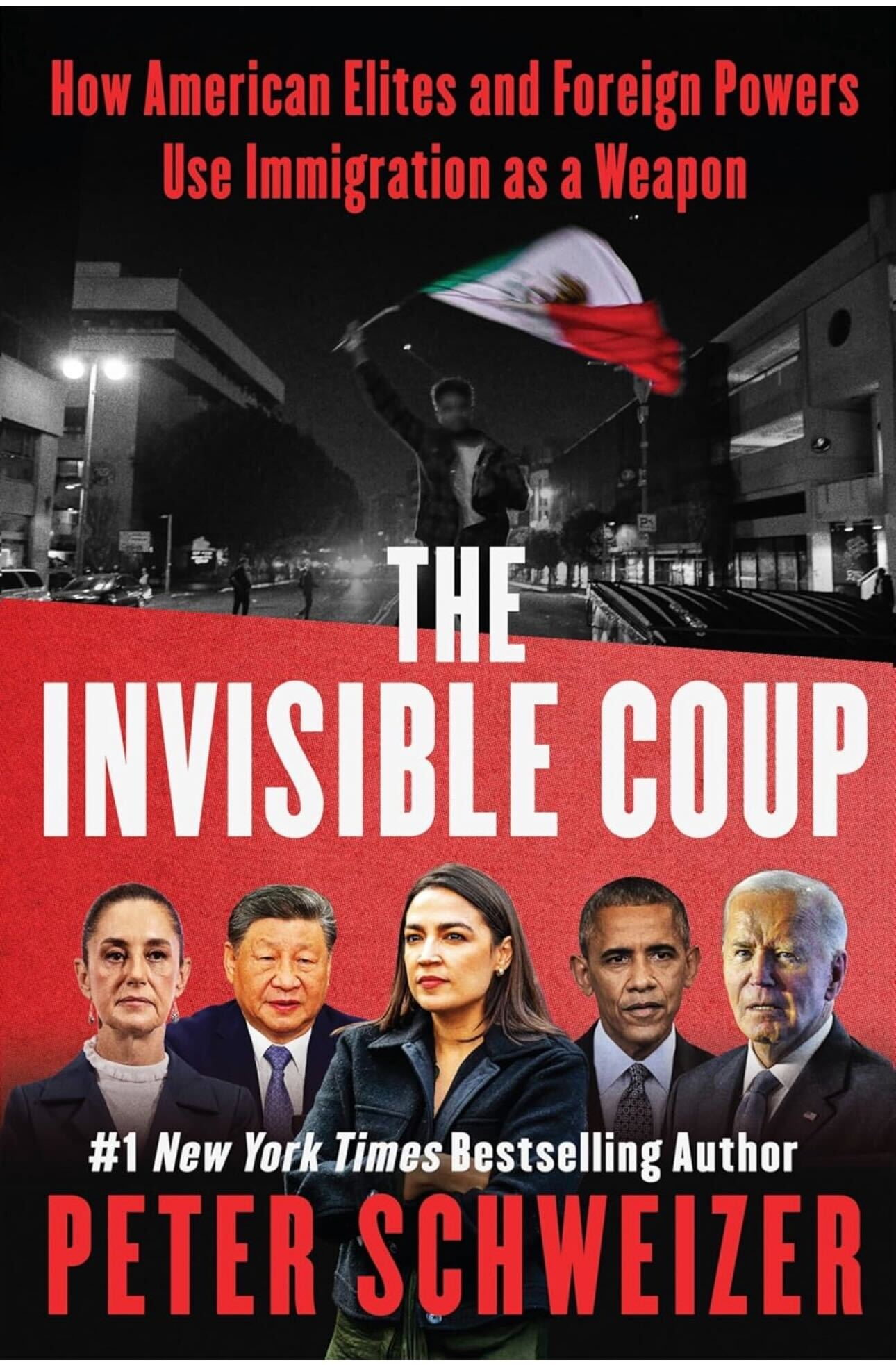
Mamdani’s decision to elevate Hijrah from a religious narrative to governing framework lands amid warnings documented by bestselling investigative author and Breitbart News senior contributor Peter Schweizer in his recently released book The Invisible Coup: How American Elites and Foreign Powers Use Immigration as a Weapon, which argues that jihadist leaders — led by the Muslim Brotherhood and aligned Islamist movements operating both overseas and inside the United States — have long treated mass migration, weaponized through modern immigration systems, not as a humanitarian phenomenon but as a deliberate strategy to penetrate, subvert, and ultimately remake the West from within.
Schweizer traces the strategy back to Islam’s origins and writes that the Muslim Brotherhood and its allies look to Muhammad himself for doctrinal justification for using migration as a tool of conquest — a religious obligation Muhammad called hijrah, which Schweizer describes as a foundational component of Islamic expansion.
Hijrah, Schweizer writes, was never merely about movement. Migration is “critically important” for da’wah — the effort to spread Islam by inviting others to adopt it — and equally important in establishing durable political power inside a host society. To illustrate how central the obligation is, Schweizer points to the year 622, when Muhammad migrated from Mecca to Yathrib, later renamed Medina — a moment he writes marked Muhammad’s transition from wandering prophet into political and military leader. Schweizer underscores the significance plainly: the Islamic calendar itself begins with that hijrah.
From there, Schweizer writes, Islamists do not merely cite history — they cite binding doctrine. He notes several hadiths embraced by Islamist movements that frame hijrah as an ongoing obligation and an “important weapon” to be used against the West — including one stating hijrah ceases only when a place has been “won over” and fath — occupation — has been achieved, and another insisting migration will continue “until the sun rises from the West,” language Schweizer presents as civilizational in scope. A further hadith, as he quotes it, lays out an operational command: “to assemble, to listen; to obey; to immigrate; and to wage jihad for the sake of Allah.”
Schweizer also places Mamdani inside the political ecosystem he documents.
He writes that Mamdani’s political rise in New York is emblematic of radical Islamist political networking in the United States — pointing to Mamdani’s past reference to his “love” for the Holy Land Five, the men convicted in a Hamas terror-funding case, and describing how Mamdani fused Islamist activism with the Democratic Socialists of America as Muslims became a key component of his campaign infrastructure.
Schweizer further documents that funds flowed into Mamdani’s campaign from a PAC that received at least $100,000 from a California-based PAC reported to be associated with CAIR — the Council on American-Islamic Relations — and that the same fund received a donation days earlier from Imam Siraj Wahaj, the cleric Mamdani campaigned with and whom Schweizer ties to figures involved in the 1993 World Trade Center bombing.
Mamdani, for his part, cast the sanctuary push Friday as a direct moral mandate — arguing faith supplies the “moral compass,” while government provides the “resources,” and vowing: “We will stand with the stranger today.”
Joshua Klein is a reporter for Breitbart News. Email him at jklein@breitbart.com. Follow him on Twitter @JoshuaKlein.
COMMENTS
Please let us know if you're having issues with commenting.