According to Science, ‘God’ Must Exist…Eventually
“Does God exist?” is, perhaps, humanity’s oldest philosophical question.

“Does God exist?” is, perhaps, humanity’s oldest philosophical question.
Alphabet is doubling down on investments by its subsidiary into artificial intelligence and leveraging a digitized cortex to manage its flagship service.
For years, the advance of artificial intelligence and human augmentation has been forensically debated by three broad factions.
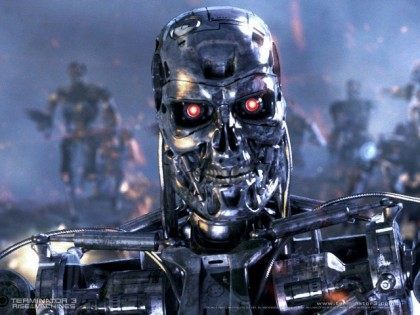
Technology’s advance is bringing us closer to the uncomfortable point at which organic and mechanical life begins to merge. That’s really what the growing ethical, legal, and practical conflicts in science boil down to.
As fears grow over what might happen if computers gain an intelligence of their own, tax-funded entrepreneur Elon Musk is sinking over $6 million into a research project to study the worst case scenarios.
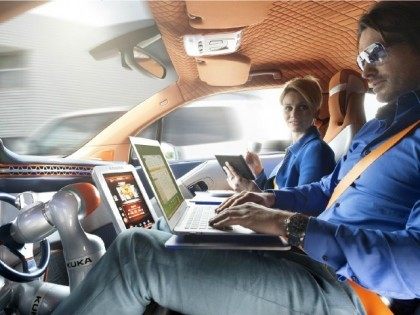
In a national poll, more than 1 in 4 Americans said they would support limits on humans driving cars in the near future, given the fact that robotic self-driving cars could be safer.
You’ll be able to buy a human brain’s worth of computing power for a thousand bucks in 2020 (which means just about everyone will have it.) You’ll be able to buy a machine with the computing power of all human minds combined for a thousand bucks by 2040. What will a thousand dollars buy in 2060, or 2100? A demigod?

Tech magnate Elon Musk is part of a group of science and technology celebrities—which includes Microsoft’s Bill Gates and physicist Stephen Hawking—who believe the impending development of artificial intelligence poses a threat to human society and perhaps even human survival.
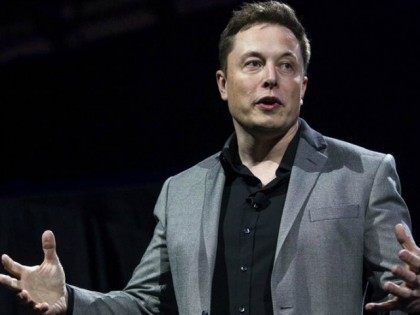
It may be time to think about baptizing the Terminator, according to Reverend Christopher Benek, an associate Pastor at First Presbyterian Church in Fort Lauderdale, who believes that religion may help artificial intelligence live alongside human beings. “I don’t see Christ’s redemption limited to human beings. It’s redemption to all of creation, even AI. If AI is autonomous, then we have should encourage it to participate in Christ’s redemptive purposes in the world,” he said.
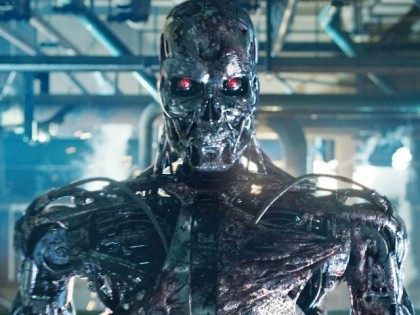
Humanity handled Y2K. But AI may be something bigger and more difficult. After all, we didn’t have to worry about Y2K fighting back. Perhaps it’s worth thinking about the safeguards that should be built into contemporary progenitors of the future’s incredibly complex expert systems, before they become self-aware and acquire civil rights.
Americans are accustomed to the dominance of Google, Microsoft, and Yahoo as search engines, but on the global stage, a Chinese service called Baidu is now second only to Google in popularity.