Iran Signs Contract to Buy 80 Boeing Planes
Iran Air said Sunday it had finalised a contract to buy 80 planes from US firm Boeing, the official IRNA news agency reported.

Iran Air said Sunday it had finalised a contract to buy 80 planes from US firm Boeing, the official IRNA news agency reported.

President Obama’s nuclear deal did not wipe out all sanctions against Iran immediately. The Iran Sanctions Act of 1996 is still in effect, and the U.S. House of Representatives just voted to renew it for another ten years.

A Texas state senator plans to shore up, close loopholes, and expand the state’s existing divestiture standard for the Iranian and Sudanese governments in two bills that prevent taxpayer dollars from flowing into countries that sponsor terrorism.

Germany wants to help Iran push ahead with reforms, Economy Minister Sigmar Gabriel said on Monday, adding he believed the Islamic Republic was a reliable credit partner as he courted closer trade ties.

Aviation giants Airbus and Boeing Co. have received permission from the U.S. government to sell aircraft to Iran, part of landmark deals potentially worth some $50 billion in total following last year’s nuclear accord.

Boeing Co. said Tuesday it signed an agreement with Iran Air “expressing the airline’s intent” to buy its aircraft, setting up the biggest business deal between the Islamic Republic and America since the 1979 US Embassy takeover in Tehran — if it goes through.

Texas Governor Greg Abbott urged his gubernatorial peers in 49 other states to establish, maintain, or strengthen state-based sanctions against Iran in a two-page letter Tuesday.

OPEC’s thorniest dilemma of the past year – at least from a purely oil standpoint – is about to disappear.

Critics have accused the Obama administration of effectively acting as Iran’s law firm during the nuclear negotiations, but now Secretary of State John Kerry seems determined to volunteer as Iran’s marketing director.
TEHRAN, Iran (AP) – Iran’s official IRNA news agency is saying a delegation from Boeing Co. will visit the country to review “possible cooperation” with Iranian airlines. The late Friday report by IRNA says officials from Iran’s national carrier, Iran

Iran is seeking $2.5 billion investment to modernize its oil tankers fleet following the lifting of sanctions against Tehran, managing director of National Iranian Tanker Company (NITC) was quoted as saying by state news agency IRNA on Saturday. Iran emerged

The Jerusalem Post reports: The European Union (EU) could impose sanctions on Iran over its recent ballistic missile tests, France’s foreign minister said on Sunday. The United States, France and other countries have already said that, if the missiles are

Iran started counting tens of millions of votes on Saturday after hotly contested elections that could see reformists speed up Tehran’s opening to the world or long-dominant hardliners reassert the Islamic Republic’s traditional anti-Westernism.

Reuters reports Wednesday that part of the deal to secure the release of American prisoners in Iran involved the Administration throwing out a $10 million claim from a Maryland jury against an Iranian-American defendant, even though the defendant himself did not want to be part of the deal.

Iranian Foreign Minister, Mohammad Javad Zarif, went on CNN to address the growing tension between his nation and Saudi Arabia, which he described as “panicking” over reduced tensions between Iran and the Western world. During the interview, he slammed Saudi Arabia as the fountain from which terrorism flows, and lectured America for being “addicted” to sanctions.

Precisely 24 hours after Saturday’s hostage for prisoner swap between America and Iran took place, news broke that three Americans were kidnapped in Baghdad, Iraq, by Iran-backed militias.

The termination of nuclear sanctions means Iran will pocket about $215 billion in cash, sell another million barrels of oil a day (bpd), and produce 5 million more bpd within 10 years; while the West gets 20 years of cheap oil.

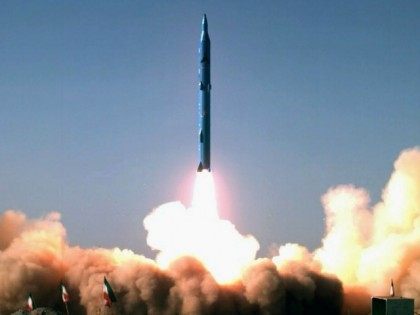
Iran will ignore recently-passed U.S. sanctions against its ballistic missile program, the regime’s defense minister pledged on Monday, promising to unveil new homemade weapons systems in the near future.

An “investigative journalist” on Iran’s state-run PressTV Monday claimed to have discovered why the Obama Administration is both offering sanctions relief to the Ayatollah’s Islamic Republic while also imposing a new round of sanctions on Tehran: “Jewish neocons.”

Israel bristled on Sunday at the lifting of international sanctions on Iran and vowed to flag up any violations of its arch-foe’s nuclear restrictions while drawing on U.S. defense aid to prepare for a possible military face-off in the future.
Israeli Prime Minister Benjamin Netanyahu rightly inferred that one threat more dangerous than President Obama’s Iranian nuclear deal would be failing to meaningfully enforce all restrictions to Iran’s nuclear weapons program once the deal is in place.

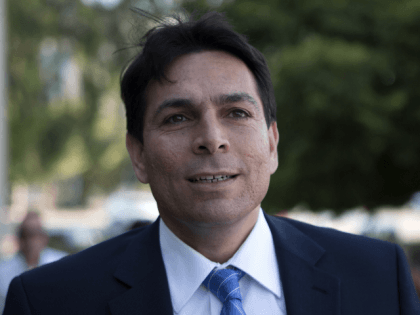
The Jerusalem Post reports: NEW YORK – “Iran is continuing to strive for nuclear weapons and the International Atomic Energy Agency’s optimism must not blind the international community,” Israel’s ambassador to the United Nations, Danny Danon (pictured) said on Saturday, as

TEL AVIV – Less than one week before the international community is set to unlock a decade of sanctions imposed on Iran, the country’s Islamic hardliners deliberately generated a crisis with the US for pure domestic consumption with the aim of ensuring the ayatollahs’s continued grip on power.

The notion that the Obama administration’s talking points increasingly sound like they are coming out of Tehran was further solidified this week, culminating with an op-ed published by Bloomberg confirming that the State Department acquiesced to Iran’s demand to reject new missile sanctions.

Fearing a flood of crude oil when the Iran sanctions are lifted in the next few months, Saudi Arabia is pumping an extra 1.5 million barrels a day and signing long-term export contracts at low prices in a desperate effort to grab cash flow and avoid bankruptcy.

Iranian regime officials have pledged to respond to any coming U.S. sanctions by “forcefully” continuing to boost “its missile capabilities,” announced defense minister Brig Gen Hossein Dehqan on Friday. The Obama White House was said to be preparing financial sanctions

Iran’s religious militia may be about to receive funds via unwitting investors from Britain and other Western nations after taking control of hundreds of companies. The Iranian Revolutionary Guard Corps (IRGC), which has been accused of sending arms to Hezbollah as

Republicans in Congress plan new sanctions against Iran even if the Iran deal passes, according to a new report by Josh Rogin of Bloomberg View.

Critics of the Iran deal have pointed out that President Barack Obama has imposed a false choice on Congress: accept a bad deal, or go to war—as if those are the only two alternatives. In fact, Obama has imposed a second false choice: either cooperate with the international community, or go it alone.

During his testimony on Tuesday before the House Foreign Affairs Committee, Secretary of State John Kerry admitted that states may retain their own sanctions against Iran. However, Kerry said, the Obama administration “will take steps” to urge the states “not to interfere.”

Iranian media organizations are absolutely exuberant about Iran’s defeat of the “evil” United States in nuclear negotiations.

(Reuters) A draft nuclear deal between Iran and six major powers calls for U.N. inspectors to have access to all suspect Iranian sites, including military, based on consultations between the powers and Tehran, a diplomatic source said on Tuesday. The source

As it becomes increasingly clear that the nuclear deal with Iran will not live up to promises made just a few months ago, the Obama administration is getting some help moving the goalposts from the New York Times.

President Obama said once again on Tuesday that the U.S. would “walk away” from a bad deal with Iran. Apparently, the definition of a “bad deal” does not include one that tosses out a key commitment included in the U.S. fact sheet published in April.

A new United Nations report suggests that the Obama administration and other western governments may be covering up Iran’s violations of international sanctions of ahead of the upcoming June 30 deadline for a final nuclear deal to be agreed.

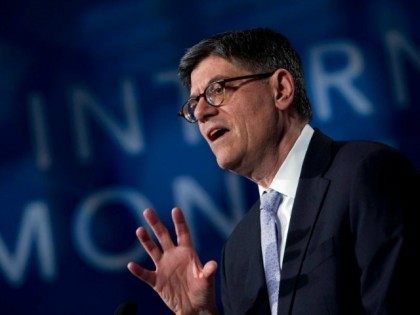
Treasury Secretary Jacob Lew was given the unenviable job of defending President Obama’s nuclear deal with Iran on Sunday at a conference in New York sponsored by the Jerusalem Post.

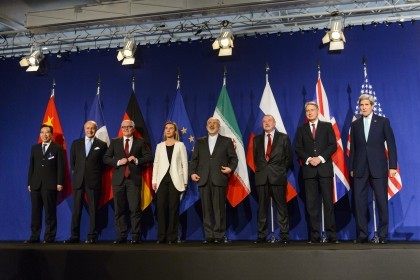
With one month left for talks, news has emerged that the P5+1–six powers negotiating with Iran (Russia, China, France, Britain, Germany and the U.S.)–have reached a deal on “snap-back” Iran sanctions–i.e. sanctions that would be removed as part of a nuclear deal but which would automatically be restored if Iran broke the agreement, due June 30. Reuters suggested that all that remained was for Iran to agree, and a major obstacle would be gone. Yet the snap-back “deal” has three fatal flaws.

Iranian Foreign Minister Mohammad Javad Zarif gave a genial interview to Der Spiegel this week, with the German magazine describing him as “relaxed and cheerful” throughout. In his relaxed and cheerful way, Zarif continued Iran’s practice of making the Obama administration look foolish, rewriting the so-called “nuclear deal” on the fly and scoffing at the administration’s talking points.

REUTERS– A senior Israeli official took a swipe at the United States on Tuesday over Iran’s reported purchase of second-hand civilian aircraft, saying the acquisition violated international sanctions and went ahead despite a tip-off from Israel. Iranian Transport Minister Abbas Akhoondi was

Great Britain has revealed to a United Nations sanctions committee that Iran is attempting to purchase nuclear material through two “blacklisted” companies in direct violation of international sanctions, according to a Reuters report.