U.S. Factory Productivity Revised Higher on Stronger Durable-Goods Output
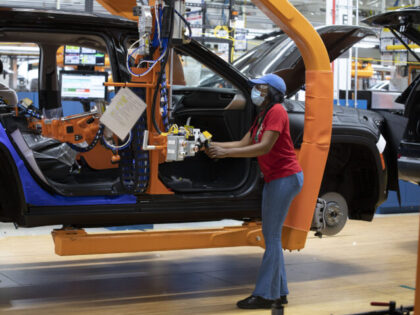
U.S. manufacturing productivity rose more than initially estimated in the third quarter, driven by a stronger showing in durable-goods output.

U.S. manufacturing productivity rose more than initially estimated in the third quarter, driven by a stronger showing in durable-goods output.
U.S. labor productivity was revised down sharply along with overall economic output growth, while employers spent more on U.S. labor. The growth rate of unit-labor productivity, a measure of goods and services produced per hour worked, was revised down to

An unexpected plunge in productivity in the first quarter suggests the economy is still struggling to find its footing.

Labor costs jumped 6.5 percent in 2022, higher than the preliminary estimate of 5.7 percent.

Another set of economic figures come in much better than expected, hinting that the resilience of the economy may be underestimated.

Productivity—the measure of how much output in goods and services workers produce in an hour—rose in the third quarter for the first time this year.
The biggest decline in records that go back to 1948.

A jobs report that would be wonderful in a low-inflation, high-growth environment is terrible in a high-inflation, low-growth economy.

Labor costs moved much higher in the first three months of the year than previously thought.

Productivity made strong gains in the fourth-quarter but inflationary forces are still pushing up costs.

Labor costs are soaring by more than expected.

It was not just productivity that crashed in the third quarter. So did real hourly compensation.

Real hourly compensation fell at an annualized rate of 4.6 percent in the first quarter.

Manufacturing sector labor productivity increased at a 19.9 percent as the economy rebounded from the lockdowns

Wages are rising, pushing up the share of America’s output that goes to workers rather than investors.