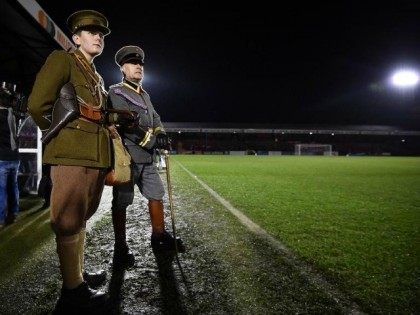
100 Years Ago: The Lusitania Left New York City on Its Final, Fateful Voyage
If there were a turn-of-the-century equivalent of a TSA security line, Pier 54 at West 14th Street on May 1, 1915 may have been it.
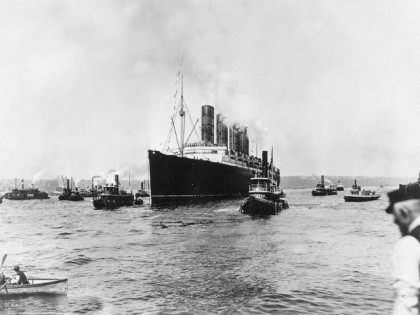
If there were a turn-of-the-century equivalent of a TSA security line, Pier 54 at West 14th Street on May 1, 1915 may have been it.
The Christian population of Turkey is evaporating rapidly. The nation, a NATO member since 1952, has experienced a reduction in its Christian population from 20% 100 years ago to only 0.2% today. The latest blow in the community occurred at the Hagia Sophia during Easter holy week.
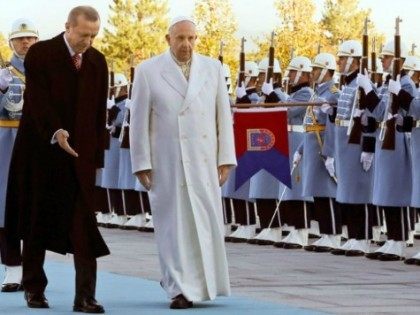
The Armenian genocide is a very sensitive subject with Turkey, as it prefers to think of that horrendous century-old bloodbath as a military clash with the Ottoman Empire, which the Armenians lost very badly–badly enough to kill about 1.5 million of the 2 million Christian Armenians living in the Ottoman Empire at the time, to be specific.
Bob Schieffer could barely contain his outrage at Sen. Tom Cotton (R-AR) for daring to warn the Iranian leadership that any nuclear deal would have to be ratified by the Senate, under the U.S. Constitution, to be binding. As Cotton explained in his appearance on CBS News’ Face the Nation, Iran is clearly not hearing that from the Obama administration itself, which is desperate to achieve “peace at any price,” rather than using constitutional constraints as leverage to force a better deal.

Gallipoli was a failure that haunted Churchill as much as supporting the Iraq War haunts many politicians today. Yet he was right about Hitler when others hid from the truth. Churchill, like Netanyahu and unlike Barack Obama, worried more about victory than pride.

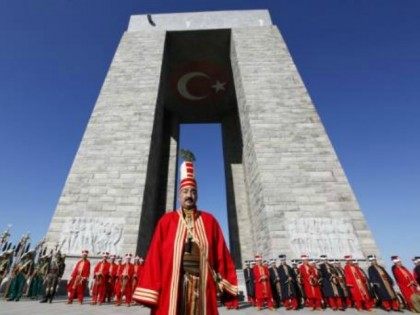
Turkey and Armenia schedule conflicting WW I centennial commemorations; China continues its double-digit military spending increases
One of the greatest war movies ever made is Grand Illusion, Jean Renoir’s 1937 film about a group of French prisoners of war held in a German aristocrat’s castle during World War I.

London (AFP) – A letter from a World War I soldier describing the “extraordinary sight” of a spontaneous Christmas ceasefire between German and British soldiers was published on Wednesday, 100 years after it was written.