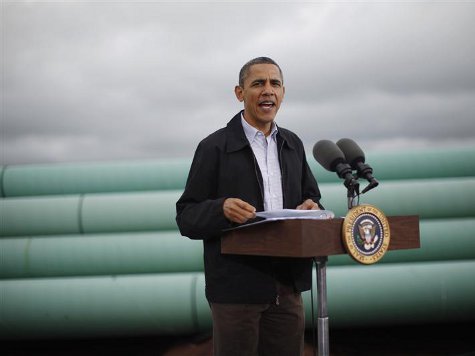


In April, Canadian Prime Minister Stephen Harper revealed disheartening consequences for America’s energy policy at athink-tank event in Washington. Asked about President Obama’s decisionto put off a decision on the construction of the cross-border KeystoneXL pipeline, Harper explained that it would permanently alter Canadian energy policy.
What it really has highlighted for Canada is that our issue when itcomes to energy and energy security is not North Americanself-sufficiency. Our energy [issue] is the necessity of diversifyingour energy export markets. We can not be, as a country, in a situationwhere really our one, and in many cases almost only, energy partnercould say no to our energy products. We just cannot be in that kind ofposition.
Harper went on to say that the alternative to a pipeline south intothe Gulf region of the United States was a pipeline west to reach themarkets of Asia. Now fast forward a couple months, and the New YorkTimes is reporting this:
While Joe Oliver, Canada’s minister of natural resources, said in aninterview that the United States would remain Canada’s “most importantcustomer,” billions of barrels of oil that would have been refined andused in the United States are now poised to head elsewhere. Expansion ofCanada’s fast-growing oil-sands industry will be restricted by the lackof pipeline capacity before the decade’s end, he said, which “adds tothe urgency of building them so that the resources will not bestranded.”
Three new pipeline network proposals — two that call for heading westand the other east — have been put forward.
In other words, Stephen Harper was not making an idle threat or apolitical statement. Canada is moving full speed ahead with plans tosell tar-sands oil to other consumers, particularly China.
The benefits to Canada of exporting to Asia are obvious. Canadacurrently earns less per barrel for its oil than the market pricebecause it is a captive supplier to the U.S. Opening the market to Asiameans more money for Canada. But there is no conceivable benefit to theUnited States in having oil from our closest, most trusted neighbor soldto China. The United States loses jobs and is forced to continuing buyits oil from nations like Venezuela and Saudi Arabia instead.
The scale of this blunder, which the President made ostensibly onenvironmental grounds, is compounded by the fact that there is noputting the genie back in the bottle. Once a new pipeline is built,Canada has no reason to return to selling its oil products solely to theU.S. at a reduced price. The decision not to approve Keystone XL makesSolyndra look like a stroke of genius.
COMMENTS
Please let us know if you're having issues with commenting.