

This morning’s key headlines from GenerationalDynamics.com
- Britain reverses direction, will send hundreds of troops to Mali
- Malians in Timbuktu cheer French troops but seek ethnic revenge
- U.N. warns that Mali’s jihadists threaten Libya’s stability
- Egypt’s army chief warns that widespread unrest could cause ‘state collapse’
- Lakhdar Brahimi says that Syria is ‘breaking up before everyone’s eyes’
Malians in Timbuktu cheer French troops but seek ethnic revenge

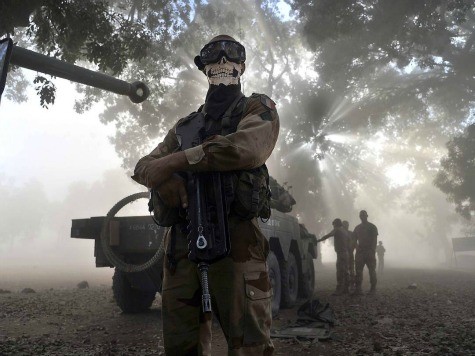
Malians cheer the arrival of French troops in Timbuktu (Reuters)
French and Malian troops regained control of Timbuktu on Monday andwere greeted by local residents with broad smiles and wild cheers.However, ethnic tensions are rising, as black-skinned Malians areseeking revenge against light-skinned ethnic Tuaregs and “Arabs,” whoare blamed for the jihadist horrors that the Malians suffered.
Because of reports of looting and targeting of civilians in newlyliberated areas, France is in favor of rapidly deploying “internationalobservers” to ensure that human rights are respected in Mali. It’sunclear to me what “international observers” means, but I suspect itimplies troops from other non-African countries who won’t take side inMali’s ethnic battles.
France’s president François Hollande iscalling for additional troops from African nations so that France canreduce its own commitment, which is becoming increasingly unpopular at home. France 24
Britain reverses direction, will send hundreds of troops to Mali
Just two weeks ago, Britain’s Prime Minister David Cameron said thatno British troops would be sent to join France’s soldiers in Mali, butnow Cameron is flying to Algeria to underline his brand newcommitment to send hundreds of British troops to Mali and the region.Britain’s defense minister denies that this is “mission creep,” as thetroops will be used for training Malian forces:
It is not our intention to deploy combat troops. Weare very clear about the risk of mission creep and we have definedvery carefully the support we are willing and able to provide tothe French and the Malian authorities.
We have an absolute duty to intervene wherever there is a threatto Britain’s national security and the security of Britain’sinterests around the world and this is exactly such a case. Thisis a well-judged, well-leveraged intervention that will deliverefficiently a result that is in Britain’s nationalinterest.
However, one opposition leader says that Mali could becomeBritain’s Vietnam: “The American catastrophe in Vietnam started off withAmerican troops in a training capacity.”
Britain’s announcement follows by one day the American military’sannouncement that it plans to set up a drone base in Niger on the Maliborder along with 300 troops. Guardian (London) and Telegraph (London)
U.N. warns that Mali’s jihadists threaten Libya’s stability
An unintended consequence of the West’s military intervention inLibya in 2011 is that, when it ended, hardened Tuareg andal-Qaeda linked jihadist rebels fled to Mali and took control of thenorthern two-thirds of the nation. Now, with French and Maliantroops driving the rebels out of the major cities in northernMali, the United Nations is concerned that they’ll return toLibya and destabilize that country:
The opposition of armed radical groups to themilitary intervention in Mali may exacerbate the situation (inLibya) given ideological and/or ethnic affiliations as well asporous borders in Libya.
Egypt’s army chief warns that widespread unrest could cause ‘state collapse’
On Tuesday, protesters continued to ignore evening a curfew orderbroadcast on Sunday by president Mohamed Morsi, calling the situationa “state of emergency.” Protests between Islamists on the one handand secularists and liberals on the other hand have been growing moreraucous each week. Egypt’s defense minister / army chief, GeneralAbdel Fattah al-Sissi, says that failure to resolve the situationstability:
The continuing conflict between political forces andtheir differences concerning the management of the country couldlead to a collapse of the state and threaten futuregenerations.
Al-Ahram (Cairo) and Al-Jazeera
Lakhdar Brahimi says that Syria is ‘breaking up before everyone’s eyes’
The United Nations / Arab League envoy to Syria, Lakhdar Brahimi,told the Security Council on Tuesday that extreme horrors aredestabilizing Syria and threatening contamination in neighboringcountries. The warning comes a day after a shocking new massacrewas discovered in Aleppo, with 79 bodies pulled from the river.
Unprecedented levels of horror have been reached. Thetragedy does not have an end.
I’m sorry if I sound like an old broken record. The country isbreaking up before everyone’s eyes. Only the internationalcommunity can help and first and foremost the SecurityCouncil.
Since the beginning of the Syrian conflict, Russia and China haverepeatedly blocked any Security Council resolutions threateningsanctions, and those vetoes are unlikely to change. Brahimiadded the risk of contamination is another reason why actionis required:
Most regional parties have aligned with one of theparties in Syria. There might be implications if the crisiscontinues spiraling. The refugee flow is becoming a matter ofcontroversy in these countries.
Syria is becoming a playground for competing forces.
None of the neighbors is immune to the fallout consequences of theconflict. The region is facing the risk ofcontamination.
Israeli Air Force Commander Maj. Gen. Amir Eshel warned Tuesday thatSyria is falling apart and no one knows what the next day may bring:eventuality.” Telegraph (London) and Debka
KEYS: Generational Dynamics, Britain, David Cameron, Algeria, Mali,Vietnam, Timbuktu, France, François Hollande,Egypt, Mohamed Morsi, Abdel Fattah al-Sissi,Syria, United Nations, Arab League, Lakhdar Brahimi,Russia, China, Israel
COMMENTS
Please let us know if you're having issues with commenting.