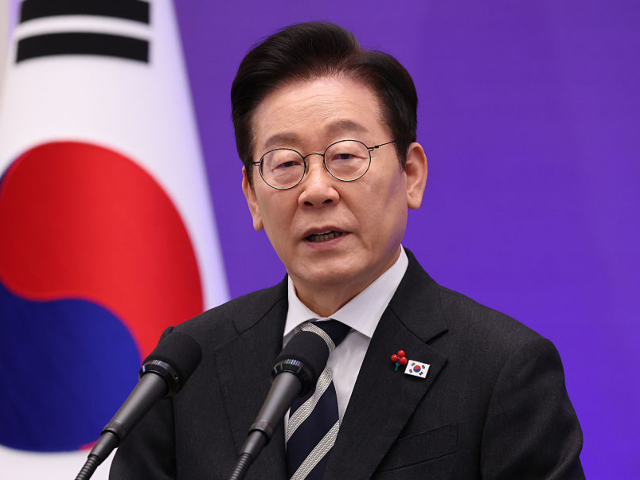

Wednesday marked the first anniversary in South Korea of the December 3, 2024, attempt by former president Yoon Suk-yeol to impose martial law.
Current President Lee Jae-Myung promised in his anniversary address that more prosecutions were coming to ensure no such effort would be made again.
“The recklessness of those who tried to destroy constitutional order and even plan a war all for their personal ambition must be brought to justice,” Lee said on Wednesday.
“It was the first time since the beginning of the 21st century that a coup occurred in a democracy like South Korea. Equally unprecedented in world history, the coup was peacefully and beautifully prevented by the hands of unarmed citizens,” he said.
“Ironically, the Dec. 3 coup became an opportunity to showcase to the world the high level of civic consciousness of our people and the remarkable resilience of South Korea’s democracy,” he said.
Lee went on to say he believed the South Korean people, as a group, were worthy of consideration for a Nobel Peace Prize because they “overcame a democracy crisis in an unprecedented and peaceful manner,” averting a potential “setback for world democracy” in the process.
“Strict punishment for those involved in the coup is just the beginning. To build a nation where no one can ever again even dream of a coup and where no one can threaten the light of people’s sovereignty, a ‘just unity’ is essential,” he said.
Yoon Suk-yeol issued his shocking declaration of martial law in an emergency press conference from his office on the evening of December 3, 2024. It was the first such declaration in South Korea since the end of its postwar military dictatorship in 1988.
Yoon said he was imposing martial law to “protect the Republic of Korea from the threats of North Korean communist forces, to immediately eradicate the unscrupulous pro-Pyongyang anti-state forces that pillage the freedom and happiness of our people, and to protect free constitutional order.”
More specifically, Yoon accused his political opponents of “paralyzing the courts in the country,” attempting to remove top officials from office, crippling his administration with budget cuts, and deadlocking the legislature.
The martial law effort fell apart within hours as the legislature defied a lockdown order to convene and passed a motion nullifying Yoon’s decree. Armed soldiers were smashing through the windows of the legislature as the vote was passed while military helicopters circled overhead.
Lee, who was acting as the head of the opposition Democratic Party caucus at the time, immediately declared that Yoon was “no longer the president of South Korea.”
It took a bit longer to remove Yoon from office — he was impeached by the legislature two weeks after the martial law incident and formally removed by the South Korean Constitutional Court in early April 2025. Lee won the special election to succeed him in June.
Yoon is currently facing trial on charges of insurrection, and several senior officials from his administration have been arrested for assisting his effort to impose martial law. In November, Yoon was additionally indicted by a special prosecutor for “benefitting the enemy in general” — ironically, much the same charge Yoon leveled against his opponents — because he allegedly ordered drone flights over North Korea in an effort to provoke a hostile response from Pyongyang and strengthen his case for imposing martial law. If the former president is found guilty on these charges, he could be sentenced to death.
Former prime minister Han Duck-soo awaits a court ruling in January on insurrection charges. Han, 77, has been accused by prosecutors of “masterminding” the martial law scheme. The prosecution is seeking a 15-year jail sentence.
Han’s case is crucial because if he is convicted and sentenced to prison time it will effectively classify the martial law decree as an act of insurrection, rather than the lesser offense of abusing power.
Yoon’s wife, former first lady Kim Keon-hee, is also facing a possible 15-year prison sentence for an assortment of fundraising, stock manipulation, and bribery charges. The most serious allegation is that she accepted luxury gifts from the controversial Unification Church in exchange for business favors.
“She colluded with a religious group and destroyed the constitutional principle of separation of politics and religion, while bringing down the democratic foundation of election fairness and the national governance system of representative democracy,” said a member of the special prosecution team on Wednesday.
In her final statement to the court, Kim apologized for causing “great concern” to the south Korean people and admitted she has “done a lot of wrong,” but still contended she has been “treated unfairly in many ways” for political reasons.
COMMENTS
Please let us know if you're having issues with commenting.