U.S. Current-Account Deficit Narrowed Sharply in Fourth Quarter
A swing in investment income drove the largest quarterly improvement in two years.


A swing in investment income drove the largest quarterly improvement in two years.
Mainstream macroeconomists argue endlessly about why America runs trade deficits. The answers they give are deeply unsatisfactory because they are so far removed reality.
U.S. business activity growth slowed to its weakest pace in nearly a year in March as the war with Iran sent energy prices surging and rattled consumer and business confidence, according to a closely watched survey released Tuesday.
The mood on the political right in America has dimmed fast in the early weeks of the war with Iran.

David Simon, who died Sunday at 64 after a battle with pancreatic cancer, was the last of a kind: a builder in an age of talkers, a dealmaker who let the deals speak for themselves, a billionaire who never confused running a great company with saving the world.
Talk of Iran deal sparked a major market rally Monday morning.
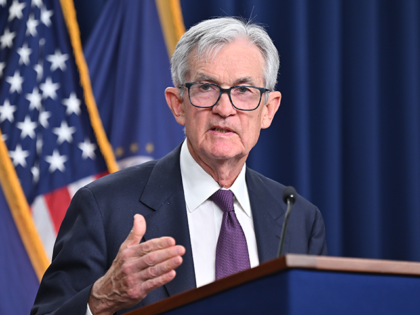
This week, we saw Jerome Powell insist that he can be Fed chairman forever or at least until his successor is confirmed, whichever comes first, we guess.
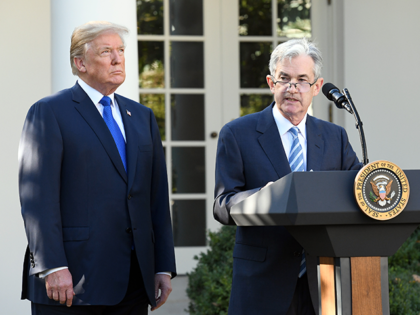
Jerome Powell can stay on the Federal Reserve board. He cannot stay as chairman. And on that question, the law does not give him the choice.
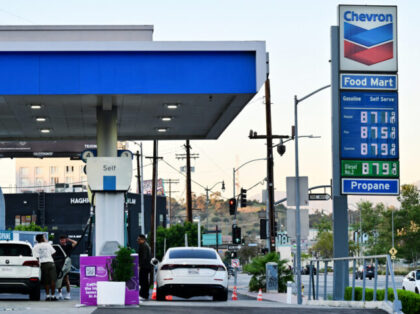
What looked this week like a fresh sign of rising inflation may have sprouted months earlier in the desert around Yuma, Arizona.

Brent crude spiked to nearly $120 a barrel Thursday morning before retreating, as the Iran conflict expanded to threaten major energy hubs across the Middle East. A drone struck a Saudi refinery, and President Trump issued a stark warning that
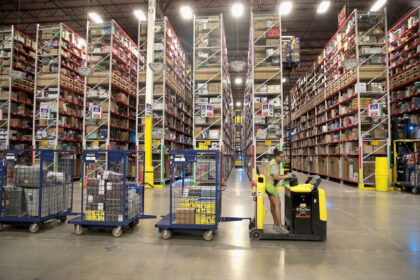
Stocks at U.S. wholesalers shrank in January, the second consecutive monthly decline, Commerce Department data showed Thursday. Inventories at merchant wholesalers were down 0.5 percent compared with the prior month, according to the seasonally adjusted figures. In December, inventories contracted
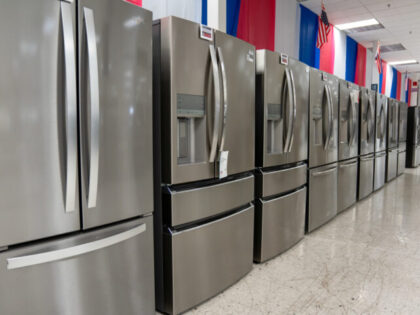
Somewhere between the economics department and the checkout line, the great tariff inflation failed to arrive.

“I have no intention of leaving the board until the investigation is well and truly over with transparency and finality. I would refer you to the statement that was in the Fed’s brief that you all have seen. I won’t have anything more for you on that,” Powell said.
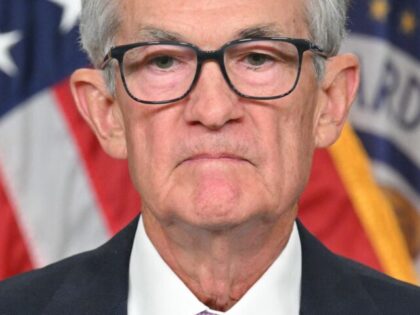
The Federal Reserve left its short-term interest rate target unchanged on Wednesday. The decision to hold the benchmark federal-funds rate steady in a range between 3.5 percent and 3.75 percent was approved on an 11 to 1 vote. Fed governor
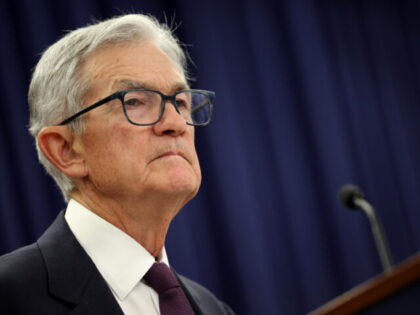
The producer price index for final demand, which measures prices received by U.S. businesses selling both goods and services to consumers and other end-users, rose 0.7 percent in February.

Saint Patrick’s Day is a $7.7 billion consumer event that is driven by consumption in the most literal sense: eating, drinking, dressing up, and going out.

Global investors turned sharply bearish in March as the ongoing war with Iran and mounting concerns about private credit markets ended months of “frothy optimism.”

Homebuyers signed far more contracts to buy homes in February than expected, the latest sign that the housing market staged a comeback at the start of the year.

We have argued since the opening days of Operation Epic Fury that the economic consequences of the Iran war depend less on the price of oil this week than on one question: how long does this last?

U.S. industrial production expanded in February, the fourth straight month of increases, beating economist forecasts as manufacturing and mining output both grew for the second consecutive month, the Federal Reserve reported Monday. The headline number understates the strength of the

This is the Breitbart Business Digest weekly wrap, which has decided that we’re never going to die in Zohran Mamdani’s New York because it is too unaffordable.
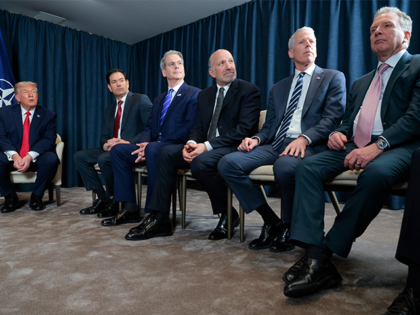
A federal judge has quashed two Justice Department subpoenas targeting the Federal Reserve, the Wall Street Journal reported Friday, delivering a significant legal victory to the central bank and a serious setback to the criminal probe that U.S. Attorney Jeanine Pirro had opened into Fed Chair Jerome Powell.
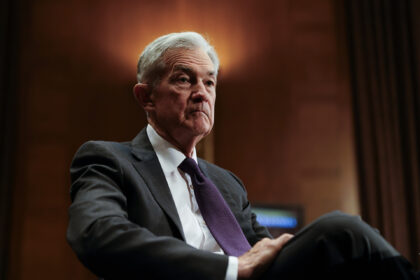
U.S. job openings rose in January while layoffs declined and workers continued to quit jobs at a steady pace, pointing to firm labor demand even as hiring remained restrained.

Sentiment started to improve until the U.S. attacked Iran this month.

New orders for long-lasting U.S. manufactured goods were unchanged in January, a sign that factory demand remained sluggish at the start of the first quarter.
U.S. economic growth in the fourth quarter was much weaker than first reported, with revised data Friday showing gross domestic product rose at a 0.7 percent annual rate instead of the previously estimated 1.4 percent.

Americans’ disposable income surged in January as the Trump tax cuts began flowing through paychecks, boosting the personal saving rate while consumers held back on spending, according to data released Friday by the Bureau of Economic Analysis.
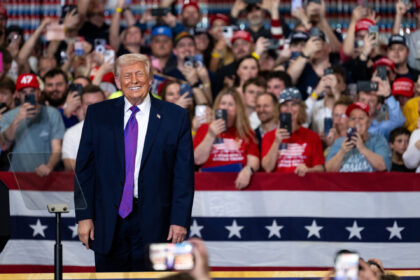
The establishment case against tariffs got a polished restatement this week. It is worth examining carefully because it gets the problem wrong, gets the causation wrong, and offers wishes in place of solutions.

The Commerce Department said Thursday that the goods and services deficit fell to $54.5 billion in January, down from $128.4 billion in the same month a year ago. That marked a decline of $73.9 billion, or 57.6 percent.
The Dow Jones Industrial Average dropped more than 500 points in midday trading.

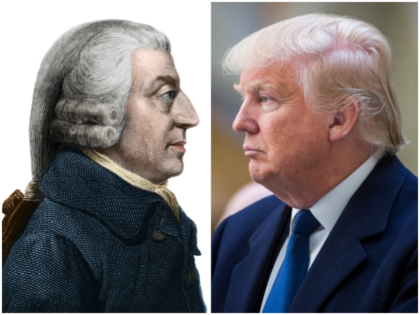
On the 250th anniversary of “The Wealth of Nations,” it is worth noting that Adam Smith defended the policy mix now advanced by President Trump.
The 32 member countries of the International Energy Agency unanimously agreed Wednesday to release 400 million barrels of oil from their emergency reserves, the largest coordinated stock release in the agency’s 52-year history.

The International Energy Agency has proposed the largest release of oil reserves in its history to bring down crude prices that have soared during the U.S.-Israel war with Iran, the Wall Street Journal reported Tuesday.

Consumer prices continued to rise at a moderate rate in February.
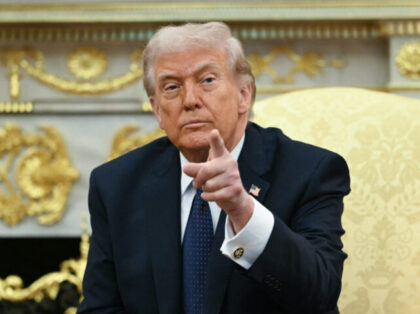
Adam Smith, often considered the patron saint of free markets, argued that a 50% tariff would improve domestic production and make British goods more competitive on international markets.

Two hundred and fifty years after the publication of The Wealth of Nations, the public figure who most embodies Adam Smith’s ideals is Donald Trump.

Existing home sales unexpectedly rose in February as affordability hit its best level in nearly four years and first-time buyers surged into the market.

Stocks rose and oil prices fell on Monday after President Trump indicated that the war with Iran was nearing its end.

It took Wall Street a while to come around, but the stock market has finally embraced the president’s worldview.
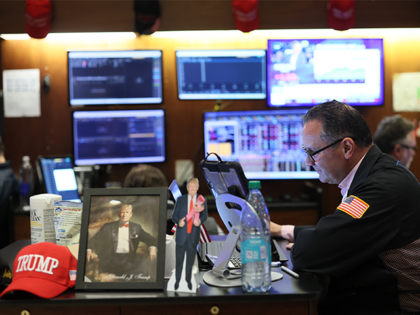
Morgan Stanley’s surprise decision to cut 2,500 jobs — 3 percent of its global workforce — was driven primarily by artificial intelligence, according to reporting by the New York Post’s Charles Gasparino.
