
The Federal Reserve’s preferred inflation measure showed moderate price increases in September, with the core index holding at levels unlikely to derail expectations for another interest rate cut at next week’s policy meeting.
The personal consumption expenditures price index rose 0.3 percent in September from the prior month, while the core measure—which excludes volatile food and energy prices—increased 0.2 percent, according to data released Friday by the Bureau of Economic Analysis. The report was delayed more than a month by the recent government shutdown.
On a year-over-year basis, overall PCE inflation ticked up to 2.8 percent from 2.7 percent in August, while core inflation edged down to 2.8 percent from 2.9 percent. All figures matched Wall Street forecasts.
The monthly core reading of 0.2 percent, if sustained, would translate to an annualized rate of roughly 2.4 percent, close to the Fed’s 2 percent target and well below the peak inflation rates seen during the Bidenflation surge.
Notably, durable goods prices showed continued disinflation, falling 0.1 percent from a month earlier for the third consecutive month. From a year earlier, durable goods prices are up just 0.9 percent, the slowest pace since May and down from over 1.2 percent earlier this year. This suggests that tariffs are not pushing up prices of durable goods.
Overall goods inflation remained subdued at 1.4 percent annually, while services prices continued to run hotter at 3.4 percent.
The inflation data comes as Fed officials prepare for their final policy meeting of 2025 on Tuesday and Wednesday. Policymakers have already cut rates twice this fall, bringing the target range down to 3.75 to 4 percent, as they attempt to balance still-elevated inflation against a cooling labor market.
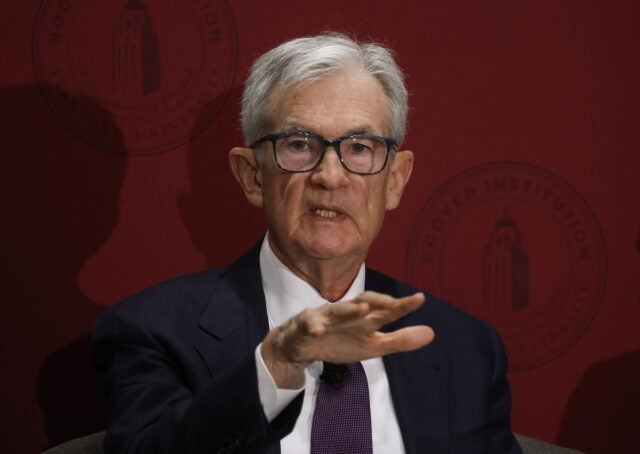
Chair Jerome Powell said after the Fed’s late October meeting that another rate cut in December wasn’t assured. But recent comments from multiple Fed officials, including New York Fed President John Williams, suggest support for further easing remains strong. Interest rate futures markets are pricing in high odds of a quarter-point cut next week.
Friday’s report also showed personal income grew 0.4 percent in September, while consumer spending increased 0.3 percent in nominal terms. Adjusted for inflation, however, consumer spending was flat for the month. Real disposable income rose 0.1 percent as modest income gains slightly outpaced price increases.
The personal saving rate held at 4.7 percent, unchanged from August.
Adding to the case for continued Fed easing, consumer inflation expectations showed marked improvement in early December, according to preliminary data from the University of Michigan’s survey of consumer sentiment released Friday.
Year-ahead inflation expectations fell to 4.1 percent from 4.5 percent in November—the lowest reading since January 2025 and the fourth consecutive monthly decline.
Long-run inflation expectations dropped to 3.2 percent from 3.4 percent, matching January levels.
The decline in inflation expectations is significant because the Fed monitors them closely as a gauge of whether elevated price pressures are becoming embedded in economic behavior. When consumers expect lower future inflation, according to the dominant thinking at the central banks, they are less likely to demand preemptive wage increases or accelerate purchases. Fed officials have said they worry that any price increases from tariffs could de-anchor inflation expectations.
“Year-ahead inflation expectations decreased from 4.5 percent last month to 4.1 percent this month, the lowest reading since January 2025,” said Joanne Hsu, director of the University of Michigan’s Surveys of Consumers. “This marks four consecutive months of declines.”
The Fed’s normal practice would be to have October inflation data and November employment figures available before its December meeting. But the government shutdown has left policymakers with a more limited—and dated—set of official economic metrics as they weigh their next move.
Despite the data lag, the combination of moderate core inflation readings, improving consumer expectations, and recent signs of labor market softening appear to be pointing the central bank toward another rate reduction as 2025 draws to a close.
COMMENTS
Please let us know if you're having issues with commenting.