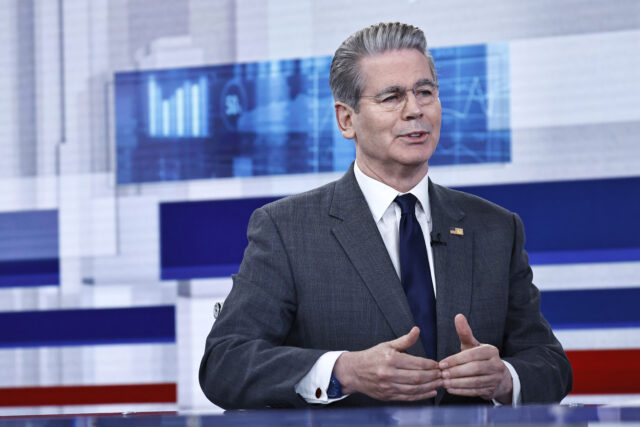

Treasury Secretary Scott Bessent said Wednesday the Trump administration plans to raise its across-the-board tariff rate to 15 percent this week, providing a timeline for an increase President Trump had announced but not yet implemented.
“That’s likely sometime this week,” Bessent said on CNBC’s “Squawk Box.”
Trump imposed a 10 percent global tariff last month after the Supreme Court struck down his broader tariff regime, then pledged within days to raise that rate to 15 percent. That promised increase, however, has not yet been implemented.
Questions also remain about which countries would be subject to the higher rate. Trade Representative Jamieson Greer suggested last week it would not apply universally.
The European Union, which reached a framework trade agreement with Washington last year, anticipates it will be spared, according to people familiar with the matter. The Tax Policy Center estimates that under a 10 percent tariff
The tariffs are being imposed under Section 122 of the Trade Act of 1974, which caps their duration at 150 days absent congressional action. Bessent said the administration would use that period to build a more legally durable tariff structure through Section 301 and Section 232 investigations.
“It’s my strong belief that the tariff rates will be back to their old rate within five months,” he said. “They are slower-moving, but they are more robust.”
The Supreme Court’s February decision invalidated the so-called reciprocal tariffs imposed under the International Economic Emergency Powers Act. Many other Trump administration tariffs were imposed under different legal authorities and remain in place, including duties on metals, cars, trucks, and timber. The Tax Policy Center estimates that the average tariff rate on imports now stands at about 12.1 percent and would fall to around 9.1 percent after the 150-day sunset on the Section 122 tariffs.
The Tax Policy Center estimates that prior to the Supreme Court’s decision, the average tariff rate was around 17 percent. Prior to Trump’s second-term tariffs, the average tariff rate was around 2.6 percent.
Some countries, however, face much higher rates. Goods from China, for example, face an average tariff rate of 27.2 percent. Vietnam’s average tariff rate is 15.3 percent and Germany’s is 11.4 percent, according to the Tax Policy Center.
COMMENTS
Please let us know if you're having issues with commenting.