
Warsh Moving Closer to Confirmation—But Rate Cuts Will Have to Wait
Kevin Warsh’s nomination to head up the Federal Reserve looked set to move one step closer to confirmation on Monday, with the Senate scheduled to vote on cloture at 5:30 p.m. By the time you are reading this, it’s likely the Senate will have approved cloture.
Warsh will actually get two cloture votes and, eventually, two votes on his nomination. That’s because Warsh is actually nominated to two positions: Fed governor and Fed chairman. The chair of the Fed is required to be a governor, so the Senate gets an up-or-down vote on both nominations. Because the outgoing chair, Jerome Powell, is stubbornly refusing to relinquish his seat on the board of governors, Warsh is stepping into the governor seat now occupied by Stephen Miran.
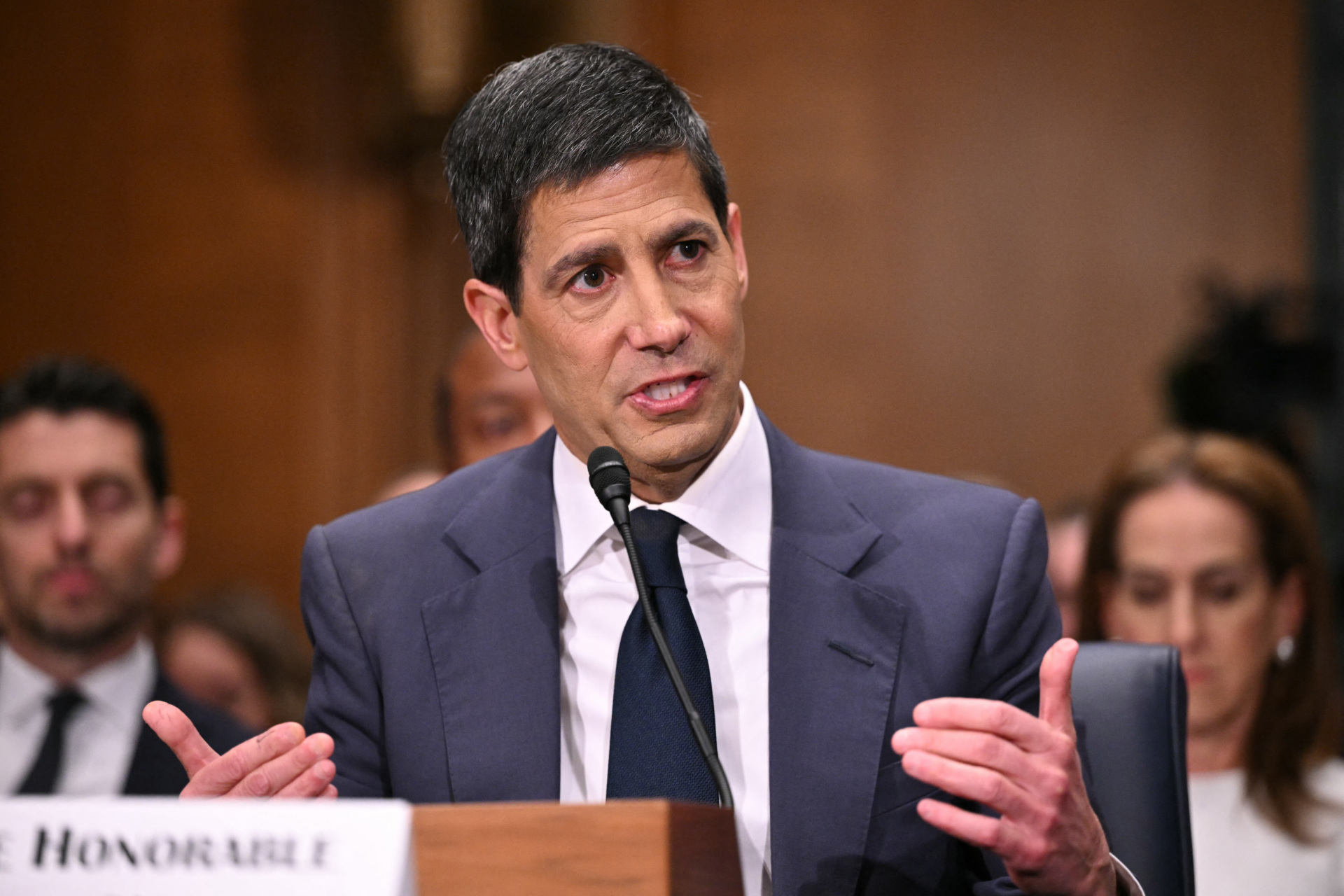
Kevin Warsh, nominee for U.S. Federal Reserve Chair, testifies during a Senate Banking Committee hearing on April 21, 2026. (Mandel NGAN / AFP via Getty Images)
It’s well known that President Trump wants Warsh to break from the Fed’s current policy of keeping rates steady, favoring dramatically lower rates. But the very economic strength that Trump has championed may force Warsh to disappoint him.
Three Federal Reserve presidents made that case explicit last month. Beth Hammack of Cleveland, Neel Kashkari of Minneapolis, and Lorie Logan of Dallas dissented from the inclusion of easing bias language in the April Federal Open Market Committee (FOMC) statement—marking the highest number of dissents on a single issue since October 1992. Their message was blunt: the Fed should not be indicating a bias toward cutting rates in this economy.
Strong Jobs and Business Investment Mean No Urgent Need for Cuts
The jobs market certainly supports their argument. Payrolls came in at 115,000 in April with private job growth at 123,000, marking the first back-to-back monthly gain in a year. The unemployment rate held steady at 4.3 percent. Jobless claims have been coming in at some of the lowest levels seen over the past 40 years. The employment side of the Fed’s dual mandate appears to be in good shape.
More broadly, the economy appears to be growing robustly. While the fourth quarter of last year and the first quarter of this year were sluggish, the Atlanta Fed’s GDPNow tracker for the second quarter sits at a robust 3.7 percent. Business investment, driven by AI development and favorable tax treatment from last year’s One Big Beautiful Bill, is booming. Retail sales in March rose 0.7 percent for a year-over-year gain of four percent, seeming to defy the negativity seen in the consumer sentiment surveys. For the first quarter, retail sales were up 3.7 percent from the period a year earlier. That’s not an economy screaming out for monetary stimulus.
In some ways, this is counterintuitive and frustrating. When a company is doing well, the rates it pays on its debt tends to fall. That’s because financial strength is seen as making the debt less risky, so investors are willing to accept lower rates. The debt of the federal government, however, doesn’t price off of default-risk and is only partly and indirectly based on investor views of the health of the U.S. economy. The bigger driver is the expectation of the Fed’s policy rates, and those expectations are shaped by how the market perceives future economic developments and how the Fed will react to them as it pursues maximum employment and price stability. So when investors see economic weakness ahead, longer Treasury yields fall on the idea that the Fed will cut to support the labor market. When they see strength, they price out cuts and begin to price in hikes.
On the other hand, inflation remains elevated, in part reflecting the recent increase in global energy prices. The personal consumption expenditure price index jumped 1.7 percent in March, the equivalent of an 8.3 percent annualized rate. Compared with a year ago, it is up 3.5 percent, the highest since May of 2023. The increase was driven almost entirely by the oil shock from the Iran war.
The underlying inflation picture is healthier. The Dallas Fed’s trimmed mean PCE inflation came in at 2.4 percent on a 12-month basis in March. The six-month annualized rate is just 2.2 percent. Unit labor costs rose just 1.2 percent year-over-year with a moderate 2.3 percent annualized gain in the first quarter.
But that nuance won’t help Warsh build a consensus for cuts anytime soon. Recent Fed commentary has shifted to hawkish. Goolsbee and Musalem have pushed back against Warsh’s call for cuts in anticipation of AI-driven productivity. More significantly, Warsh is taking the seat of Governor Stephen Miran, the board’s most dovish voice and a consistent advocate for rate cuts. Governor Christopher Waller has been sounding more cautious lately.
The Oil Shock Will Push Headline Inflation Higher—But Won’t Be Inflationary
Even though the oil shock is not inflationary in itself—it’s likely deflationary because higher gas prices leave less for consumers to spend elsewhere—it’s not clear that all the members of the FOMC understand this. And many fear that higher gas prices are pushing household inflation expectations higher—and the University of Michigan’s consumer sentiment surveys confirm this. Since the doctrine at the Fed holds that inflation expectations can become self-fulfilling prophecies, higher gas prices become a reason to remain hawkish.
Bank of America’s rates analysts, who had penciled in rate cuts for September through October, just pushed them out to summer 2027. The reason is stark: “the data flow precludes cuts for now.” The CME Group’s Fedwatch tool, which calculates the implied odds of policy rate changes from prices in fed funds futures market, is now reflecting the view that we will not get a cut at all this year. Indeed, it has a one-in-five chance that rates increase by 25 basis points, up from next to nothing a month ago.
Trump’s economic policies—immigration enforcement tightening labor supply, tariffs reshaping trade flows and creating confidence in U.S. manufacturing, deregulation supporting business confidence, tax cuts supporting investment, the end of the war on fossil fuels—have produced such a strong labor market and solid business growth that rate cuts are probably off the table in the foreseeable future. Warsh will arrive at the Fed as an advocate for lower rates, only to discover that the economy’s success has made his job harder.
The president will have to wait for his rate cuts.
COMMENTS
Please let us know if you're having issues with commenting.