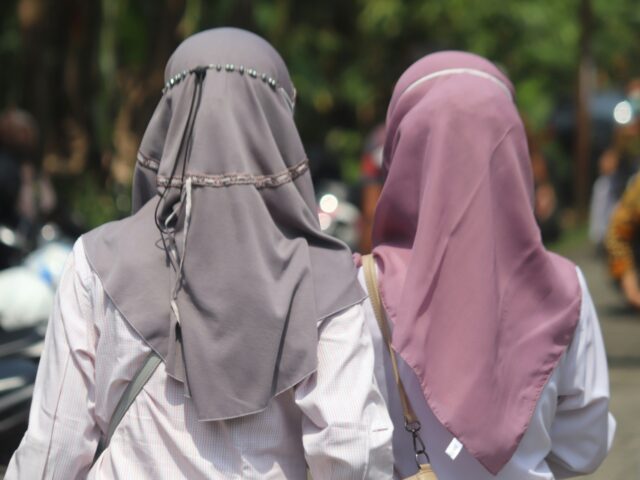

A school headscarf ban for girls and teenagers has been passed by the Austrian government, defying months of opposition by what has been called “Islamist influencers” mobilising in the country.
The Austrian government voted through a package of new education measures on Thursday with votes from the FPÖ (Freedom Party of Austria), ÖVP (Austrian People’s Party), SPÖ (Social Democratic Party of Austria), and NEOS (The New Austria and Liberal Forum), the national Parliament’s news service reports. Among the changes due to come into effect in September 2026 is a headscarf ban for girls aged up to 14 years-old, with the government calling the veiling of young children in some communities a “symbol of oppression”.
The policy is to be enforced with a fine of up to €800 ($950).
With support from the right, centre, and centre left, the Green Party was the only major political opposition to the vote, aligning itself with the criticism of the Austrian Islamic Religious Community (IGGÖ) which called the law unconstitutional and unnecessary. The IGGÖ say they will appeal to the national constitutional court in a bid to see the law overturned and said in a statement: “Children need protection, education, and enlightenment, not symbolic politics. We reject coercion. We defend freedom. Both simultaneously, for every child”.
An FPÖ amendment to the law which would have seen it go further, banning teachers from wearing the head scarf in schools too, was not adopted in the votes.
The law came despite what Austria’s largest newspaper Die Kronen Zeitung characterised as “Islamist online mobilization” against the law, with the integration minister particularly targeted. Responding to these attempts, minister Claudia Plakolm had said in September when the plan to pass the law was announced: “We’ve clearly hit a nerve with radical Muslims. Girls who grow up visibly and independently seem to be a threat to these hate preachers. They want to hide girls from head to toe under the guise of religion. We will protect girls from exactly that with the headscarf ban.”
And as unpopular with some in the Islamic community as it may be, it is proven popular with the wider nation, with polling taken just before this week’s vote put support at 73 per cent.
The Austria child headscarf ban is one of many such initiatives launched across Europe in a bid to encourage the integration of new cultural minorities into the nations of the continent. As reported earlier this year, Austria had launched a programme to fight “Islamic separatism” and “sharia law” by bringing in a burqa ban bill, which would outlaw headscarves in schools, universities, and places of employment.
France has been working towards various forms of headscarf ban for years, particularly forms that involve face-covering, arguing that Islamic traditions clash with Republican virtues, for many years. This has included, most recently, a ban on the Islamic abaya in schools, with the then-Education minister explaining in 2023: “When you walk into a classroom, you shouldn’t be able to identify the pupils’ religion just by looking at them… I have decided that the abaya could no longer be worn in schools.”
COMMENTS
Please let us know if you're having issues with commenting.