Feb. 19 (UPI) — Frequent deployment of satellites and re-entries by the rockets that deploy them might pose a risk to the Earth’s upper atmosphere and environment, a German study published Thursday indicates.
As more rockets exit and re-enter the Earth’s upper atmosphere, they leave behind lithium atoms and space debris that German researchers said could cause harm.
The researchers detected 10 times more lithium atoms than normal in the upper atmosphere some 20 hours after a SpaceX Falcon 9 upper-stage rocket made an uncontrolled re-entry a year ago, lead author Robin Wing said in an article published on Thursday in the Communications Earth & Environment journal.
“This study presents the first measurement of upper-atmospheric pollution resulting from space debris re-entry and the first observational evidence that the ablation of space debris can be detected by ground-based lidar,” the study said.
“The analysis of geomagnetic conditions, atmospheric dynamics, and ionospheric measurements supports the claim that the enhancement was not of natural origin,” the researchers said.
“Our findings demonstrate that identifying pollutants and tracing them to their sources is achievable, with significant implications for monitoring and mitigating space emissions in the atmosphere.”
The researchers called the rising frequency of satellite and rocket re-entries an “emerging societal and scientific concern,” particularly regarding the potential environmental consequences for the planet’s atmosphere.
Past studies mostly have focused on the risks that space debris poses to people and infrastructure, but the researchers said relatively little is known about the possible effects of “exotic atomic and molecular species not typically found in large quantities in natural meteoric input.”
“This finding supports growing concerns that space traffic may pollute the upper atmosphere in ways not yet fully understood,” the researchers said.
“Continued growth in satellite launches and re-entries may lead to cumulative effects, with implications for long-term atmospheric composition and climate interactions.”
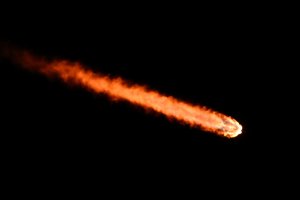
They cited a Feb. 19, 2025, uncontrolled re-entry of a Falcon 9 rocket’s upper stage created a fireball that could be seen from the planet’s surface, along with a “persistent high-altitude plume of lithium vapor.”
That plume was detected over Germany and is what the researchers said caused the re-entry point to contain 10 times the amount of lithium vapor than the upper atmosphere normally would have.
“This event provides a rare opportunity to examine the upper atmospheric signature of space debris re-entry using a suite of advanced remote sensing instruments and atmospheric models,” the study said.
They used lidar, the Icosahedral Nonhydrostatic circulation model and the ablation process to measure the effects of the rocket’s uncontrolled re-entry.
COMMENTS
Please let us know if you're having issues with commenting.