
Here are the latest developments in the Middle East war:
‘Wartime’ budget
South Korea’s government said it aims to roll out a $17-billion “wartime” supplementary budget and expand fuel tax cuts to counter rising energy prices, in the latest example of how the war has affected countries across the globe.
– Israeli soldier killed –
The Israeli military said that a soldier was killed in fighting against Iran-backed Hezbollah in south Lebanon.
– Dead in Abu Dhabi –
Two people were killed and three were wounded by falling debris after air defences intercepted a ballistic missile on the outskirts of Abu Dhabi, the government media office said.
– Wounded in Israel –
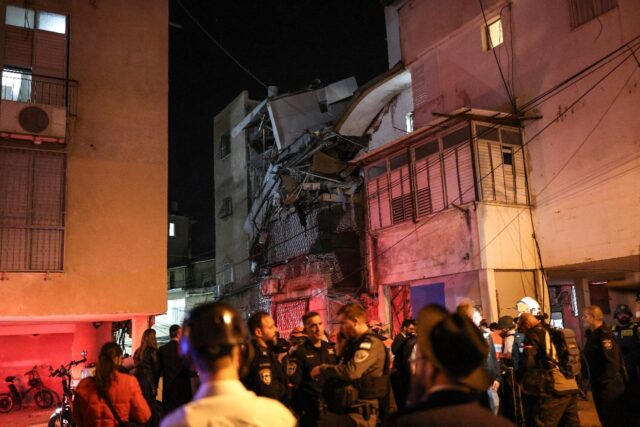
Missile attacks from Iran left six people lightly injured in Israel, medics said.
New Iran strikes
Israel’s military said its forces had carried out a wave of strikes across Iran, including in the central city of Isfahan.
War goals
Pakistan’s defence minister, whose government has offered to host talks between Iranian and American envoys to stop the war, appeared to take a jab at the US operation that has led to the closure of the strategic Strait of Hormuz.
“The goal of the war seems to have shifted to opening the Strait of Hormuz, which was open before the war,” Khawaja Asif posted on X, alongside hand-clapping emojis.
Oil edges up
Oil prices jumped and equities fell Thursday as investors tracked developments in the Middle East.
With investors holding on to hope that a deal can be struck, oil prices have stabilised this week, with Brent just above $100 and WTI around $90.
Stocks in Wall Street and Europe rose but Asian markets struggled after a two-day rally.
‘Glimmer of hope’
China’s top diplomat has said that a “glimmer of hope” has emerged due to moves to stop the war.
China’s foreign minister Wang Yi urged dialogue in separate calls with his Turkish and Egyptian counterparts, suggesting that both Tehran and Washington had shown signals they were willing to return to the negotiating table.
‘Afraid’ to admit talks
US President Donald Trump insisted that Iran was taking part in peace talks, suggesting Tehran’s denials were because Iranian negotiators fear being killed by their own side.
“They are negotiating, by the way, and they want to make a deal so badly. But they’re afraid to say it, because they figure they’ll be killed by their own people,” Trump told a dinner for Republican members of Congress.
Missile capacities
The United States has hit two-thirds of Iran’s production facilities for missiles and drones, and a similar proportion of its naval production, a top officer said.
Admiral Brad Cooper, head of Central Command, also estimated that Iran’s drone and missile launch rates were down by 90 percent, and “we’ve also removed the regime’s ability to rebuild them”.
‘Resistance’
Tehran’s Foreign Minister Abbas Araghchi rejected any diplomatic efforts to wind down the conflict.
“At present, our policy is the continuation of resistance,” Araghchi said on Iranian state TV. “We do not intend to negotiate — so far, no negotiations have taken place, and I believe our position is completely principled.”
“Speaking of negotiations now is an admission of defeat,” he said.
Kuwait arrests six
Kuwait arrested six people allegedly linked to the Iran-backed Hezbollah group in Lebanon who were planning “assassinations” in the Gulf state, the interior ministry said.
Iran island
Iran’s powerful parliament speaker warned of the possible invasion of an Iranian island with the support of an unnamed regional country.
“Based on some intelligence reports, Iran’s enemies are preparing to occupy one of the Iranian islands with support from one of the regional states,” Mohammad Bagher Ghalibaf posted on X.
Demands on Iraq
Several Gulf countries as well as Jordan demanded in a joint statement that Iraq act immediately to stop attacks from its territory by armed pro-Iran groups.
The statement was signed by Saudi Arabia, the United Arab Emirates, Qatar, Kuwait, Bahrain and Jordan.
burs/yad/kjm
COMMENTS
Please let us know if you're having issues with commenting.